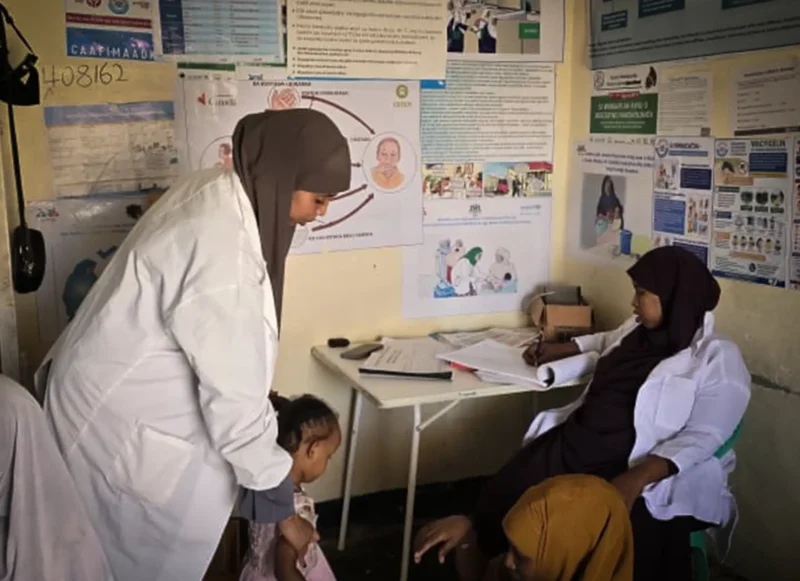
MOGADISHU — A mother and child health centre that has served families in Laas Caanood for nearly four decades is on the verge of closure, the latest casualty of funding shortfalls that are dismantling Somalia’s fragile health system.
The Central Mother and Child Health Centre, which provided free maternal and child health services to thousands of displaced and vulnerable families, is facing severe funding gaps that have already forced its 18 medical staff to work on a voluntary basis, according to the UN Office for the Coordination of Humanitarian Affairs.
“We don’t know where we will go if this facility closes,” said Assanti Abdi, a displaced woman of Ethiopian origin who delivered all four of her children at the centre. “This is where my children received their vaccinations and where we came whenever they needed medical treatment.”
A System Under Collapse
The Laas Caanood centre is not an isolated case. According to the World Health Organization, 380 health facilities either closed or operated at reduced capacity in 11 regions between January and June 2026, most of them primary health care units serving thousands of Somalis.
At least 115 mobile health units have closed nationwide this year, cutting off the only source of care for many remote communities. Thirty hospitals are operating below capacity, and in the northern districts of Laas Caanood, Badhan and Buuhoodle, at least 10 public hospitals are struggling to remain operational.
In August alone, the Laas Caanood centre treated 722 children, including 567 under the age of five. More than 450 pregnant and breastfeeding women received services, 24 mothers delivered safely, and 155 children were vaccinated.
“Funding cuts have severely affected our operations,” said Maryam Abdinasir, the centre’s officer-in-charge. “All 18 medical staff working here are providing services on a voluntary basis.”
Drought Compounds the Crisis
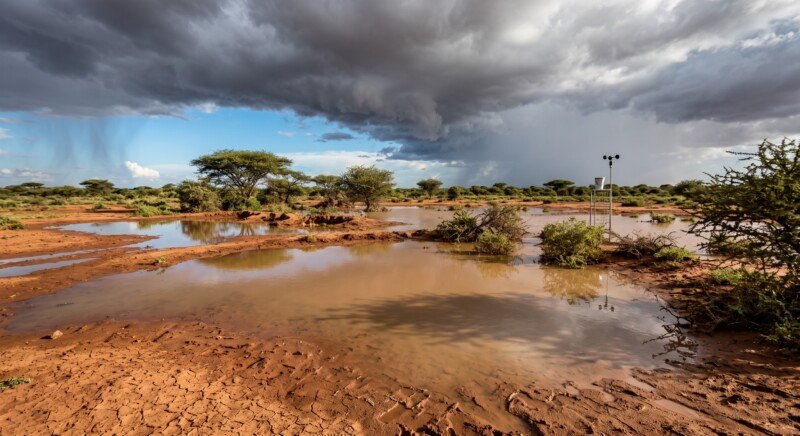
The health crisis is unfolding against a backdrop of worsening drought across Sool and other northern regions, including Sanaag, Bari, Nugaal and Mudug. Up to 1.9 million people in these areas are estimated to be acutely food insecure.
More than 75 per cent of traditional water sources in Sool and nearby Sanaag have dried up. Across the two regions, more than 165,000 people have been directly affected by drought.
The situation could deteriorate further between October and December, when a projected El Niño is expected to increase the risk of widespread flooding and disease outbreaks. SoDMA has joined regional preparedness efforts, with the IGAD High-Level Ministerial Forum on El Niño Preparedness held in Addis Ababa from September 15 to 17, as reported in FTL Somalia’s coverage of the regional forum.
“The people of Sool and Sanaag have endured multiple and overlapping crises,” said Humanitarian Coordinator George Conway during a visit to Laas Caanood in August. “Early action saves lives and prevents suffering from worsening.”
Funding Shortfall Leaves Response Plan in Jeopardy
Despite escalating needs, funding for humanitarian activities remains critically low. As of 15 September, the Somalia 2026 Humanitarian Needs and Response Plan was only 30.7 per cent funded.
Between January and June, only 29 per cent of people the response set out to assist across 64 districts received multi-cluster support. In Sool and nearby Sanaag and Togdheer regions, only 26 per cent of the 83,000 people planned for assistance had been reached.
Children are paying the highest price. According to UNICEF, admissions of Somali children with severe acute malnutrition and medical complications to stabilisation centres increased by 32 per cent during the first six months of the year compared with the same period last year.
Overall, 6.5 million people, nearly one third of the Somali population, are facing high levels of acute food insecurity. About 1.9 million children suffer from acute malnutrition, including 493,000 facing severe acute malnutrition.
Higher fuel costs and disruptions to maritime supply chains have driven food prices up by as much as 20 per cent. The Central Bank of Somalia’s latest quarterly report similarly found that domestic fuel prices more than doubled in the first quarter of 2026, contributing to inflation projected at 5.9 per cent for the year, as detailed in FTL Somalia’s reporting on the economic impact.
Critical Note
The possible closure of the Laas Caanood centre is a measure of how far Somalia’s health system has deteriorated. The facility has operated for four decades, survived armed conflict, and continued serving families through years of instability. What it may not survive is the withdrawal of international funding.
The humanitarian response plan’s 30.7 per cent funding level is the critical variable. The World Health Organization has warned that 618 health facilities are at risk of closure in 2026, while the Somalia Humanitarian Fund and CERF have provided stopgap financing that cannot replace sustained donor support. Early action, as Conway noted, saves lives, but early action requires money that has not been committed.
The Laas Caanood centre’s staff continue to work without pay. That is not a sustainable model for health service delivery, and it is not a substitute for a functioning system. If the facility closes, the mothers and children who depend on it will have nowhere to go. The question is whether the international community will act before that happens.
Recommended Reading On ftlsomalia.com
- SoDMA Chief Joins IGAD High-Level Forum on El Niño Preparedness in Addis Ababa
- Drought, Fuel Prices and Falling Aid Push Somalia’s Growth to Four-Year Low
- SoDMA and UN’s George Conway Hold Talks on Drought Response and Super El Niño Preparedness
- SoDMA Holds Conference in Nairobi on Reducing Impact of Drought in Somalia
- Somalia’s Disaster Agency Pushes for Tech-Driven Early Warning Systems
- Aid Cuts Leave Somalia Vulnerable as Health Systems Struggle