STOCKHOLM — A Somali father of six children living in Sweden has appealed to President Hassan Sheikh Mohamud for help as he faces deportation to Mogadishu on September 22, alleging that three individuals from the Office of the Prime Minister are involved in his forced removal.
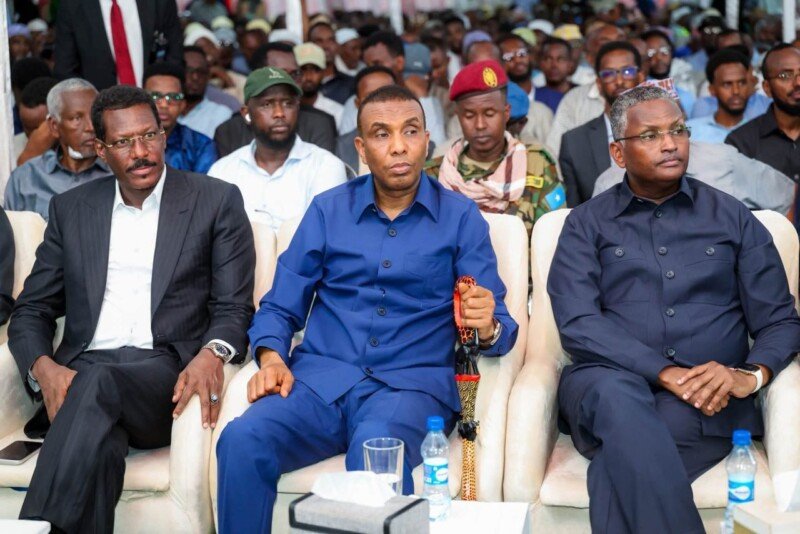
Abas Bashir, said in a message circulated by Shabelle Media that he is scheduled to be deported without his children. He named three officials from the Prime Minister’s Office whom he says are actively involved in his deportation: the current Permanent Secretary Kamal Dahir Gutale, former Permanent Secretary Ahmednur Mohamed Abd (Senior Political Advisor to the Prime Minister) and Yahye Ali Ibrahim (Hareri).
Bashir’s case is the latest in a series of deportations of Somali nationals from Sweden that have drawn scrutiny over the transparency of bilateral arrangements between Stockholm and Mogadishu. The Swedish government has acknowledged that it conditioned development assistance on Somalia’s willingness to accept deported nationals, a policy described by Development Minister Benjamin Dousa as a necessary step to ensure that convicted criminals are returned to their home country.
The Swedish Deportation Policy
Sweden has deported 34 individuals to Somalia since 2024 as part of a policy that links development assistance to cooperation on readmissions. According to Dousa, the Swedish government has told Somali authorities: “If we are to help you, we require that you accept your own citizens.”
Among those deported are individuals convicted of serious crimes including aiding murder, child rape, robbery, assault and fraud. The Swedish government has argued that the policy addresses a long-standing problem: despite decades of Swedish aid to Somalia, few convicted criminals had been successfully deported.
But the policy has also drawn significant criticism. Swedish media investigations revealed that 100 million kronor, about $9 million, in aid was redirected to a fund with close ties to the Somali Prime Minister’s Office, prompting allegations of corruption and concerns about the use of development assistance as leverage in migration policy.
Investigations by Swedish Radio and the newspaper DN found that some of the funded positions may have been “ghost workers,” individuals listed on government roles without performing any visible functions, with funds reaching influential figures close to the Somali Prime Minister.
Somali Government Denials
The Somali government has repeatedly denied allegations of a secret deportation agreement with Sweden. In a statement released in October 2025, the Prime Minister’s Office described the claims as “baseless and misleading,” stressing that no covert arrangement exists between Mogadishu and Stockholm.
“The Federal Government of Somalia has not entered into, nor has it discussed, any covert arrangement with the Government of Sweden regarding the return or deportation of Somali nationals,” the statement read. The government said all cooperation with Sweden is conducted through formal diplomatic channels and is subject to cabinet oversight and institutional accountability.
Somali officials also clarified that any funds linked to cooperation with Sweden are managed through United Nations agencies (UNDP), including the World Bank, and are not deposited directly into the Somali government’s treasury.
Swedish Development Minister Dousa has also denied that aid funds reached the Prime Minister’s Office directly. “No money has gone to the prime minister’s office. It has never been on the table to support politicians directly,” he told SVT.
Broader Scrutiny of Deportation Arrangements
The case comes amid broader scrutiny of deportation arrangements between Somalia and European countries, including allegations of human rights violations in Switzerland’s deportation of Somali nationals. Swiss human rights organization Augenauf has condemned Switzerland’s plan to forcibly deport a seriously injured Somali citizen, describing the case as part of a broader pattern of violations during forced deportations.
According to Augenauf, the man, a father of three children living in Europe who has been in Switzerland for 11 years, suffered multiple skull fractures, a traumatic brain injury and eye injuries after an alleged attack at an underground asylum accommodation. Two additional operations scheduled for the week of September 7 were prevented by Swiss authorities. Augenauf said Swiss police authorities use an enormous amount of violence during forced deportations, committing massive violations of Swiss and international law.
Augenauf also said Switzerland provides financial and technical support to Somalia’s Immigration and Citizenship Agency, including equipment and training, while simultaneously tightening visa rules for Somalia in August. The group described the approach as a “carrot and stick” strategy.
The European Union has also been considering stricter visa measures against Somali citizens due to what it describes as inadequate cooperation from Mogadishu on readmission procedures. Irregular arrivals from Somalia to the EU more than doubled between 2024 and 2025, prompting EU interior and justice ministers to approve new restrictive visa measures during a meeting of the Justice and Home Affairs Council in Luxembourg.
The EU’s support for repatriation and reintegration has been a longstanding partnership, including assistance to Somali nationals repatriated from Libya, Algeria and Yemen. The European Union Delegation to Somalia recently visited the National Commission for Refugees and Internally Displaced Persons Return and Reintegration Centre in Mogadishu, reaffirming its commitment to supporting reintegration efforts.
The Broader Context of Deportations
Bashir’s case is not isolated. Cabas Hussein, another Somali father of six living in Sweden, is scheduled to be deported to Mogadishu on September 22, the same day as Bashir. Hussein came to Sweden in 2014 and had permanent residency and full-time employment when a missed letter from the Swedish Tax Agency led to his deregistration, the revocation of his residency permit, and a deportation order.
The deportations have also raised concerns about the application of the principle of non-refoulement, which prohibits returning individuals to countries where they face a risk of torture, death, or inhuman treatment. Critics have argued that Sweden’s policy of conditioning aid on deportations prioritizes migration control over human rights protections.
The Swedish government has defended the policy, with Migration Minister Johan Forssell saying that the cooperation has enabled Sweden to “fivefold the deportations” in a short time and that there is “zero tolerance for corruption.”
Critical Note
Abas Bashir’s appeal to President Mohamud places the Somali government in a difficult position. If the officials he names are indeed involved in facilitating his deportation, the case would contradict the government’s repeated denials of any covert arrangement with Sweden. If the officials are not involved, the government should clarify the nature of its cooperation with Swedish authorities and explain how deportations are processed.
The broader issue at stake is the transparency of migration cooperation between Somalia and European countries. Sweden’s policy of conditioning development assistance on deportations has been widely criticized, including by Swedish media, opposition parties, and human rights organizations. The allegations of ghost workers and funds reaching figures close to the Prime Minister’s Office remain unverified but have not been independently investigated. Similar concerns have been raised about Switzerland’s deportation practices, with Augenauf documenting a pattern of violence and procedural violations.
For Somali citizens facing deportation, the process raises serious questions about due process, family unity, and the right to appeal. Bashir’s case, involving separation from his six children, highlights the human consequences of policies that prioritize immigration enforcement over individual circumstances. The Somali government must ensure that its cooperation with European partners does not come at the expense of its citizens’ rights and dignity.
Recommended Reading On ftlsomalia.com
- Swiss Authorities Accused of Human Rights Violations in Deportation of Somali Nationals
- EU Considers Stricter Visa Measures for Somali Citizens Over Repatriation Cooperation Concerns
- EU Delegation Visits NCRI Return and Reintegration Centre in Mogadishu
- Somali PM’s Office Denies Secret Deal with Sweden over Asylum Deportations