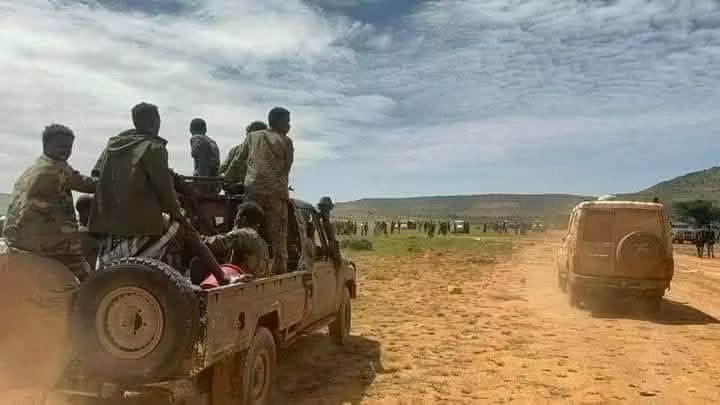
MOGADISHU — Reports from Buqdharkayn in the Togdheer region indicate that tensions have escalated between the Habar Je’lo and Dhulbahante clans, with both sides reportedly mobilising armed fighters in the area.
Residents in the area have said the two sides are gathering weapons, raising fears of an outbreak of fighting in the locality. As of Wednesday, there were no official statements confirming casualties or the specific cause of the current standoff.
A Recurring Flashpoint
Buqdharkayn has been a flashpoint for violence between the two communities before. The area has seen repeated clashes between forces aligned with Somaliland and those aligned with the North Eastern State. As reported in FTL Somalia’s coverage of clan conflict in the region, the Sool, Sanaag, and Cayn regions remain points of contention due to overlapping clan affiliations and historical claims.
The broader frontier between the Isaaq and Dhulbahante communities has remained tense since 2023, when intense fighting between Somaliland forces and Dhulbahante clan militias drove Somaliland troops out of Las Anod and large areas of Sool. A new frontline emerged between Oog and Guumays in western Sool, aligning roughly with the boundary between the two clans.
As detailed in FTL Somalia’s coverage of the North Eastern State, the administration was formally declared as Somalia’s sixth federal member state in July 2025, with Las Anod as its capital. The formation has drawn strong opposition from both Somaliland and Puntland, who claim the Sool, Sanaag, and Cayn regions as part of their respective territories.
Contested Control and Regional Dynamics
Buqdharkayn lies in a contested zone. While the majority of the Togdheer region, including the cities of Burao and Owdweyne, remains under the control of the Somaliland administration, the Cayn area around Buuhoodle is administered by the North Eastern State. The area around Buqdharkayn falls near the fault line between these two authorities.
The fragility of the North Eastern State’s political institutions was highlighted by the defection of parliamentarian Fahiima Yuusuf Quuje to Somaliland in July 2026, as reported in FTL Somalia’s coverage of the defection. The move underscored the fluid nature of political allegiances in the region.
The Federal Government has sought to consolidate the North Eastern State’s position within the federal framework. President Hassan Sheikh Mohamud visited Las Anod in January 2026 to attend the inauguration of the state’s president, as detailed in FTL Somalia’s coverage of the visit.
Critical Note
The reported mobilisation in Buqdharkayn is the latest sign that the unresolved frontier between the Isaaq and Dhulbahante communities remains a source of instability. The pattern is familiar: local disputes over land, water, or political allegiance escalate quickly when weapons are available and state authority is contested.
Neither the Somaliland administration nor the North Eastern State has issued a statement on the current situation. The absence of official information makes it difficult to assess how serious the standoff is, or whether local elders and authorities are working to de-escalate. In the past, clan elders and traditional leaders have played a role in mediating such disputes, and their involvement will be critical in preventing another round of fighting.
For the residents of Buqdharkayn, the recurring cycles of violence have brought displacement, loss of livestock, and disruption of livelihoods. Without a durable political settlement that clarifies administrative control and addresses local grievances, the area is likely to remain vulnerable to flare-ups. The current buildup is a warning that the underlying issues remain unresolved.
Recommended Reading On ftlsomalia.com
- Deadly Sanaag Clan Conflict Exposes Fragility of Peace in Northeastern Somalia
- North Eastern State Security Minister Engages U.S. AFRICOM on Counterterrorism Efforts
- Somaliland Welcomes Defection of North Eastern State MP Who Once Fought Against Hargeisa
- Somali President to Visit Lasanod, Risking Somaliland Tensions
- Hargeisa Wants Israel to Shield It From Turkish Drones and Warplanes
- Ambassador Warfaa Announces Planned Somali National Army Deployment to Hargeisa and Berbera