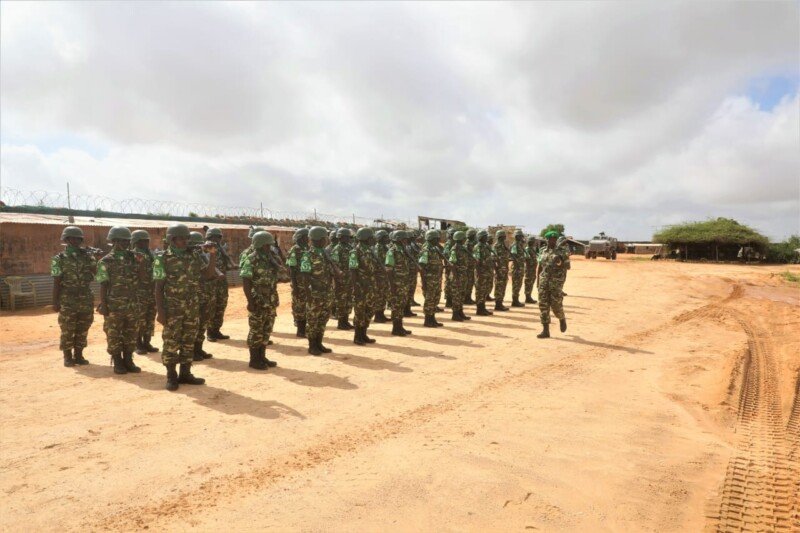
BALCAD, The commander of AUSSOM Sector 5, Brig. Gen. Ndenzako Michel, visited Burundian National Defence Forces troops at the Balcad Forward Operating Base on Saturday, assessing mandate implementation and preparedness for an anticipated Super El Niño response, the mission said.
In a statement posted by AUSSOM, Ndenzako stressed the need for close collaboration with Somali Security Forces, local authorities and communities across Hirshabelle State. He urged troops to maintain alertness, discipline and adherence to operational procedures to protect civilians and surrounding communities, and to execute duties in line with the AUSSOM mandate and applicable regulations.
Balcad’s Strategic Position and the Flood Risk
Balcad sits in the Middle Shabelle region, roughly 39 kilometers north of Mogadishu along the main road to Jowhar. The area has long hosted Burundian forces operating under the African Union framework, first as part of ATMIS and now AUSSOM. The forward operating base serves as a buffer for Jowhar, the administrative capital of Hirshabelle State.
The commander’s mention of Super El Niño preparedness reflects a broader concern across Somalia. Humanitarian partners have been pre-positioning cargo, expanding storage capacity and conducting flood response exercises in anticipation of the October-December 2026 rains. The Somali Disaster Management Agency has placed Balcad among 29 districts across 14 regions on high alert for riverine and flash flooding during the Deyr season.
For AUSSOM troops, flood response adds a civilian protection dimension to an already complex mandate. Roads and access routes in Middle Shabelle are vulnerable to seasonal flooding, which can complicate the movement of security forces and humanitarian relief alike. AUSSOM has previously conducted flood evacuations of Burundian troops from forward bases in the region, underscoring the operational reality of seasonal weather.
Coordination With Somali Forces and Communities
Ndenzako’s emphasis on working with Somali Security Forces and local authorities echoes standing themes in AUSSOM’s Sector 5 operations. The mission has conducted civil-military activities in the region, including medical outreach at Jowhar Airfield for displaced communities.
Burundian troops in Sector 5 have faced persistent threats from Al-Shabaab, particularly in the Middle Shabelle area. The Somali National Army has conducted IED clearance operations in the Gololey area on the outskirts of Balcad, removing roadside bombs planted by the militant group along transit routes. The Jowhar-Balcad corridor remains a contested route where Al-Shabaab has maintained influence, despite its proximity to the capital.
Critical Note
A forward operating base visit is a routine command activity, and the messaging from AUSSOM is consistent with the mission’s public posture: vigilance, coordination, civilian protection. The addition of Super El Niño preparedness is a sensible recognition that security operations in Hirshabelle cannot be separated from the seasonal realities that affect mobility, displacement and humanitarian access.
What such statements do not address is the durability of the arrangements they describe. AUSSOM’s Sector 5 remains a Burundian-led operation, and questions about the mission’s long-term configuration persist. The broader transition planning between AUSSOM and Somali forces continues amid funding uncertainty and unresolved timelines. The Burundian contingent’s continued presence, while welcome from a security standpoint, also reflects the distance between announced transitions and implemented ones.
The more immediate question is whether coordination with Somali forces and local authorities extends beyond meetings and into sustained, verifiable joint operations. Al-Shabaab retains the ability to contest territory in Middle Shabelle, as the IED clearance at Balcad’s edge demonstrates. Flood response will demand not only military readiness but also the kind of civil-military trust that cannot be mandated by a command directive. Whether the Balcad visit produces more than a statement will be determined in the coming weeks, when the rains arrive.
Recommended Reading On ftlsomalia.com
- Army Clears Mines in Middle Shabelle
- Burundian Troops Evacuated from Flooded Xawaadley Base, No Casualties
- SoDMA Urges 29 Districts Across 14 Regions to Prepare for Super El Niño Flooding
- Heavy Rains Flood Mogadishu Roads, Disrupt Schools and Businesses
- Gorgor Commandos Launch Security Operations in Jowhar
- National Security Adviser and AUSSOM Chief Meet at Villa Somalia to Discuss Transition