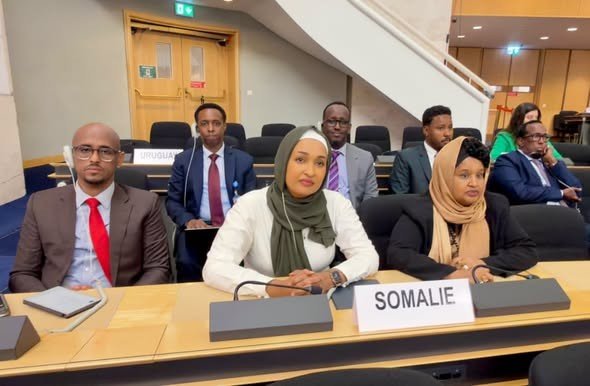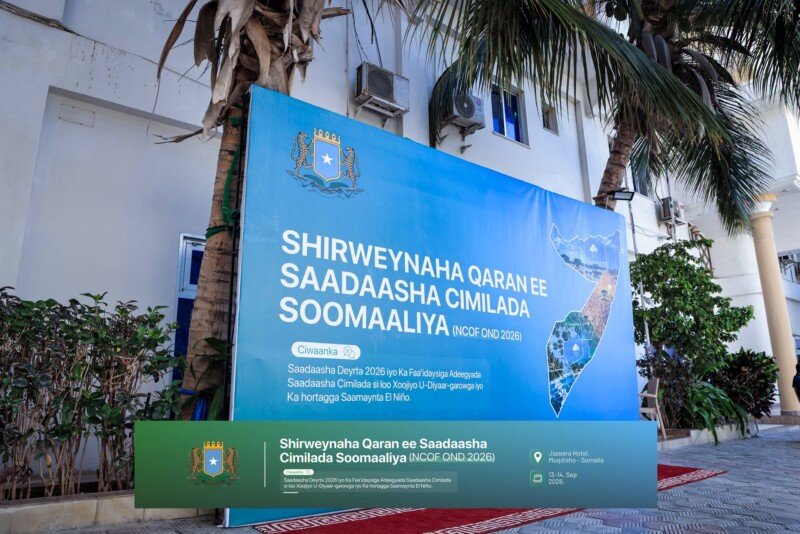
MOGADISHU — The National Climate Outlook Forum (NCOF OND 2026) opened in Mogadishu on Saturday, bringing together climate experts, government officials, and development partners to review seasonal forecasts, strengthen El Niño preparedness, and improve climate data systems for early action across Somalia.
The two-day forum, running from 13 to 14 September 2026, focuses on climate forecasts for the October-November-December (OND) Deyr season, El Niño preparedness, and the use of climate data to inform decision-making at national and regional levels.
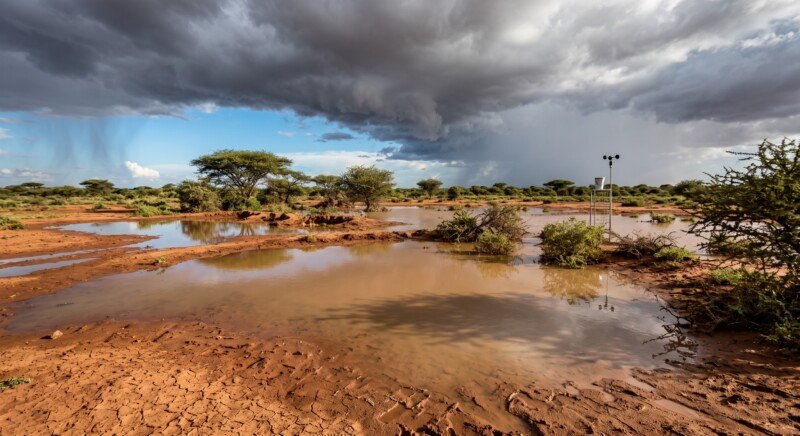
Minister of Environment and Climate Change Lt. Gen. Bashir Mohamed Jama called for active participation in the forum, underscoring the importance of coordinated action as Somalia faces a near-certain El Niño event during the Deyr season. Forecasters project a 97 to 100 percent probability of severe flooding between October and December, with the Juba and Shabelle river basins identified as areas of particular concern.
Preparedness and Early Warning
The forum comes as the Somali Disaster Management Agency (SoDMA) has urged communities in 29 districts across 14 regions to prepare for potential heavy, flood-causing rains. The districts identified span the country and include Doolow, Luuq, Baardheere, Bu’aale, Beledweyne, Buuloburde, Jowhar, Mogadishu, Hargeisa, Garowe, Bosaso, Qardho, Baydhabo, Gaalkacyo, Kismayo, Afgooye, Buurdhuubo, Jilib, Afmadow, Diinsoor, Qansax Dheere, Jamaame, Ceel Barde, Sablaale, Kurtunwarey, Marka, Baraawe, Dhuusamareeb and Balcad.
Somalia has adopted a new Anticipatory Action Strategy aimed at strengthening early warning systems and enabling faster, more targeted responses to natural and man-made crises. The strategy represents a shift from reactive aid delivery to proactive planning that anticipates disasters before they strike.
The country has also launched the Multi-Hazard Early Warning System under the global Early Warnings for All framework, in collaboration with the United Nations Development Programme and the Green Climate Fund. The initiative aims to reduce disaster-related deaths by 42 percent by 2030 and extend early warning coverage from 20 percent to complete national coverage.
SoDMA and UN Humanitarian Coordinator George Conway have held talks on Super El Niño preparedness, including a joint assessment mission to regions including Somaliland, North Eastern State, and Puntland.
SoDMA has also coordinated with the Somali Air Force, with both sides agreeing that the Armed Forces should play an important role in emergency response and rescue efforts, including the delivery of relief assistance, information gathering, and ground assessments using helicopters and unmanned aerial vehicles.
Critical Note
The National Climate Outlook Forum is a welcome platform for coordination, but its value will be measured by whether the forecasts it produces translate into timely action on the ground. Somalia has made progress in building early warning systems and anticipatory action frameworks, yet the funding available remains a fraction of what a major flood event would require. Pre-positioned financing stands at approximately $17 million against a credible worst-case scenario in the range of the 2023 floods, which cost $176 million in damages and losses alone.
The forum also highlights a persistent tension in Somalia’s climate governance. On paper, the country has developed strategies, early warning systems, and coordination mechanisms. In practice, the space between planning and implementation is evident. The 2023 floods demonstrated that effective early action can mitigate loss of life, yet the same vulnerabilities that existed then remain today. If the forum produces another set of plans without corresponding investment and operational capacity, the cycle of warning, displacement, and response will continue.
The international community must respond to Somalia’s appeal for enhanced technical, financial, and logistical support. For a country already hosting millions of displaced people and facing widespread food insecurity, another major flood event could push vulnerable communities beyond their capacity to cope. The time to act is now, before the rains arrive.
Recommended Reading On ftlsomalia.com
- FAO Launches Anticipatory Action to Help Vulnerable Somalis Handle El Niño Better
- Over 300 Sites on Shabelle River Identified as Flood-Prone
- Somalia Launches Groundbreaking Strategy to Predict and Respond to Disasters
- Somalia Introduces Climate Early Warning System
- SoDMA and UN Push for Early Action to Mitigate Flood Risks
- Somali Air Force to Support Humanitarian Efforts as Super El Niño Threat Looms