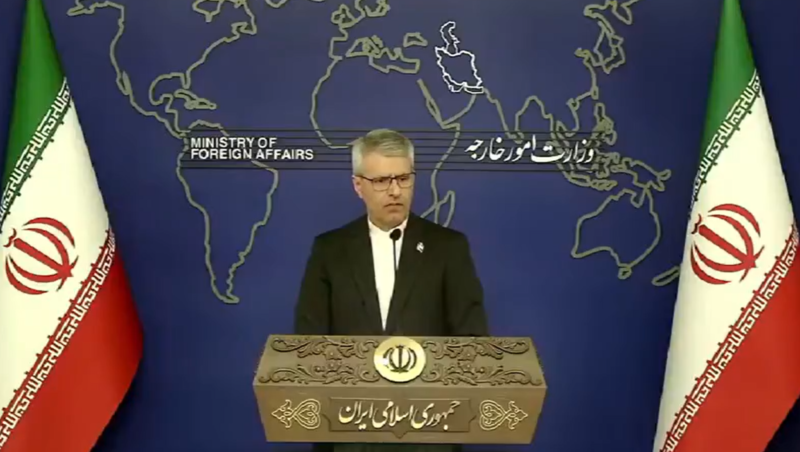
ADDIS ABABA — Ethiopia’s Ministry of Foreign Affairs issued a press statement on 5 October 2026 reaffirming its “legitimate interests” in the Blue Nile and the Red Sea, rejecting what it described as “political rhetoric, coercive measures, or acts of destabilization.”
The statement said “virtually all of the Blue Nile originates in the Ethiopian highlands,” contributing about 85 percent of the Nile’s total flow, and that “any discussion concerning the utilization and management of the Abay River should be informed by these fundamental realities.”
On the Red Sea, the ministry said Ethiopia remains “geographically and historically connected” to the maritime body, with its nearest border “barely 30 miles from the coast.” It argued that “any serious discussion of regional maritime affairs and security architecture must account for Ethiopia’s legitimate interests.”
“These geographic and historical realities cannot be altered by political rhetoric, coercive measures, or acts of destabilization,” the statement said. “Actions taken through proxies or acts of aggression will not change the facts on the ground, nor will they diminish Ethiopia’s legitimate interests, role, and responsibilities in the region.”
Response to the Alamein Summit
The Ethiopian statement came a day after a four-way summit in New Alamein, Egypt, involving Egyptian President Abdel Fattah El-Sisi, Eritrean President Isaias Afwerki, Somali President Hassan Sheikh Mohamud, and Sudanese Transitional Sovereignty Council Chairman Abdel Fattah al-Burhan.
The four leaders issued a joint declaration reaffirming respect for sovereignty and territorial integrity, rejecting interference in the internal affairs of regional states, and stating that the management of the Red Sea is a responsibility exclusive to its littoral states. The declaration also rejected “any unilateral measures that negatively affect current water use in the downstream countries of the Nile.”
Ethiopia did not specifically mention the summit or the Grand Ethiopian Renaissance Dam in its statement, but the timing and language appeared to respond directly to the four-nation declaration.
Deteriorating Regional Relations
The statement comes amid a sharp deterioration in Ethiopia’s relations with Egypt and Eritrea. On 1 October 2026, Ethiopia closed its embassy in Asmara and declared ten Eritrean diplomats “persona non grata,” accusing them of activities threatening Ethiopia’s national security. Eritrea severed diplomatic relations in response, and Egypt and Ethiopia expelled each other’s diplomats.
Ethiopia’s army chief has accused Eritrea, Sudan, and Egypt of supporting the TPLF-led rebel alliance that launched a renewed offensive in northern Ethiopia in late September. As reported in FTL Somalia’s coverage of the rebel alliance, the coalition includes the Tigray People’s Liberation Front, the Fano militia, and the Oromo Liberation Army, and has seized airports in Mekelle, Axum, and Shire.
Ethiopia and Eritrea fought a devastating war from 2020 to 2022, and relations deteriorated after the Pretoria Agreement excluded Eritrea from negotiations and called for the withdrawal of Eritrean forces from Tigray. Prime Minister Abiy Ahmed’s repeated demands for Red Sea access, including a naval base, have further inflamed tensions with Asmara. As reported in FTL Somalia’s coverage of the US sanctions decision, Washington has signaled its opposition to any forceful Ethiopian acquisition of sea access while lifting sanctions on Eritrea in September 2026, a move analysts linked to Washington’s interest in securing Red Sea access through a recognized state.
The regional escalation has also drawn in Somalia, where Ethiopia’s reported withdrawal of more than 3,000 troops from South West State creates a security gap. As detailed in FTL Somalia’s analysis of the withdrawal, Ethiopia has been a major troop contributor to the African Union mission, and its forces have operated in key areas of southern and central Somalia for years. President Hassan Sheikh Mohamud recently held talks with El-Sisi in Alamein, where the two leaders discussed strengthening coordination on Red Sea security and agreed on the importance of continued consultation among regional states, as reported in FTL Somalia’s coverage of the meeting.
Critical Note
Ethiopia’s press statement is a measured but firm response to a regional alignment that is increasingly arrayed against it. The four-nation Alamein Declaration formalizes cooperation among Egypt, Eritrea, Sudan, and Somalia on issues that directly affect Ethiopia’s core interests: the Nile, Red Sea governance, and the war in Sudan. Ethiopia’s decision to frame its position in geographic and historical terms, rather than engaging with the specific provisions of the declaration, suggests a desire to avoid direct confrontation while making clear that it will not accept external constraints on its use of the Blue Nile or its claims to Red Sea access.
The statement’s reference to “proxy actions” and “acts of aggression” reflects Ethiopia’s assessment that its neighbors are actively supporting rebel groups fighting to destabilize the government. The allegations are denied by Egypt and Eritrea, but the diplomatic expulsions and the severing of relations between Addis Ababa and Asmara have created a new level of regional fragmentation.
For Somalia, the statement underscores the difficulty of its position. Mogadishu has aligned itself with a bloc that is openly opposed to Ethiopia, its largest neighbor and a fellow contributor to the African Union mission on Somali soil. Ethiopia’s reported withdrawal of 3,000 troops from South West State creates a security gap that Somali forces may struggle to fill, while the diplomatic confrontation with Egypt and Eritrea adds to the uncertainty. The coming weeks will test whether Somalia can manage its relationships with both sides without becoming a proxy battleground in a wider regional confrontation.
Recommended Reading On ftlsomalia.com
- Ethiopia’s Troop Withdrawal and the Egypt-Eritrea Alignment: What It Means for Somalia
- President Hassan Sheikh Visits Addis Ababa as Ethiopia Faces Renewed Rebel Alliance
- ONLF Joins Seven-Group Ethiopian Alliance Against Abiy Government
- US Sanctions Move Elevates Eritrea as Strategic Red Sea Partner
- President Hassan Sheikh Meets El-Sisi in Alamein as Regional Coordination Tops Agenda