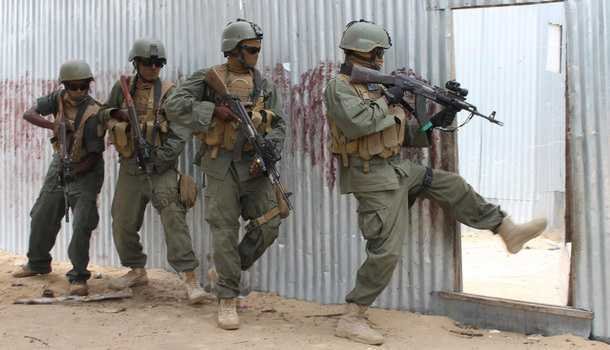
MOGADISHU — Ethiopia is planning to withdraw more than 3,000 troops from Somalia as renewed fighting in its northern Tigray region forces Prime Minister Abiy Ahmed’s government to redirect military resources toward a widening internal conflict, according to a Bloomberg report citing people familiar with the matter.
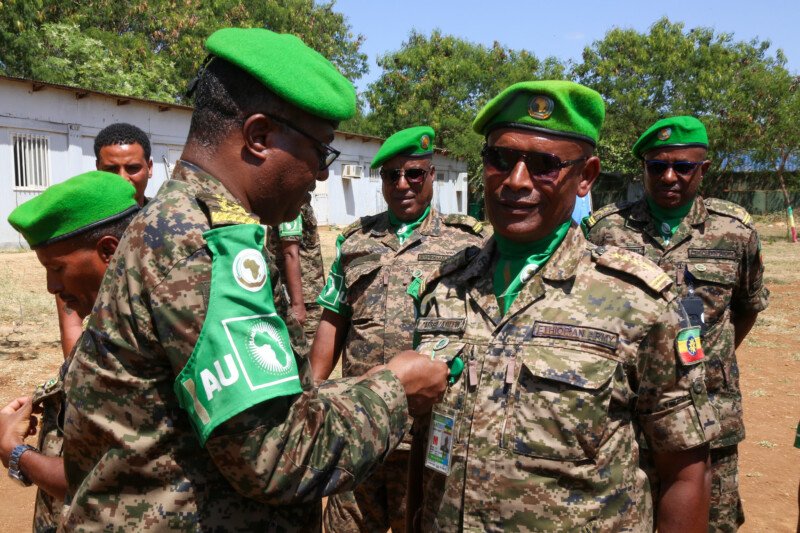
The troops could begin leaving in the coming days or weeks, the sources said, speaking on condition of anonymity because they were not authorized to speak to the media. It remains unclear whether the withdrawal would affect Ethiopian forces serving under the African Union Support and Stabilization Mission in Somalia (AUSSOM), troops deployed under separate bilateral security arrangements, or both.
A Somali defence ministry official said Mogadishu had not been informed by Addis Ababa of any plan to withdraw its forces. “Ethiopia has not informed us of any plan to withdraw its troops from Somalia. If they tell us that, we will let you know,” the official said.
Neither Ethiopia, Somalia nor the African Union has publicly announced a change to Ethiopia’s current deployment in Somalia. The reported plan therefore leaves several questions unresolved, including how many troops would leave, which deployments would be affected and whether other Somali or AUSSOM forces would replace them.
The Tigray Conflict and Rebel Alliance
The reported withdrawal comes as Ethiopia faces its most serious internal security challenge since the 2020-2022 Tigray war. On September 20, seven armed groups announced the formation of the Ethiopian Peoples’ Forces Alliance for Survival, a coalition aimed at removing Prime Minister Abiy Ahmed’s government.
The alliance brings together the Tigray People’s Liberation Front (TPLF), the Amhara Fano militia, the Oromo Liberation Army (OLA) and four smaller groupings spanning half of Ethiopia’s twelve regional states. The groups accuse the government of presiding over “war, genocide, mass destruction and utter poverty,” claiming Ethiopia is at risk of disintegration.
Three days after the alliance was announced, Tigrayan forces seized airports in Mekelle, Axum and Shire, prompting Ethiopian Airlines to suspend flights to all three cities. Fighting has since spread into parts of Tigray, Amhara and Afar, with the Ethiopian National Defense Forces reportedly retaking the strategic town of Alamata on September 28.
Médecins Sans Frontières has reported treating at least 720 wounded people in hospitals it supports in the region. At least 150,000 people have been displaced in Afar, and telecommunications across Tigray remain severely disrupted.
South West State: Ethiopia’s Primary Deployment
The bulk of Ethiopian forces in Somalia are stationed in South West State, where they operate under AUSSOM’s Sector 3 command. Ethiopian troops have been based in Baidoa, the regional capital, and at forward operating bases across the Bay and Bakool regions for years.
Ethiopian forces have played a critical role in defending Baidoa against Al-Shabaab attacks. In June 2025, Ethiopian troops under AUSSOM provided vital support to Somali security forces and South West Darawish troops in repelling a coordinated Al-Shabaab assault on the Bay Durjed Forward Operating Base, located 12 km east of Baidoa, as reported in FTL Somalia’s coverage of the attack.
But Baidoa is also the centre of an ongoing political and armed conflict that has complicated Ethiopia’s position. Federal forces took control of the city on March 30, 2026, after former South West State President Abdiaziz Hassan Mohamed Laftagareen opposed Mogadishu’s constitutional reforms. Laftagareen resigned, and Sheikh Adan Mohamed Nur Madobe was elected to replace him. But Laftagareen’s loyalists have continued to launch attacks on Baidoa, most recently on Monday, when heavy fighting erupted between federal forces and militias loyal to the former president.
Ethiopia has maintained a posture of strict neutrality in the Baidoa conflict, declining to intervene on behalf of either side. As detailed in FTL Somalia’s analysis of the Addis Ababa talks, Somalia has sought active Ethiopian National Defense Force participation in the defence of Baidoa, arguing that Laftagareen-aligned forces are coordinating with Al-Shabaab. Ethiopia has treated that claim as a brief rather than a verified finding, maintaining its distinction between Al-Shabaab as the common enemy and Somali factional war as a separate matter.
Previous Withdrawals and Security Gaps
Ethiopia has previously withdrawn troops from Somalia during periods of intense fighting at home, including during the Tigray war that began in 2020. More recently, Ethiopian forces handed over the Buurhakaba forward operating base to the Somali National Army’s 60th Division in August 2026, after nearly 12 years of occupation, as part of the ongoing transition to Somali security responsibility.
The base is strategically important because of its location along the road linking Baidoa and Mogadishu, an area that has been a focus of military operations against Al-Shabaab. The withdrawal raised questions about whether Somali troops can independently secure strategic areas where foreign forces have maintained a presence for years.
AUSSOM has said Ethiopian troops serving in Sector 4 completed a rotation earlier this month, with new personnel replacing soldiers who had served a three-year deployment in Beletweyne and Halgan.
Critical Note
The reported Ethiopian troop withdrawal presents Somalia with a significant strategic challenge at a moment when the country is already navigating a fragile security transition. Ethiopia has been one of the largest contributors to African Union peacekeeping operations in Somalia, and its forces have operated in key areas of southern and central Somalia for years. If more than 3,000 troops leave, the burden of filling those security gaps will fall on an already stretched Somali National Army and other AUSSOM contributors.
The concentration of Ethiopian forces in South West State makes the reported withdrawal particularly consequential. Baidoa is both a major humanitarian hub and the centre of an unresolved political conflict. Ethiopian troops have provided critical defensive support against Al-Shabaab in the region, but they have also maintained a careful neutrality in the Baidoa dispute. If those forces leave, Al-Shabaab may seek to exploit the vacuum, and the federal government may find itself without the military backing it has sought for the city’s defence.
The lack of official notification from Addis Ababa to Mogadishu is concerning. If Bloomberg’s reporting is accurate, Ethiopia appears to be planning a major strategic adjustment without consulting its Somali counterpart. That would be a departure from the bilateral engagement that the two governments have publicly emphasized in recent months, including the Ankara Declaration framework and the meeting between President Mohamud and Prime Minister Abiy this week.
What is clear is that Ethiopia’s internal crisis has become a factor in Somalia’s security equation. Somalia cannot control the internal dynamics that drive Addis Ababa’s military planning, but it can prepare for the consequences. The question is whether Mogadishu has a contingency plan for the withdrawal of a major security partner, or whether it will be forced to improvise as events unfold.