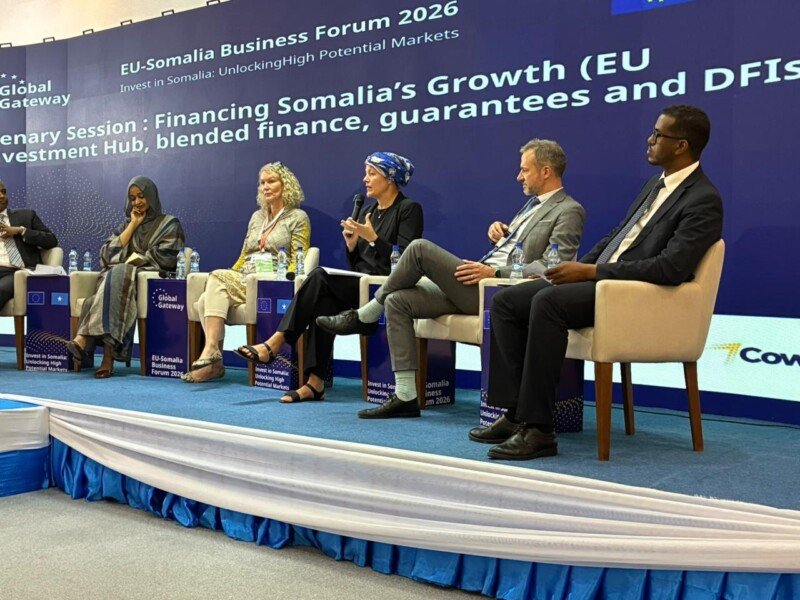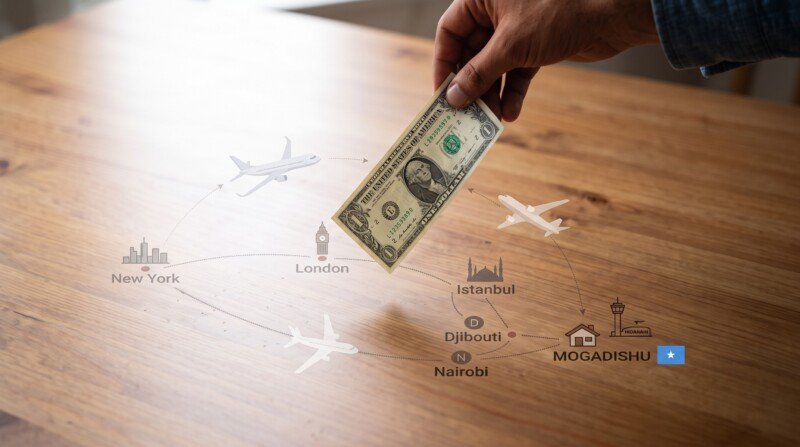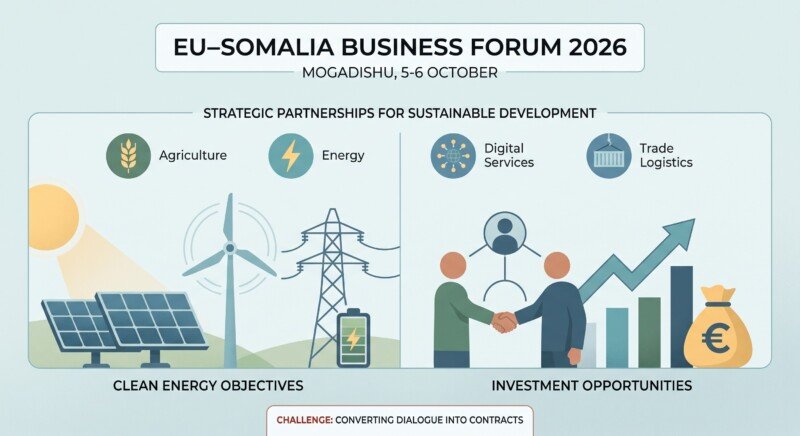
MOGADISHU — The EU–Somalia Business Forum 2026 is set to convene in Mogadishu on 5-6 October, bringing together Somali enterprises and European investors to explore partnerships in Somalia’s growing energy sector, with a focus on expanding access to clean and affordable energy.
The forum, organized by the European Union Delegation in Somalia in collaboration with the Ministry of Commerce and Industry, will focus on four strategic sectors: agriculture, energy, digital services, and trade logistics. Under the theme “#InvestInSomalia: Unlocking High-Potential Markets,” the event aims to strengthen Somalia’s investment ecosystem and foster regional trade integration.
Energy is a central pillar of the forum’s agenda. Discussions will focus on renewable energy, solar mini-grids, utility-scale renewables, clean cooking solutions, and energy services for productive uses. The forum will present investment opportunities in these areas while connecting EU companies with Somali firms, sector associations, and government institutions.
Somalia’s Energy Access Challenge
Somalia faces significant energy access challenges. According to the World Bank’s 2025 Multi-Tier Framework Survey, 71 percent of households report access to electricity, but only 21 percent receive more than eight hours of supply per day, limiting productivity and resilience, as detailed in FTL Somalia’s coverage of the World Bank report. With nearly all electricity generation diesel-based, global fuel price increases quickly translate into higher domestic inflation, production costs, and household expenses, disproportionately affecting poorer households.
Somalia has set ambitious targets under its National Transformation Plan, pledging to expand electricity coverage from 69.1 percent to 80 percent and cut electricity costs by half nationwide. As reported in FTL Somalia’s coverage of the National Transformation Plan, the plan positions sustainable energy as a cornerstone of national development.
The European Union has consistently supported Somalia’s energy sector through initiatives such as the €40.5 million Green Energy and Economic Development (GEED) Programme, co-financed by German Cooperation, which aims to increase access to renewable energy for Somali households and businesses. As detailed in FTL Somalia’s coverage of the GEED programme, the initiative focuses on strengthening access to clean, affordable energy and de-risking private investment.
The forum aims to address these challenges by showcasing financing pathways, including blended finance, guarantees, and partnerships with EU development finance institutions. It will also facilitate business-to-business matchmaking and early-stage pipeline development ahead of future investment missions.
Recent developments underscore the momentum in Somalia’s energy sector. The African Development Fund has approved $23.36 million to establish clean and stable electricity services in Bosaso, as reported in FTL Somalia’s coverage of the Bosaso project. The initiative will implement additional solar generation capabilities, extend the distribution network, and deploy advanced meters to assist households in monitoring energy consumption.
Somalia’s energy minister has also committed to cutting the country’s reliance on imported fuel from 85 percent to 50 percent within three years, with the remaining half sourced from solar energy. As reported in FTL Somalia’s coverage of the solar transition plan, the government has framed the shift as essential for economic development and climate resilience.
“Reliable, affordable energy can help Somali businesses grow,” the Ministry of Commerce and Industry said in a statement announcing the forum. “Somali enterprises and European investors will explore partnerships that can expand access to clean energy, support businesses and unlock investment across Somalia’s growing energy sector.”
Critical Note
The EU–Somalia Business Forum’s focus on energy reflects a recognition that access to reliable and affordable electricity is a foundational constraint on Somalia’s economic development. Businesses cannot grow, industries cannot expand, and households cannot improve their living standards without dependable power. The forum’s emphasis on renewable energy and mini-grids is appropriate given Somalia’s abundant solar resources and the absence of a national grid.
However, the gap between investment forums and actual implementation remains wide. The energy sector has seen numerous announcements and commitments in recent years, but the pace of delivery has been slow. The World Bank’s finding that only 21 percent of households receive more than eight hours of electricity daily underscores the scale of the challenge. The EU’s GEED programme and the African Development Fund’s Bosaso project are positive steps, but they represent a fraction of what is needed to transform Somalia’s energy landscape.
The challenge for the forum is not identifying opportunities, which are well documented, but converting dialogue into signed contracts and operational projects. The EU’s role as a convener and financier is important, but it cannot substitute for domestic policy reforms and institutional capacity. Somalia’s energy sector remains fragmented across federal and regional authorities, and regulatory frameworks are still developing. Without a coordinated national approach to energy planning, investment incentives, and tariff regulation, even well-financed projects risk being undermined by political and administrative obstacles. The forum is a necessary platform, but its success will be measured by what gets built, not what gets discussed.
Recommended Reading On ftlsomalia.com
- World Bank: Only 21% of Somali households receive more than eight hours of electricity daily
- Somalia Targets 80% Electricity Coverage Under National Transformation Plan
- Planning Ministry, EU and German partners review progress of GEED green energy programme
- Bosaso to Benefit from $23 Million African Development Fund Clean Energy Grant
- Somalia Sets Ambitious Course Toward Solar-Powered Future
- Somali Innovators Shine Spotlight on Clean Energy at Landmark Conference