MOGADISHU — The Federal Government of Somalia has officially concluded the mandate of the United Nations Human Rights Office in Somalia, which operated under the UN Transition Mission in Somalia (UNTMIS) Human Rights and Protection Group, transferring full responsibility for human rights matters to national institutions.
The handover followed a series of national and international consultations, including meetings held in Mogadishu, Geneva, and New York. The process was led by Ambassador Khadija Mohamed Al-Makhzoumi, Minister of Family and Human Rights Development, and involved ministry management, directors, advisers, experts, and Somali staff.
The government stated that the transition was based on Somalia’s progress in human rights, government decisions, and the strengthening of the National Independent Human Rights Commission (NIHRC). The National Human Rights Conference held in March 2025 was also cited as having contributed to the development of a national vision for human rights protection.
A Phased Transition Rooted in National Ownership
The closure of the UN human rights office is the culmination of a process outlined in the Somalia Human Rights Transition Plan for 2025–2026, which was designed as a binding framework aligned with UN Human Rights Council Resolution HRC60/L.14. The plan set out the operational responsibilities of the federal government during the transition period, beginning with the conclusion of the mandate of the UN Independent Expert on Human Rights in Somalia in October 2025 and culminating in the phased withdrawal of the UNTMIS Human Rights and Protection Group by October 2026.
UNTMIS succeeded the UN Assistance Mission in Somalia on November 1, 2024, in line with UN Security Council Resolution 2753, and operates under a two-year sunset clause scheduled to conclude by October 31, 2026. The transition is structured in two phases. Phase One prioritized support and capacity building in state-building, human rights, rule of law, and security sector support. Phase Two involves the progressive transfer of all remaining functions to the Federal Government and the UN Country Team.
Under the transition plan, UNTMIS has provided technical assistance to legislative and policy development, capacity development, and outreach activities to the Ministry of Family and Human Rights Development, the NIHRC, and Somali security forces. Mentoring and training on human rights and protection for the Somali National Army and Somali Police Force were transferred by June 2026. In collaboration with the NIHRC, UNTMIS continued to provide capacity development and policy guidance to strengthen networks and facilitate dialogue between government and civil society until September 2026.
The Federal Government requested that human rights and protection monitoring and reporting continue until October 2026, with the conduct of these activities supported by the Joint Human Rights Programme Phase II. A third programme is being prepared by the Ministry of Family and Human Rights Development.
The National Human Rights Commission and Its Mandate
At the center of Somalia’s new human rights architecture is the NIHRC, established under Article 111B of the Provisional Constitution and the National Human Rights Commission Establishment Law signed in August 2016. The Commission is mandated to promote respect for human rights, protect and develop human rights, monitor and assess the observance of human rights, investigate allegations of violations, and take steps to secure appropriate redress.
Dr. Maryan Qasim was elected as the first chairperson of the Commission in February 2026, marking a significant step toward national ownership of human rights oversight. The Commission has been building its operational capacity, including a week-long capacity-building workshop in April 2026 that brought together Commission members and experts from the United Nations and regional human rights institutions.
The Commission’s mandate includes the power to summon individuals, hear and resolve complaints through mediation and conciliation, request information from government institutions, conduct investigations, and access premises with a court order if necessary.
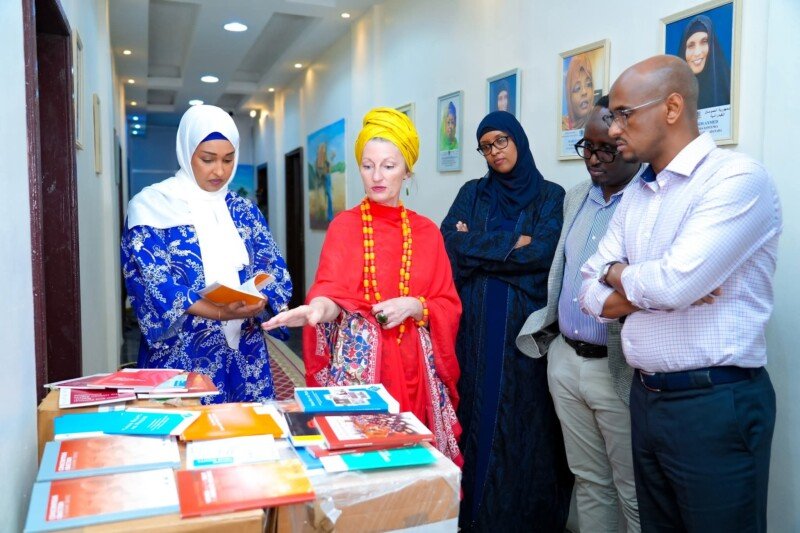
The Commission and the European Union have agreed to deepen their cooperation on human rights, accountability, and governance, with discussions focused on broadening support for the Commission’s activities and improving its institutional capacity.
The Road Ahead
The closure of the UN human rights office is not viewed as an end to human rights support and work, but rather as a new phase in which Somali institutions take direct responsibility for protecting, promoting, and advocating for citizens’ rights.
This new phase requires strengthening institutions, accountability, the rule of law, and fulfilling constitutional and international obligations related to human rights. The United Nations has pledged to continue supporting the Commission following the departure of UNTMIS, though the nature and scope of that support remain to be determined.
Critical Note
The conclusion of the UN human rights office and the transfer of responsibilities to Somali institutions represents a significant milestone in Somalia’s state-building trajectory. The transition plan was carefully sequenced, with capacity-building and mentoring designed to prepare national institutions for the handover. The NIHRC has been established with a strong constitutional mandate and has begun building its operational capacity under Dr. Maryan Qasim’s leadership.
Yet the scale of the challenge should not be underestimated. Somalia’s human rights landscape remains deeply concerning. The country continues to face a protracted conflict with Al-Shabaab, and civic space has been classified as “repressed” by the CIVICUS Civic Space Monitor. Journalists face arbitrary arrests, harassment, and prosecution under vague provisions of the Penal Code and Anti-Terrorism Law. Human rights defenders operate under sustained pressure, and impunity for violations remains widespread.
For the NIHRC to succeed as an independent oversight body, it will need sustained political support, adequate resources, and the freedom to operate without interference. The Commission’s ability to investigate violations, access information, and hold institutions accountable will be the true measure of whether this transition delivers on its promise. The international community, while stepping back from direct monitoring, should continue to support Somali institutions and advocate for a human rights environment where independent voices can operate freely.