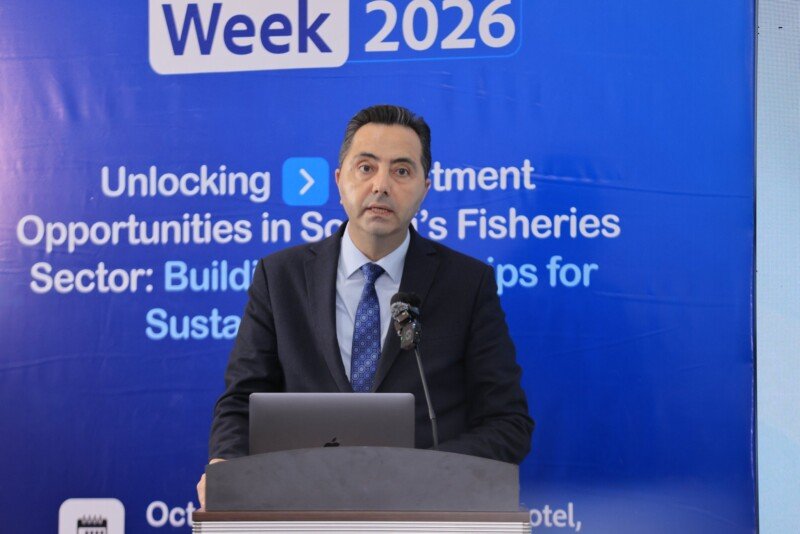
MOGADISHU, A Turkish research and fishing vessel is on its way to Somalia to support the development of local fisheries, Ambassador Ferhat Alkan announced during Somali National Fisheries Week 2026 in Mogadishu, as Ankara reaffirmed its commitment to Somalia’s blue economy as a core component of its strategic partnership.
According to the Turkish Embassy, the vessel had set sail for Somalia to provide “active support for the development of local fisheries and fishing infrastructure.” He emphasized that Türkiye stands by Somalia “in every field as a reliable and long-term strategic partner,” reiterating Ankara’s commitment to supporting Somalia’s national priorities through partnerships, comprehensive cooperation, and capacity building.
The local report describes the vessel as combining maritime research with fishing operations, and says its arrival is expected to improve the skills of Somali fishermen and strengthen the maritime-dependent economy.
A Partnership Beyond Fishing
The announcement was made at an event that brought together the Ministry of Fisheries and Blue Economy, international partners, and private companies, including SomTürk, the joint venture between the Somali Fisheries Company and Türkiye’s OYAK Group. Alkan praised the Ministry, led by Minister Ahmed Hassan Aden, and the sponsors for the event’s success.
SomTürk holds exclusive authority over fisheries licensing in Somalia’s Exclusive Economic Zone, an arrangement that was intended to combat illegal, unreported, and unregulated fishing and strengthen maritime surveillance capacity, as reported in FTL Somalia’s coverage of the joint venture.
The arrangement has not gone unchallenged. Puntland issued a formal statement in July 2026 rejecting any Turkish maritime operations off its coastline, barring SomTürk from conducting fishing activities within Puntland’s territorial waters without prior approval, as reported in FTL Somalia’s coverage of the dispute.
Türkiye’s engagement in Somalia extends far beyond fisheries. Turkish firms manage Mogadishu’s port and airport, Turkish forces train Somali troops, and Ankara has signed defense and economic agreements that give it a significant stake in Somalia’s maritime domain.
The Challenges the Vessel Cannot Solve
The local report is more sober about the sector’s problems. Somalia has a long coastline and rich marine resources, but the development of its fisheries is constrained by the need for modern equipment, technical training, production infrastructure, and better commercial markets.
The sector contributes only an estimated 2 to 3 percent of GDP, and illegal fishing by foreign vessels continues to deplete the Exclusive Economic Zone. Local fishermen lack access to finance, cold storage, and processing facilities. The Director General of the Ministry of Fisheries and Blue Economy, Abdi Dirshe, has said the sector could generate billions of dollars annually if managed effectively, as reported in FTL Somalia’s coverage of the sector’s potential.
The arrival of a single vessel, however welcome, does not address those structural gaps. As reported in FTL Somalia’s coverage of other fisheries initiatives, Japan and the FAO have also launched projects aimed at revitalizing the sector, focusing on sustainable management and job creation. The challenge is not a lack of interest from international partners. It is the absence of the infrastructure and governance that would allow that interest to translate into durable gains.
Critical Note
The deployment of a Turkish research and fishing vessel is a visible, tangible step in the Türkiye-Somalia partnership. It is more than a diplomatic gesture: the vessel will conduct research and provide training, and its presence signals Ankara’s continued investment in Somalia’s maritime sector. Ambassador Alkan’s presence at Fisheries Week, and his praise for Minister Aden and SomTürk, reinforce the message that Türkiye is committed to the blue economy as a pillar of the relationship.
But the vessel is not a solution to the structural problems the sector faces. Somalia needs a functioning regulatory framework for fisheries, cold chain infrastructure, processing facilities, and access to markets. It needs to combat illegal fishing and enforce its maritime laws. It needs to resolve the political dispute with Puntland over licensing authority, a dispute that has already led to the rejection of SomTürk’s operations off Puntland’s coast.
The Turkish vessel can help. It can train fishermen and conduct research. It cannot do the work that only the Somali state can do: build the institutions, enforce the rules, and create the conditions for sustainable investment. The partnership is real, and it is valuable. But it is not a substitute for Somali sovereignty over its own blue economy.
Recommended Reading On ftlsomalia.com
- Somalia Establishes Somtürk Fisheries Partnership with Turkey to Enhance Blue Economy
- Turkish Delegation Launches Blue Economy Committees as SOMTURK Faces Puntland Ban and Federal Tensions
- Somalia’s Blue Economy Holds Billion-Dollar Promise, Says DG Dirshe
- Japan and UN Join Forces to Revitalize Somalia’s Fisheries Sector