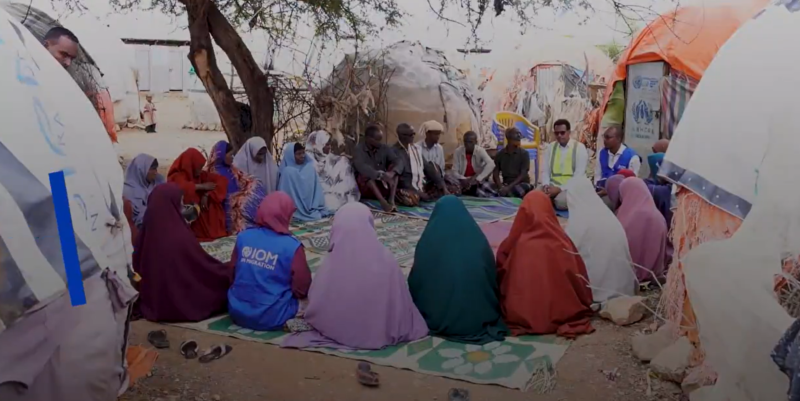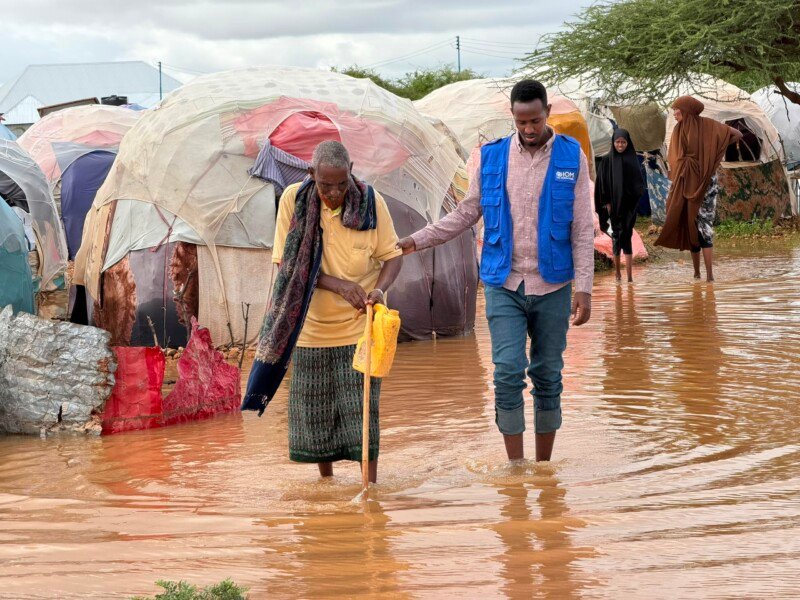
MOGADISHU — Heavy rainfall in Hudur district, in Somalia’s South West State, triggered flash floods on 14 October, affecting 37 displaced households across the Ato, Rabdhuure and Haluul displacement sites, according to the International Organization for Migration (IOM).
IOM’s Camp Coordination and Camp Management (CCCM) team assessed the impact of the floods, which included damaged shelters and destroyed household items. The team said it continues to monitor the situation.
A Localised Incident Within a National Crisis
The Hudur flash floods are a small but telling example of the wider crisis facing Somalia as the Deyr rainy season begins under Super El Niño conditions. The flooding in Hudur came on the same day that heavy rains submerged roads across Mogadishu, disrupting schools, businesses and transportation in the capital. As reported in FTL Somalia’s coverage of the Mogadishu floods, the capital experienced widespread disruption as the Deyr rains began.
The Somali Disaster Management Agency (SoDMA) has placed 29 districts across 14 regions on high alert for riverine and flash flooding, including Hudur and other areas in South West State. As detailed in FTL Somalia’s coverage of SoDMA’s warnings, the districts span riverine areas, coastal zones and regions with poor drainage infrastructure, many of which host large populations of internally displaced people living in low-lying settlements.
The coordination between government agencies and humanitarian partners has been intensified in recent days. As reported in FTL Somalia’s coverage of the SoDMA-UN meeting, SoDMA Commissioner Mahmoud Moallim Abdulle held talks with UN Humanitarian Coordinator George Conway and OCHA Head Crispen Rukasha on the humanitarian situation and preparedness for the risks of heavy rains and flooding linked to Super El Niño.
A Wider Pattern of Flooding and Displacement
The floods in Hudur are part of a documented pattern. In April 2026, flooding in Banadir region’s Dayniile district displaced approximately 4,068 individuals from 678 households, with low-lying IDP settlements disproportionately affected. The UNHCR assessment noted that the flooding caused secondary displacement, particularly affecting households previously displaced by conflict who were forced to move again due to climate shocks.
The Hudur incident follows the same pattern: displaced households, already vulnerable after fleeing conflict or drought, are now being displaced again by flooding.
Humanitarian Impact and Preparedness Gaps
The flooding comes as Somalia faces a projected humanitarian crisis of significant magnitude. As reported in FTL Somalia’s coverage of the humanitarian situation, the Integrated Food Security Phase Classification analysis projects that 5.4 million people will face crisis levels of hunger or worse between October and December 2026, including 1.5 million at emergency levels. Nearly 1.92 million under-five children will require treatment for acute malnutrition, including 433,000 with severe acute malnutrition.
IOM and other humanitarian agencies have been working to prepare for the anticipated El Niño floods. As reported in FTL Somalia’s coverage of the preparedness agreement, SoDMA has signed a two-year cooperation agreement with the World Food Programme to strengthen disaster preparedness and early warning systems. However, the response faces severe funding constraints. The 2026 Somalia Humanitarian Needs and Response Plan is only 15.2 percent funded.
IOM’s CCCM teams, which conducted the assessment in Hudur, play a critical role in managing displacement sites and coordinating services. The agency’s work in Somalia has included improving shelter, water and protection services for displaced communities, with more than 90,000 people accessing shelter support through a recent EU-funded project.
Critical Note
The flash floods in Hudur are a small-scale disaster in a country facing a much larger crisis. But they illustrate the compounding nature of Somalia’s humanitarian emergency: households already displaced by conflict or drought are now being displaced again by flooding.
The pattern is familiar and documented. In Dayniile in April, in Hudur in October, in Baidoa and Jowhar and Beledweyne repeatedly over years, the same communities are hit by the same shocks. They live in low-lying settlements, their shelters are constructed of sticks and plastic sheeting, and they have no capacity to absorb another blow.
The preparedness efforts by IOM, SoDMA and their partners are real, but the funding gap is stark. With the response plan only 15 percent funded and the flood season just beginning, the humanitarian system in Somalia is being asked to respond to a major crisis with a fraction of the resources it needs. The floods in Hudur affected 37 households. If the El Niño forecasts are correct, the next floods could affect hundreds of thousands.
Share your story. FTL Somalia is continuing to investigate flood preparedness and response across Somalia. If you have information or insights to share, contact us at info@ftlsomalia.com. Your identity will be protected.
Recommended Reading On ftlsomalia.com
- Heavy Rains Flood Mogadishu Roads, Disrupt Schools and Businesses
- SoDMA Urges 29 Districts Across 14 Regions to Prepare for Super El Niño Flooding
- UN Humanitarian Coordinator Meets SoDMA Chief as Somalia Braces for Severe Flooding
- OCHA Warns Baidoa Violence Deepens Humanitarian Crisis as Famine Risk Looms
- SoDMA and WFP Sign Two-Year Deal to Strengthen Somalia’s Disaster Preparedness