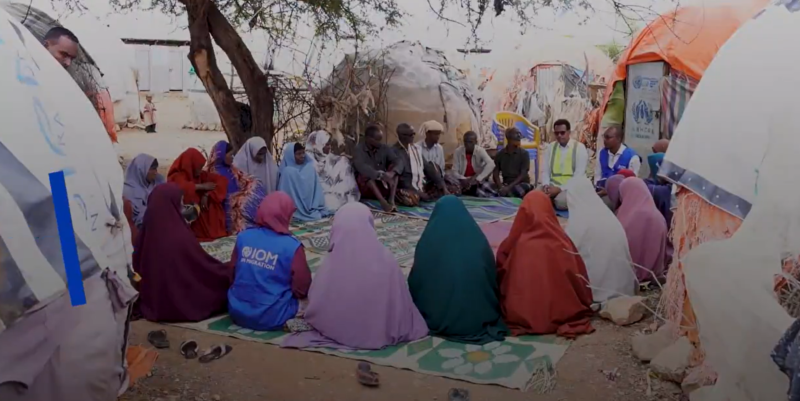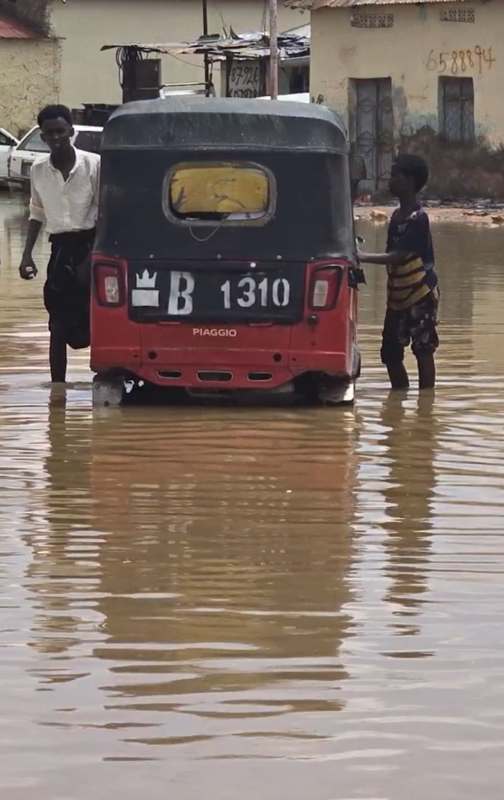
GAALKACYO, Torrential rains during October inundated extensive sections of Gaalkacyo, inflicting widespread destruction on civilian infrastructure and trapping vulnerable internally displaced persons within waterlogged settlements. The United Nations Office for the Coordination of Humanitarian Affairs (OCHA) reported that persistent downpours left standing pools across multiple quarters, cutting off mobility and compounding health hazards in an urban hub that remains chronically exposed to recurrent flash flooding.
Submerged Settlements and Infrastructure Damage
The downpours submerged primary thoroughfares, residential quarters, and makeshift shelters across the divided city, paralyzing local transport links and commercial activities. In low-lying displacement sites, stagnant floodwaters swamped communal facilities, collapsed latrines, and severed municipal water networks, drastically elevating the danger of waterborne epidemics including acute watery diarrhoea and cholera.
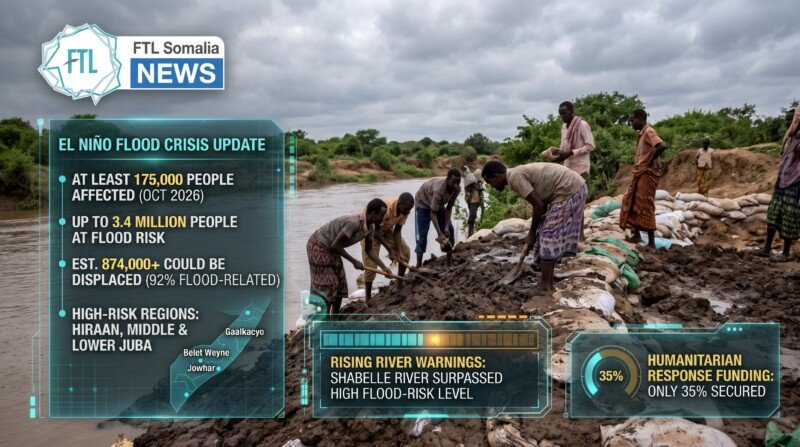
The destruction in Gaalkacyo mirrors a wider surge in climate emergencies across central and southern districts. Recent countrywide assessments confirmed that over 175,000 people were affected as El Niño floods hit Somalia, identifying Gaalkacyo alongside Abudwaq and Baidoa as the epicentres of recent destruction, with thousands of homes damaged or flattened.
Early warnings had placed local authorities on notice, as the disaster agency previously warned when SoDMA urged 29 districts across 14 regions to prepare for extreme seasonal downpours. The crisis has placed enormous strain on relief agencies, particularly after IOM warned 874,000 could be displaced nationwide if early mitigation measures failed to receive adequate emergency funding.
Drainage Bottlenecks and Recurring Vulnerability
Gaalkacyo has suffered repeated inundations during successive Deyr and Gu rainy seasons. The absence of an engineered municipal drainage network, combined with rapid, unplanned urban expansion, ensures that even brief torrential bursts overwhelm open natural channels and submerge informal settlements located in depression zones.
Local relief committees noted that displaced families, many of whom previously fled severe rural drought and localized clan clashes, now face secondary displacement as water levels refuse to recede. Similar patterns emerged in northern areas when flooding displaced residents in Godob-yar village, demonstrating how localized flash deluges consistently outpace rudimentary regional containment capacities.
FTL Critical Note
The recurring inundation of Gaalkacyo exposes a chronic failure of urban governance and municipal planning that extends far beyond unseasonable weather patterns. For years, regional administrations in Mudug have treated seasonal flash floods as unexpected humanitarian emergencies rather than predictable hydrological events, relying on international non-governmental organisations to deploy temporary water pumps and emergency rations instead of investing in permanent civil engineering solutions.
While international humanitarian appeals frequently highlight emergency funding shortfalls, local municipal authorities bear direct responsibility for allowing informal settlements to expand into known flood runoff corridors without basic storm drains or waste management systems. Until municipal leaders prioritize comprehensive civil infrastructure over ad hoc emergency appeals, Gaalkacyo’s most impoverished residents will remain trapped in an unending cycle of flooding, displacement, and disease.
Recommended Reading On ftlsomalia.com
- 175,000 Affected as El Niño Floods Hit Somalia, With 3.4 Million at Risk
- IOM Warns 874,000 Could Be Displaced as Floods Threaten Somalia
- SoDMA Urges 29 Districts Across 14 Regions to Prepare for Super El Niño Flooding
- Flooding Displaces Residents in Godob-yar Village as El Niño Rains Begin in Puntland
- Flash Floods in Hudur Affect 37 Displaced Households as El Niño Rains Begin
- Deputy PM Chairs Ministerial Meeting as Government Approves National El Niño Preparedness Plan