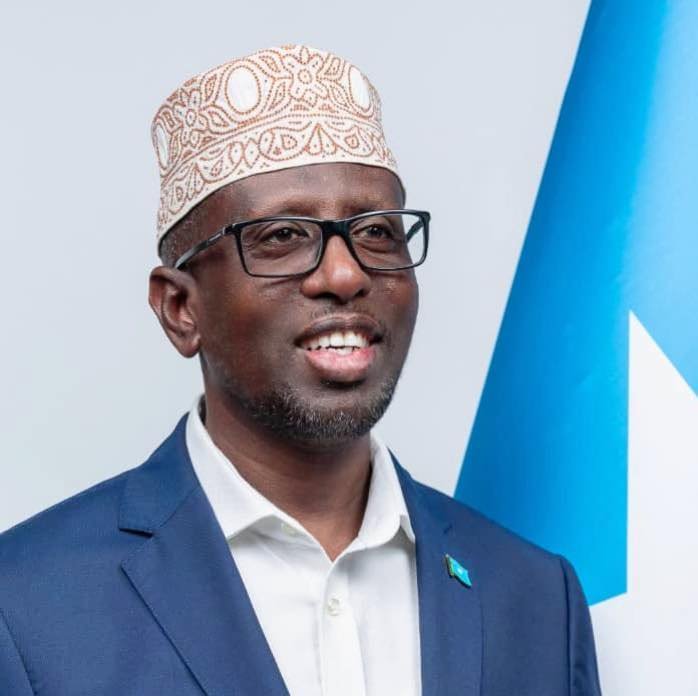
MOGADISHU — Former Somali President Sharif Sheikh Ahmed issued a formal statement on Wednesday warning that the country’s political crisis cannot be resolved through force or unilateral measures, calling instead for dialogue, national consensus, and adherence to the constitutional rules governing Somalia’s political transition.
In the statement dated October 8, 2026, Sharif Sheikh Ahmed said every constitutional or electoral milestone must be clear, specific, and acceptable to the political forces, Federal Member States, and the Somali people. He called on the government to establish and publicly communicate a clear and credible timetable for the electoral process.
Demands for Electoral Clarity
The former president posed a series of questions he said the Somali people have the right to know: When will elections be held? What are the key stages and processes preceding them? What safeguards will ensure their integrity? And how will political forces and Federal Member States participate?
“The country cannot remain hostage to political uncertainty, nor should constitutional obligations be used as tools in the struggle for political power,” Sharif Sheikh Ahmed said.
His intervention comes amid a prolonged dispute over Somalia’s electoral framework and the constitutional mandate of current institutions. As detailed in FTL Somalia’s coverage of the collapsed election talks, negotiations between the federal government and the Somali Future Council broke down in May 2026, with the opposition declaring it no longer recognized President Hassan Sheikh Mohamud’s authority after his four-year term expired under the 2012 Provisional Constitution.
Rejection of Force and Political Repression
Sharif Sheikh Ahmed categorically rejected the use of threatening rhetoric, the threat of force, or military mobilization against political opposition groups.
“Political disagreement is not a crime,” he said. “The opposition is not an enemy of the state, and political competition must never be allowed to turn into a security or military confrontation.”
He warned that the use of state institutions or security forces to exert pressure on political opponents risks undermining Somalia’s unity and stability, and that national forces and the Somali people would confront any attempt to drag the country toward chaos or authoritarianism through all legitimate political, legal, constitutional, and peaceful means.
The warning carries particular weight given the precedent in South West State, where the federal government’s confrontation with former President Abdiaziz Hassan Mohamed Laftagareen eventually developed into armed conflict. As reported in analysis of the Baidoa crisis, the federal intervention was presented by Mogadishu as necessary to restore stability, while Laftagareen’s supporters described it as an attempt to impose a political outcome on the state.
Call for National Front
Sharif Sheikh Ahmed called on all Somali national forces, political, social, federal, and civil, to work toward building a broad and united national front to save Somalia. Such a front, he said, should target no one and seek to exclude no one, but should work to protect the state, safeguard the constitution, complete the democratic transition, achieve national reconciliation, and create conditions necessary for development and rebuilding state institutions.
“Saving Somalia will not come from outside, nor will it be achieved through internal conflict or the use of force against political opponents,” he said. “It must be achieved by Somalis themselves, through consensus, dialogue, participation, and national responsibility.”
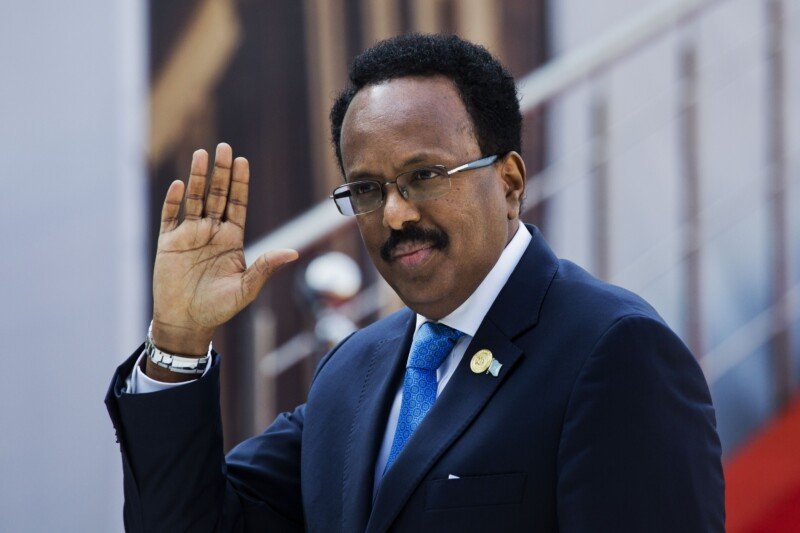
The call echoes similar appeals from other political figures. As reported in coverage of former President Mohamed Abdullahi Farmaajo’s open letter, Farmaajo urged President Mohamud in September 2026 to open an inclusive national dialogue, warning that widening disputes over the constitution, federalism, and political mandates risk further destabilizing the country.
Sharif Sheikh Ahmed’s statement noted that Somalia faces major security, economic, and social challenges, while the wider region experiences successive security and political upheavals. He said the national priority should be to unite efforts to confront these challenges rather than distract public attention with political side battles. He called on the government to address livelihood concerns, improve economic conditions, create employment opportunities, combat corruption, improve public services, and strengthen security.
Critical Note
Sharif Sheikh Ahmed’s statement is a significant intervention from a former head of state whose political weight extends beyond the current opposition coalition. As president from 2009 to 2012, he led Somalia’s Transitional Federal Government through a period of intense conflict and laid groundwork for the federal system that exists today. His decision to speak now, as constitutional deadlines approach and opposition to the government’s electoral framework hardens, adds a distinct voice to the pressure on Mogadishu.
His statement is notable for what it does not do. It does not endorse the opposition’s position that the president’s mandate has expired. It does not call for the government’s removal. Instead, it frames the crisis as a dispute over rules and process, and demands that the government clarify the electoral timetable. This framing leaves room for negotiation in a way that more confrontational opposition statements have not.
But statements alone do not resolve political crises. The government has consistently framed its constitutional amendments and electoral plans as necessary to complete Somalia’s transition and introduce direct elections. It has rejected opposition demands as attempts to delay the process. Whether Sharif Sheikh Ahmed’s intervention, and similar appeals from figures like Farmaajo, can create enough pressure to force a negotiated settlement, or whether they will remain isolated statements in an increasingly polarized landscape, remains the central question.