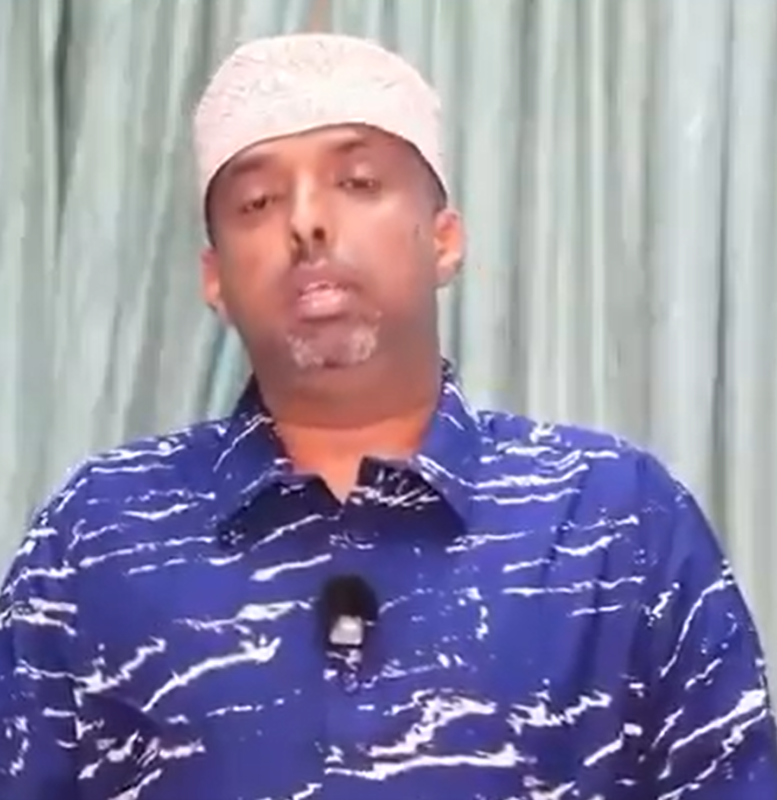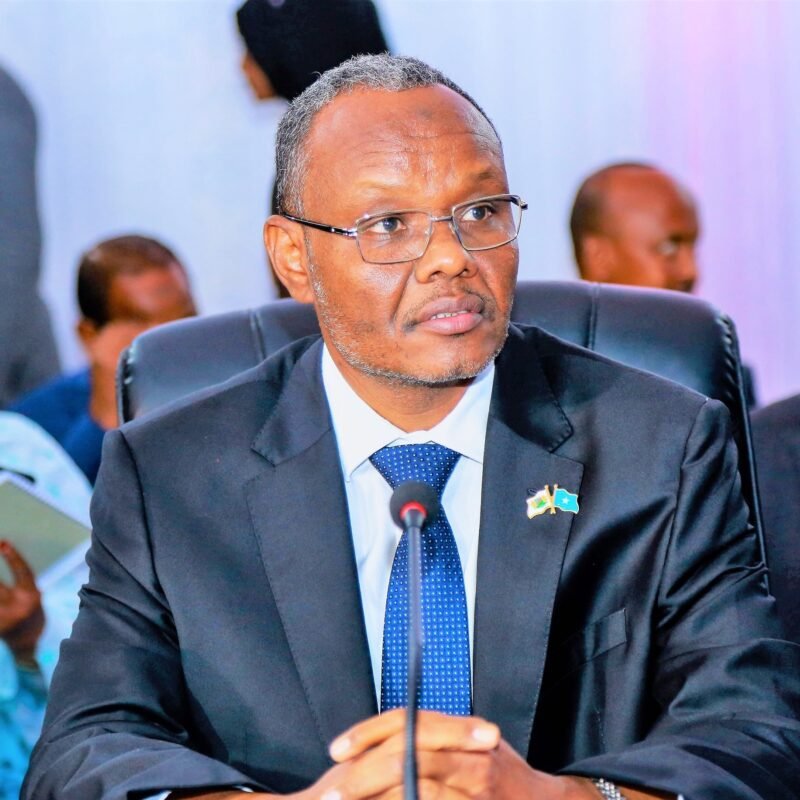
MOGADISHU — Former South West State President Abdiaziz Hassan Mohamed Laftagareen has lodged a formal complaint with the Turkish government over alleged F-16 airstrikes in Baidoa and surrounding villages, accusing Türkiye of enabling what he describes as a clan-based political agenda by President Hassan Sheikh Mohamud.
The letter, dated 15 October 2026 and addressed to the Government of the Republic of Türkiye with a copy to the Turkish Embassy in Mogadishu, states that Turkish F-16 airstrikes have continued from 30 March 2026 through the present, causing civilian deaths and destroying property and livestock. Laftagareen calls on Ankara to immediately halt all F-16 operations over Baidoa, investigate the deaths and destruction, make the findings public, and use its influence to support the withdrawal of federal troops loyal to President Mohamud from South West State.
Territorial Gains and Escalating Conflict
The complaint comes as forces loyal to Laftagareen have expanded their territorial control in the Bay region. On Thursday, Laftagareen-aligned fighters reportedly seized control of Buurhakaba, a strategic town approximately 60 kilometres northeast of Baidoa, following heavy clashes with federal troops and forces supporting the administration of South West State President Sheikh Aden Mohamed Nur Madobe. The takeover follows the earlier capture of Qansahdhere district, putting Laftagareen’s forces in control of two of Bay region’s four traditionally recognised districts.
Buurhakaba lies along the main road connecting Mogadishu with Baidoa, making control of the town significant for the movement of security forces, commercial transport, and supplies. The fighting has raised concerns that the confrontation could spread toward Baidoa, the regional capital, where federal forces have reportedly deployed thousands of soldiers.
Laftagareen was removed from power in March 2026 after federal forces took control of Baidoa amid a dispute over the leadership of South West State. His supporters have since mounted repeated attacks against federal and regional forces. As reported in FTL Somalia’s coverage of the standoff, the political conflict has extended into the digital sphere, with Laftagareen seizing control of the official South West State Presidency digital platforms.
Financial Sanctions
The federal government has escalated its response by imposing financial sanctions on Laftagareen and nine other individuals. As reported in FTL Somalia’s coverage of the sanctions, the National Anti-Money Laundering and Counter-Terrorism Financing Committee said the sanctions were based on information and evidence indicating that the individuals were linked to, cooperated with, or provided financial support to Al-Shabaab.
The sanctions order requires financial institutions to freeze assets, prohibit transactions, and report relevant activity to the Financial Reporting Center. The committee did not publicly disclose the specific evidence against each individual. Laftagareen and his allies have denied cooperating with Al-Shabaab, and the allegations have not been independently verified.
The Turkish Military Role Under Scrutiny
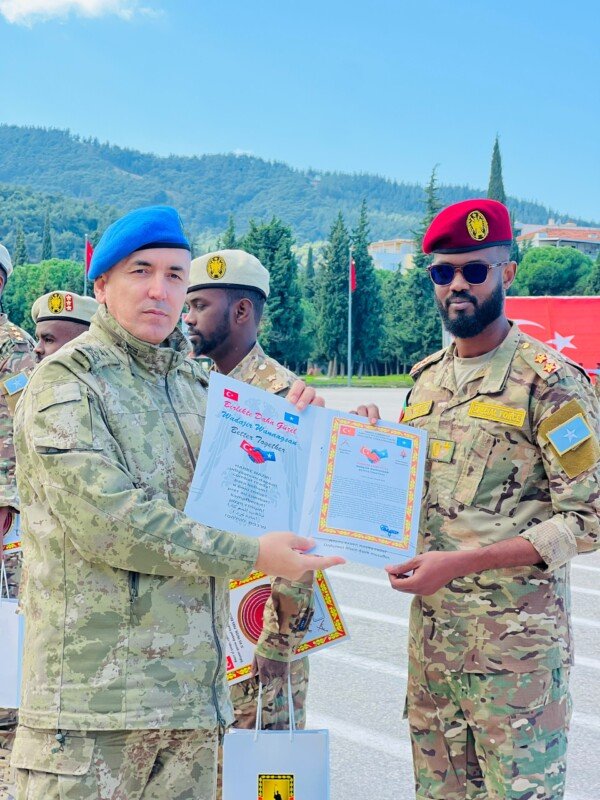
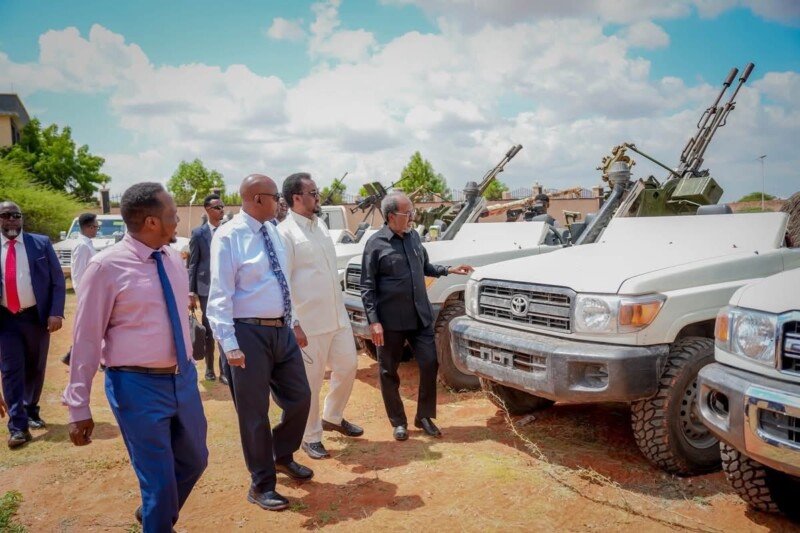
Laftagareen’s formal complaint adds to mounting scrutiny of Türkiye’s military role in Somalia. As reported in FTL Somalia’s coverage of Turkey’s military deployment, a Turkish military transport docked at Mogadishu Port in February 2026, offloading a shipment of M48 and M60 Patton battle tanks. The tanks were positioned to defend Turkish installations in the Warshiikh district, which is reportedly being prepared for missile and satellite launch operations.
Turkish F-16s, drones, and other military assets have been increasingly visible in Somalia. The expanded military footprint has drawn concern from regional actors. As reported in FTL Somalia’s coverage of Somaliland’s security concerns, Somaliland officials have stated that Turkish F-16 deployments and Ankara’s growing drone capabilities are a primary reason for seeking air-defence systems from Israel. Somaliland’s Senior Presidential Adviser on Foreign Affairs, Mohamed Osman Fadal, said: “We need air defence systems. Turkey has deployed F-16s in Mogadishu and wants to build a drone base in Somalia. We want Israel to support us against Turkey.”
Analysts note that Turkey’s military posture in Somalia serves multiple purposes: counterterrorism, protection of Turkish economic investments in ports and airports, and strategic positioning in the Red Sea and Indian Ocean corridor. However, this expanded role has entangled Ankara more deeply in Somalia’s internal political dynamics, including the confrontation between the federal government and Laftagareen.
International Concerns
Former U.S. Ambassador to Somalia Larry André Jr. has also weighed in, calling on the international community to pressure the federal government to halt hostilities in South West State. As reported in FTL Somalia’s coverage of André’s remarks, he accused the administration of using security forces for political purposes and warned that the political dispute cannot be resolved through military action.
The fighting has had a severe humanitarian impact. As reported in FTL Somalia’s coverage of the humanitarian crisis, UNHCR reported in early October that clashes in Baidoa displaced more than 5,600 people. The displacement intensifies urgent needs for food, water, shelter, and medical care in a region already facing crisis-level food insecurity.
As detailed in FTL Somalia’s coverage of the famine risk, the World Food Programme has warned that 5.4 million people could face crisis-level hunger or worse between October and December 2026, with Baidoa’s displaced population at particular risk. The Integrated Food Security Phase Classification assessment projects that about 26,000 internally displaced people in Baidoa could face catastrophic levels of hunger, with a risk of famine under a worst-case scenario.
Ethiopia’s planned withdrawal of more than 3,000 troops from South West State has added to concerns about the security vacuum. As reported in FTL Somalia’s coverage of the UK’s call for restraint, the United Kingdom urged all parties to exercise restraint amid concerns about the security vacuum that could emerge.
Critical Note
Laftagareen’s letter to Ankara marks a significant escalation in his confrontation with the federal government. By directly appealing to Türkiye, he is attempting to internationalise the dispute and pressure Ankara to reconsider its alignment with President Mohamud’s administration. The letter’s claim that Türkiye’s actions reflect a “clannish mindset” is a pointed accusation that Ankara is being drawn into Somalia’s clan politics.
The evidence regarding Turkish airstrikes remains contested. Laftagareen’s camp has provided specific dates and locations, but independent verification is lacking. The Somali federal government has rejected allegations linking it to the Doolow strike, and Turkish authorities have not publicly accepted responsibility for any of the alleged attacks. However, the documented use of Turkish F-16s in combat operations and the confirmed deployment of these aircraft to Mogadishu lend credibility to the broader claim that Turkish airpower is being used in Somalia’s internal conflict.
What is clear is that Türkiye’s deepening military involvement in Somalia has become a political liability. Somaliland’s explicit appeal to Israel for air-defence systems to counter Turkish aircraft, and the humanitarian catastrophe unfolding in Baidoa, illustrate the wider consequences of Ankara’s perceived alignment with one side of Somalia’s domestic political struggle. For a country that has positioned itself as a partner to the Somali people rather than to any single administration, this is a strategic risk that Ankara has not yet fully addressed..
Recommended Reading On ftlsomalia.com
- Former South West State President Laftagareen Named on Somalia’s Financial Sanctions List
- Laftagareen Seizes Official Southwest State Digital Platforms Amid Standoff With Adan Madobe
- Turkey Sends Tanks to Somalia to Protect Aerospace Facilities
- Hargeisa Wants Israel to Shield It From Turkish Drones and Warplanes
- OCHA Warns Baidoa Violence Deepens Humanitarian Crisis as Famine Risk Looms
- UN: Baidoa Conflict Risks Famine Among Displaced as Aid Funding Dwindles