KHARTOUM, Sudan has formally accused Ethiopia of serving as the launchpad for a sustained drone campaign against its territory, presenting a report that alleges attacks were launched from Ethiopian soil with direct links to Somali territory and the United Arab Emirates.
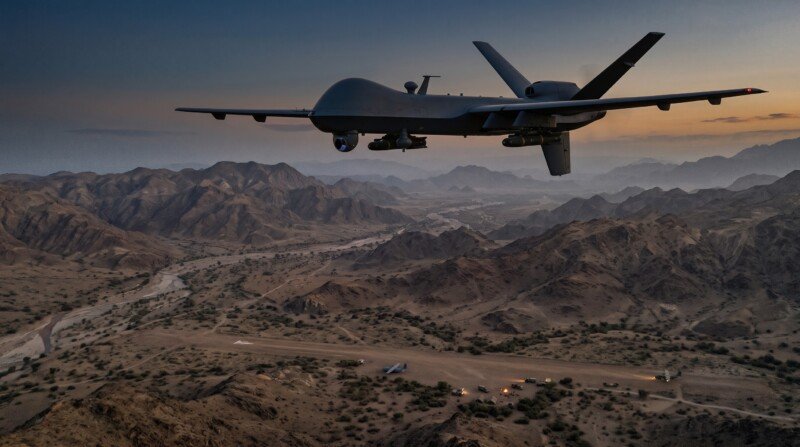
The report, released by Sudan’s Transitional Sovereignty Council on October 28, documents 70 drone attacks between February 15 and October 27, 2026, involving 187 one-way attack drones and 82 munitions fired by strategic drones. It claims the attacks killed or wounded 484 civilians and killed 176 Sudanese soldiers. Sudan’s Foreign Ministry Undersecretary, Muawiya Osman Khalid, said the launches represented “a dangerous development that could undermine security and stability in the region.”
The central allegation is that armed drones took off from Ethiopian territory, specifically from Asosa Airport in the Benishangul-Gumuz region, the Kurmuk-Gizen border sector, and Bahir Dar Air Base in the Amhara region. Sudan says a recovered flight computer from a drone downed at Ad-Damazin on September 20 recorded a take-off point 1.7 kilometres inside Ethiopia.
The Somali Connection
While the report focuses on Ethiopia’s role as the launchpad, its broader context implicates Somali territory in the logistical network sustaining the Rapid Support Forces (RSF). A UN Independent International Fact-Finding Mission report documented how Bosaso, the commercial capital of Puntland, functioned as a “recurring logistical hub and transit point” for personnel and cargo destined for RSF-controlled areas.
Witnesses cited by the UN described Ilyushin-76 cargo flights linking Bosaso, Kufra, Benghazi, and Chad, from which cargo and personnel were transferred into Sudan. The UN further found that United Arab Emirates-based individuals and entities maintained facilities in Bosaso, including a military base through which foreign contractors transited. Despite repeated efforts, Somalia did not provide a substantive response to the mission’s request for information regarding these activities.
The UAE’s role is a common thread. Reuters reported in February 2026 that the RSF training camp at Menge in Ethiopia was financed and supported by the UAE, with Emirati trainers and logistics provided to the site. Sudan’s report names the UAE as the “state of evil” and accuses it of conspiring with Israel’s Mossad. The UAE has denied involvement in the Sudan conflict, stating it “is not a party” and does not participate in combat operations.
Independent Corroboration and the Somaliland Dimension
Sudan’s claims about Ethiopian territory being used for military support to the RSF are not without independent corroboration. Yale University’s Humanitarian Research Lab documented a major military buildup at the Ethiopian National Defence Force base in Asosa, including approximately 100 light technical vehicles, armored personnel carriers, and cargo containers, assessing that the buildup increased the likelihood of an RSF attack on Ad-Damazin. Reuters, citing 15 sources, reported that the Menge camp was established under the oversight of Major General Getachew Gudina, head of defense intelligence in the Ethiopian National Defense Forces, with capacity for up to 10,000 fighters.
The logistical architecture described in the Sudan report and the UN findings extends beyond Puntland. The UAE is building a military base at Berbera Airport in Somaliland, a project Le Monde reported is intended to serve U.S. and Israeli interests. Israel has established an intelligence footprint at Berbera, with Somaliland intelligence officers having travelled to Tel Aviv for training. The International Institute for Strategic Studies has suggested the infrastructure upgrades could pave the way for Israeli access.
US Senator Jim Risch, chairman of the Senate Foreign Relations Committee, explicitly linked the two Somali territories in February 2026, stating he was “troubled by reports of a UAE-connected training base for genocidal RSF elements in Ethiopia with possible supply channels via Somaliland”. The Senate’s concern underscores that the network Sudan describes is not confined to Ethiopia’s borders. It runs through Somali territory, both Puntland and Somaliland, under the umbrella of UAE logistics and security arrangements.
The UAE has already begun pulling out military hardware from Somalia following a ban on its aircraft using Somali airspace, a move that followed reports of unauthorized military flights and the covert transport of a Yemeni separatist leader through Mogadishu and Berbera.
Critical Note
Sudan’s report is an official state document presented as evidence of aggression. It is detailed, technically specific, and explicitly offers its wreckage and flight data for independent examination. That openness is notable. But it is also a partisan document produced by a government at war, and its central forensic claims about drone launch coordinates have not been independently verified by a neutral body. Ethiopia denies the allegations, and the UAE denies involvement.
What is not in dispute is the broader architecture. The UN has documented Bosaso as a transit hub for RSF supplies. Reuters and Yale have documented the Menge camp and the Asosa military buildup. Le Monde and FTL Somalia have documented the UAE’s military construction at Berbera and Israel’s intelligence footprint there. These are not Sudanese claims. They are the findings of UN investigators, Western news agencies, and academic research labs.
For Somalia, the implication is uncomfortable. The federal government has been focused on Al-Shabaab and its own security transition. It has not publicly addressed the UN’s finding that Bosaso was used to facilitate a foreign war, nor has it responded substantively to the Fact-Finding Mission’s requests for information. Puntland administers Bosaso. Somaliland administers Berbera. Mogadishu claims sovereignty over both but exercises authority over neither. The result is that Somali territory, under different administrative arrangements, has become embedded in a regional logistics network that Sudan now cites as evidence of aggression.
Sudan’s report will be debated at the UN Security Council and the African Union. The legal questions about state responsibility and aggression will be contested. But the factual questions about what is happening on Somali soil are already documented by independent actors. The question for Mogadishu is not whether Sudan’s report is fully accurate. It is whether the government will investigate what the UN and Reuters have already found, and whether it will act before the next report names another Somali port or airport.
Recommended Reading On ftlsomalia.com
- UN Report Exposes Transnational Networks Fuelling Sudan’s War Through Puntland
- Le Monde Reports UAE Building Secret Military Base in Berbera for U.S. and Israel
- Israel Opens Somaliland Intelligence Base
- US Senate Expresses Concern Over Somaliland’s Alleged Role in RSF Supply Routes
- UAE Pulls Out Military Hardware Following Somalia’s Airspace Ban