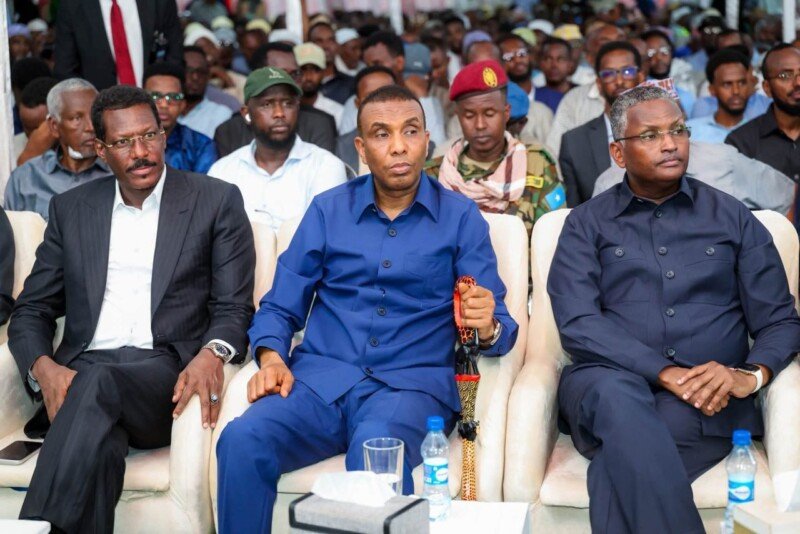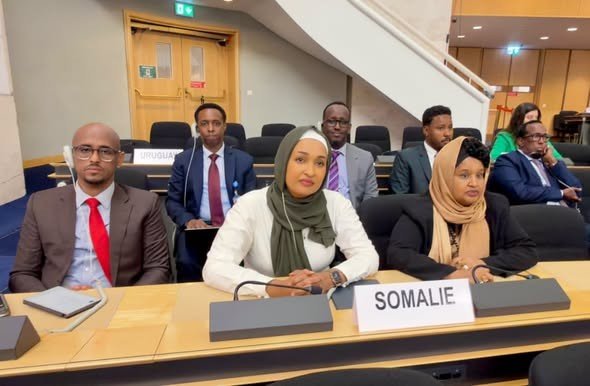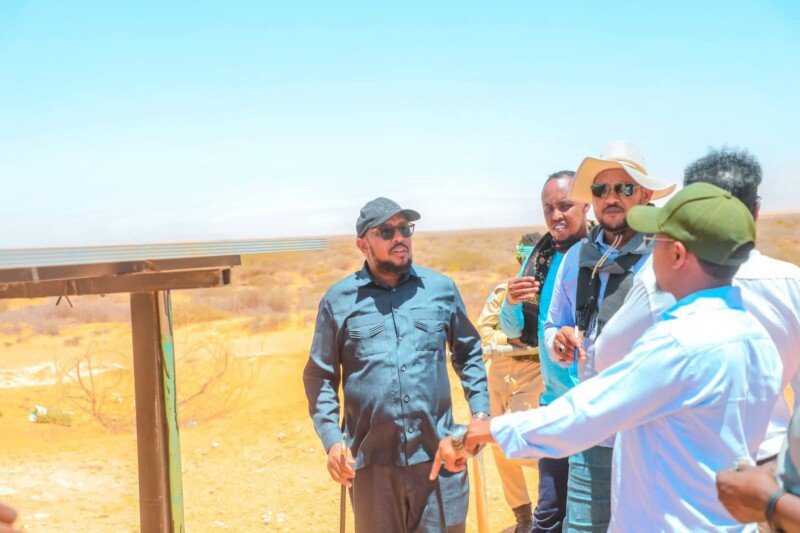
GALMUDUG — A delegation led by Galmudug State Minister of Energy and Water Resources Abdullahi Mohamed Dahir, accompanied by Deputy Minister of Health and Social Care Dahir Farah Fiidow and other officials, has conducted a multi-district working tour to assess water and health services in Xero Dhagaxley and Wisil.
The delegation’s first stop was Xero Dhagaxley, where the Minister inspected agricultural conditions and water wells, particularly those operating with motorized pumps. He conducted an assessment of water services and the needs of the local community, and met with the district administration to discuss the general situation, community needs, and ways to strengthen basic services, particularly access to sufficient water for both residents and livestock.
The delegation then proceeded to Wisil district in the Mudug region, where officials said the purpose of their visit was to assess the state of water and health services for communities in the district and surrounding areas. While in Wisil, the delegation held a consultative meeting with district administration officials, who briefed them on the needs and challenges facing basic services, particularly access to clean water and healthcare.
Accompanying the ministers were the Director of the Water Department at the Ministry of Energy and Water Resources and several members of parliament.
Galmudug’s Worsening Water Crisis
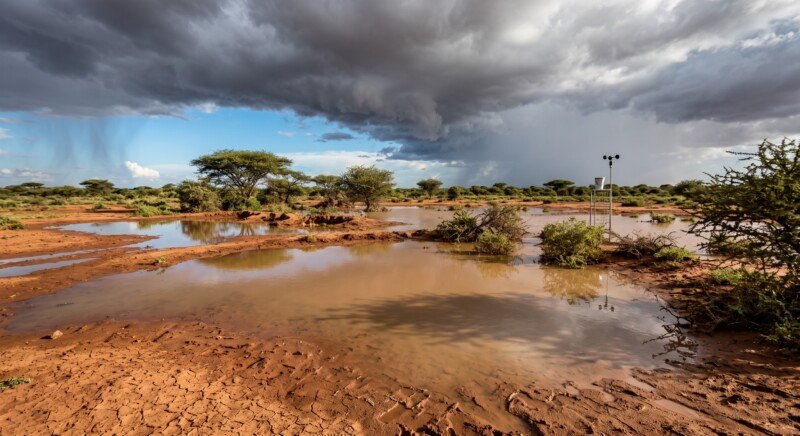
The tour comes as Galmudug remains among the regions most severely affected by drought conditions in Somalia. Continued rainfall deficits have contributed to worsening water shortages, livestock losses, declining livelihoods, and increasing population movements. An estimated 34,000 people have reportedly migrated in search of water and pasture, while 20 strategic water sources require urgent rehabilitation to restore access to safe water.
Minister Dahir previously held a high-level meeting with officials from the International Committee of the Red Cross (ICRC) to address the critical humanitarian situation and essential service needs in the region. That meeting focused on pressing issues related to water scarcity, lack of electricity and limited healthcare services, which have severely impacted communities living in areas with inadequate infrastructure.
Ongoing Water Projects and Drought Response in Galmudug
The Horn of Africa Groundwater for Resilience Project, locally known as Abaartire, is gaining momentum in Somalia, with the rehabilitation of a vital borehole in Qaradhi, a community in Cadaado District, Galmudug State. The project, jointly implemented by the Federal Ministry of Energy and Water Resources and state ministries with backing from the World Bank, aims to strengthen Somalia’s resilience to climate shocks through groundwater mapping, infrastructure rehabilitation, and community engagement.
In Wisil district specifically, the Somali Disaster Management Agency has previously delivered 125 water tankers to the district drought committee during an urgent national drought-relief mission. SoDMA Commissioner Mahmoud Moallim Abdulle visited Wisil to launch the distribution, with the tankers designed to provide clean water to families whose traditional water sources have dried up. The Commissioner also conducted a needs assessment and reviewed the operations of the strategic wells in the district, noting that most of the wells there have dried up.
Qatar Charity has also launched the implementation of 24 water projects in four Somali states, including Galmudug, as part of ongoing efforts to improve access to safe water and strengthen essential services in drought-affected communities. The projects include the drilling of 19 shallow wells, the construction of two water ponds, and the drilling of three deep wells.
Galmudug authorities have previously provided water trucking services to drought-affected residents, deploying water trucks to different parts of the region to provide residents with access to clean and safe water. The Galmudug Ministry of Relief has appealed for immediate humanitarian support, underlining the necessity of collaborative initiatives to deliver water provisions, sustenance supplies and crisis relief services.
Critical Note
The multi-district tour by Galmudug’s water and health ministers reflects the administration’s efforts to assess service delivery challenges firsthand. Visiting Xero Dhagaxley and Wisil in succession allows officials to compare conditions across different communities and identify common gaps in water and health infrastructure.
Yet field assessments alone cannot resolve the structural deficits facing Galmudug. The region’s water and health crises are driven by prolonged rainfall deficits, aging infrastructure, and limited investment capacity. While projects like Abaartire, the Qatar Charity initiative, and SoDMA’s water tanker deliveries bring relief, the scale of need far exceeds current efforts. An estimated 34,000 people have already migrated in search of water and pasture, and 20 strategic water sources require urgent rehabilitation.
The effectiveness of these ministerial tours will ultimately be measured by whether the assessments translate into concrete action, whether through borehole rehabilitation, new well construction, improved health facilities, or better maintenance of existing infrastructure. For communities dependent on livestock and agriculture, reliable access to water and healthcare is not merely a service delivery issue but a matter of survival and economic stability.