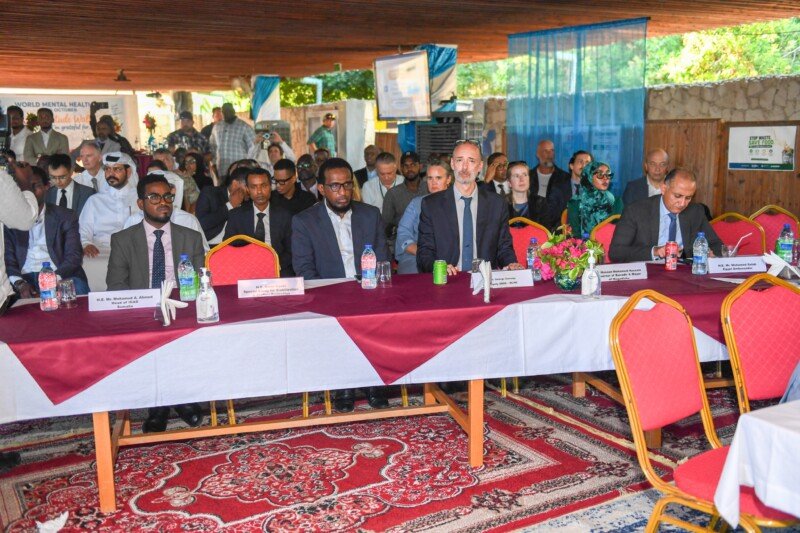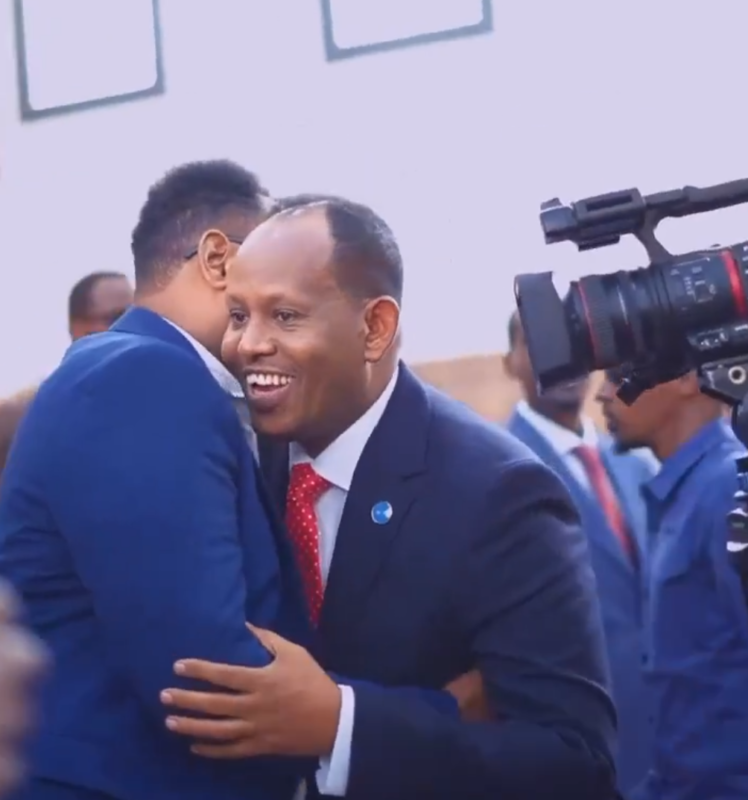
DHUSAMAREB, Hussein Mohamed Nur Mohamed, known as Hussein Dhagaweyne, has been elected Speaker of the Galmudug State House of Representatives, defeating Ismail Abdi Jimale Alasow of the Sincad political organisation in a vote held Sunday in Dhusamareb.
Dhagaweyne contested under the Justice and Solidarity Party (JSP), which holds 67 of the assembly’s 89 seats. Both deputy speaker positions were also filled by JSP candidates, Abdulkadir Ahmed Ali Quri and Mursal Abdi Adan Elmi, who faced no listed challengers.
The election completes the formation of the parliamentary leadership. The assembly will proceed to the presidential vote on October 22, 2026, with JSP having nominated Liban Ahmed Hassan as its sole candidate.
A Parliament Shaped by Judicial Intervention and Exclusion
The assembly that elected Dhagaweyne emerged from a process marked by legal contestation. The original parliamentary election on July 30, 2026, was annulled by Somalia’s Supreme Court, which found that the vote had not met constitutional and electoral requirements for free, fair and impartial elections.
A rerun was ordered and held on September 30. However, the National Independent Electoral and Boundaries Commission excluded the Towfiiq political organisation, the party that had successfully brought the legal challenge leading to the annulment, from participating in the rerun. The commission stated that Towfiiq had failed to meet the deadline for submitting candidate lists, but did not provide a detailed public explanation.
The exclusion drew criticism from Towfiiq, which questioned the fairness and transparency of the process. The JSP’s dominance, 67 of 89 seats, reflects a political field in which the principal legal challenger to the original vote was absent from the ballot.
The Malxiis Question
Whether Ismail Abdi Jimale, the Sincad candidate, constituted genuine opposition or a “malxiis,” a propped-up contender arranged to lend the appearance of competition, cannot be definitively established from available information. Sincad is not a shell organisation: in the Galmudug local council elections, the party received 14,305 votes and won 17 seats. Its candidate for speaker was nominated through the official process and appeared on the electoral commission’s list alongside Dhagaweyne.
What is clear, however, is that the structural conditions for meaningful competition were absent. The JSP’s two-thirds majority meant that the outcome of the speakership vote was effectively predetermined regardless of the opposing candidate’s identity or quality. A contest held under such conditions, even with a formally legitimate opponent, does not function as a genuine test of parliamentary confidence.
Next Steps and the Road to the Presidency
The presidential election scheduled for October 22 will follow a similar pattern. Liban Ahmed Hassan is the JSP’s sole nominee, and no credible challenger has emerged. The new Speaker will preside over a chamber whose composition was determined by a rerun from which the party that successfully challenged the original vote was excluded.
Critical Note
The election of a parliamentary speaker is, in isolation, a procedural matter. But the process that produced this parliament warrants scrutiny that the proceedings in Dhusamareb have not invited. The Supreme Court annulled the July vote because it failed the constitutional test of transparency and fairness. The commission’s response was to administer a rerun that excluded the party that had brought the successful challenge. The JSP then won a majority so large that the speakership contest, whatever the intentions of the Sincad candidate, could not alter the outcome.
The question of whether Ismail Abdi Jimale was a “malxiis” may never be answered with certainty. But the more consequential question is whether a parliament elected under these conditions can serve as a genuine check on executive power. The Speaker’s first test will come on October 22, when the assembly votes for a president whose only candidate was selected by the same party that controls two-thirds of the chamber. Whether that vote resembles a ratification more than an election will be evident to Galmudug’s citizens, even if the procedural forms are observed.
Share your story. FTL Somalia is continuing to follow the election processes in Somalia. If you have information or insights to share, contact us at info@ftlsomalia.com. Your identity will be protected.