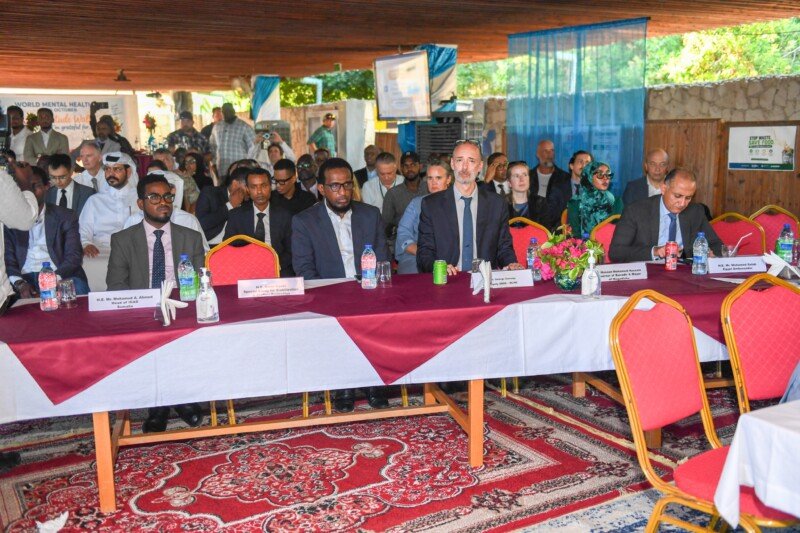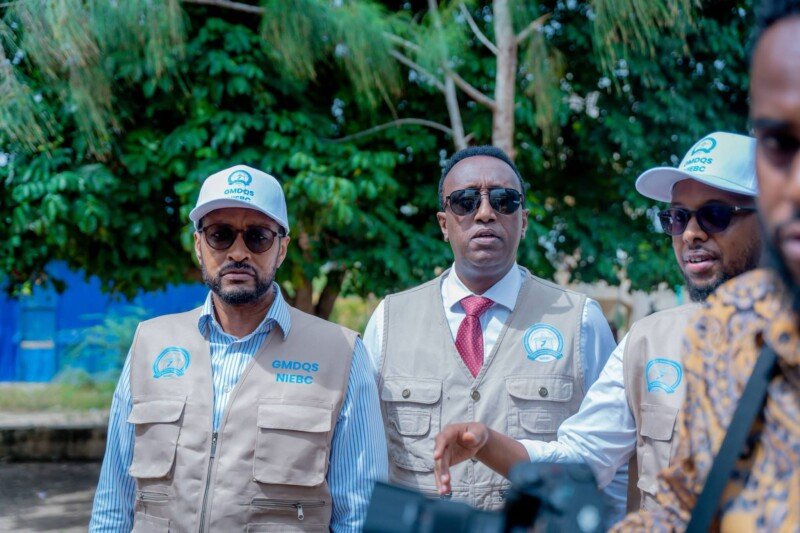
MOGADISHU, Somalia’s National Independent Electoral and Boundaries Commission (NIEBC) has announced the official timetable for the Hirshabelle regional leadership elections, setting a compressed schedule that will see a new parliament sworn in on Tuesday, a speaker elected by Thursday, and a regional president chosen by Saturday.
According to a statement released on Monday, the 99 newly elected members of the Hirshabelle House of the People will be sworn in on October 20. Candidates for Speaker and Deputy Speakers will submit their applications on October 21, with campaign speeches and the speakership vote scheduled for October 22.
The timeline then shifts to the executive. Applications for the regional presidency and vice-presidency will open on October 23, with candidate speeches and the final vote set for October 24.
The Supreme Court’s Stamp of Approval
The electoral commission’s announcement follows the formal certification of the parliamentary election results by Somalia’s Supreme Court on Monday. The court confirmed the victory of the Justice and Solidarity Party (JSP), which secured 78 of the 99 seats in the regional assembly.
The court stated that no legal challenges had been filed against the September 30 elections within the established legal framework, clearing the way for the new legislature to convene [citation:12]. The JSP’s overwhelming majority, which followed a similar landslide in Galmudug, gives the party effective control over the selection of Hirshabelle’s next leadership.
A Contested Political Landscape
While the electoral process has moved forward procedurally, it remains deeply contested politically. The JSP has nominated incumbent President Ali Abdullahi Hussein Guudlaawe for another term, a decision that has sharpened a long-running power-sharing dispute between the Hawadle community of Hiiraan and the Abgaal community of Middle Shabelle.
Hirshabelle’s Vice President, Yusuf Ahmed Hagar Dabageed, a Hawadle politician, has publicly accused President Hassan Sheikh Mohamud of reneging on a promise to return the regional presidency to the Hawadle clan. Dabageed stated that when he asked the president about his own candidacy, the president replied that he would give the position to Guudlaawe instead.
The dispute has also raised questions about the inclusivity of the electoral process in Hiiraan. Prior to the parliamentary vote, Dabageed warned that elections could not proceed in the region without a political agreement involving traditional elders and local stakeholders [citation:4]. While voting did take place in Beledweyne, the underlying grievances remain unresolved as the region prepares to elect its next president.
Critical Note
The release of the electoral timetable is a procedural step that brings Hirshabelle closer to completing its leadership transition. The Supreme Court’s certification provides the necessary legal cover, and the schedule is clear. But the speed of the process, with the entire leadership structure set to be finalized within five days, leaves little room for the kind of political consensus-building that the Hawadle community has demanded.
The JSP’s 78-seat majority means that Guudlaawe is virtually assured of re-election. The party’s control of the legislature is so absolute that the presidential vote, scheduled for Saturday, is unlikely to be competitive in any meaningful sense. This is not a reflection of Guudlaawe’s popularity or the opposition’s weakness, but of an electoral system in which the ruling party’s dominance at the federal level has translated directly into control of the regional assembly.
The unresolved question is whether this procedural victory will produce a stable administration. The Hawadle leadership’s sense of betrayal, articulated publicly by the regional vice president, is not a peripheral grievance. It speaks to a fundamental disagreement over the power-sharing arrangement that created Hirshabelle in 2016. If the new administration is seen as having been imposed without genuine consultation, it will inherit the same legitimacy deficit that has plagued its predecessors. A five-day election calendar can produce a government, but it cannot manufacture political trust.
Share your story. FTL Somalia is continuing to follow the Hirshabelle elections and political developments. If you have information or insights to share, contact us at info@ftlsomalia.com. Your identity will be protected.