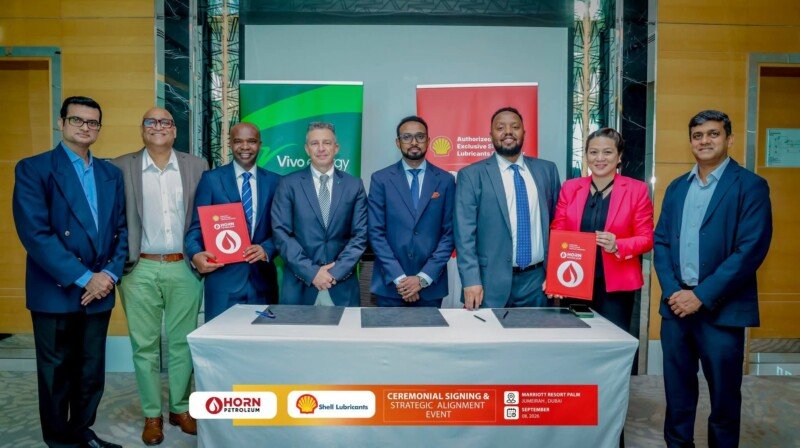
DUBAI — Horn Petroleum and VIVO Energy, the company responsible for Shell-branded fuels for vehicles and commercial industries, have signed a historic agreement in Dubai, officially designating Horn Petroleum as the official representative for Shell fuels in Somalia.
The agreement was signed by Horn Petroleum CEO Mahad Abdi Ali and VIVO Energy Vice President Karim Kermen during a ceremony in Dubai, marking a new chapter in the development of energy markets and the delivery of quality fuels to customers and businesses across the region .
The partnership is expected to address long-standing concerns over fuel quality in the country, benefiting both businesses and transportation sectors. VIVO Energy operates about 4,200 service stations across 29 markets, supplying fuels and lubricants to retail and commercial customers across sectors including road transport, construction, manufacturing, mining, power, aviation and marine operations .
Horn Petroleum, part of Somalia’s Dahabshiil Group, already operates fuel stations and wholesale petroleum operations in Somalia and Somaliland, and also markets Horn Gas LPG as an alternative to charcoal for household cooking .
Significance of the Deal
The agreement represents a significant step in Somalia’s energy sector, bringing internationally recognized fuel standards to the country’s market. Shell is one of the world’s most recognized fuel brands, and its entry through Horn Petroleum signals growing confidence in Somalia’s business environment.
Somalia’s fuel imports have been a critical component of the country’s economy, and the Horn Petroleum-VIVO Energy partnership will likely improve the availability of quality fuels at competitive prices. The deal is expected to benefit businesses, transporters, and consumers who have long faced challenges with fuel quality and availability.
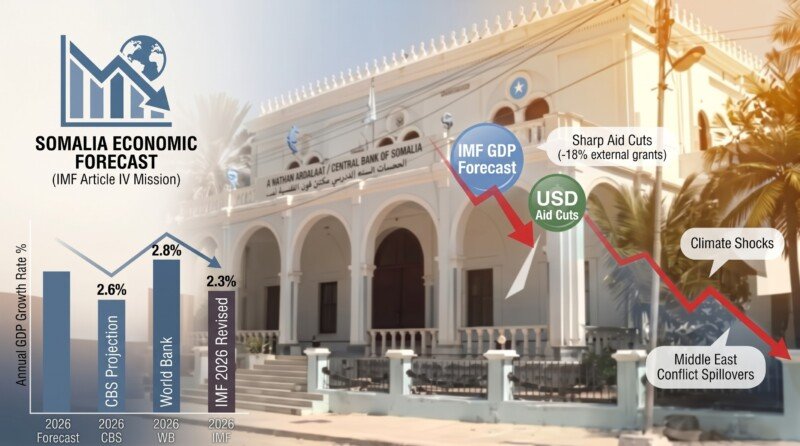
Somalia’s energy sector has been undergoing transformation, with increased investment in renewable energy and fuel distribution networks. The country’s economy has been growing, with real GDP estimated at 3.1% in 2025, and the energy sector is expected to play a key role in sustaining growth.
According to the Federal Government’s National Transformation Plan (NTP) 2025-2029, energy sector reform is a priority, with the government aiming to improve energy access, promote private sector investment, and enhance energy security. The Ministry of Petroleum has previously issued directives to fuel merchants to protect consumers and stabilize markets, emphasizing the importance of fair and transparent pricing models .
The Horn Petroleum-VIVO Energy agreement aligns with these national priorities, reflecting the government’s commitment to creating a conducive environment for private sector investment in the energy sector.
Somalia is also embarking on a broader energy transformation, including significant developments in offshore oil and gas exploration. The country is estimated to hold up to 30 billion barrels of oil reserves, with offshore acreage including 247 licensable blocks . In 2024, Somalia signed multiple Production Sharing Agreements with Turkish Petroleum, Liberty Petroleum, Coastline Exploration, and GulfSom .
Turkey’s ultra-deepwater drillship Çağrı Bey is expected to commence Somalia’s first ultra-deepwater exploration well in 2026, targeting depths of around 3,500 meters . If successful, it would rank among the world’s deepest offshore wells and position Somalia as a modern energy frontier .
VIVO Energy’s lubricant range includes Shell Helix for passenger vehicles, Shell Rimula for heavy-duty engines, and Shell Gadus, Spirax and Tellus products used in industrial and machinery applications .
Critical Note
The Horn Petroleum-VIVO Energy agreement represents a significant milestone in Somalia’s energy sector, bringing internationally recognized fuel standards to the country’s market. The deal addresses long-standing concerns over fuel quality and availability, benefiting businesses, transporters, and consumers across the country.
Yet, the success of the agreement will depend on the ability of the two companies to establish an effective distribution network and ensure that quality fuels are available at competitive prices. The energy sector in Somalia still faces significant challenges, including inadequate infrastructure, regulatory gaps, and security concerns. The government must continue to support private sector investment in the energy sector while ensuring that regulatory frameworks are transparent and consistent with international standards.
The deal also underscores the growing confidence in Somalia’s business environment, reflecting the country’s economic recovery and development progress. However, the benefits of this partnership must reach all Somalis, including those in remote and underserved areas, to contribute to the country’s broader development objectives.