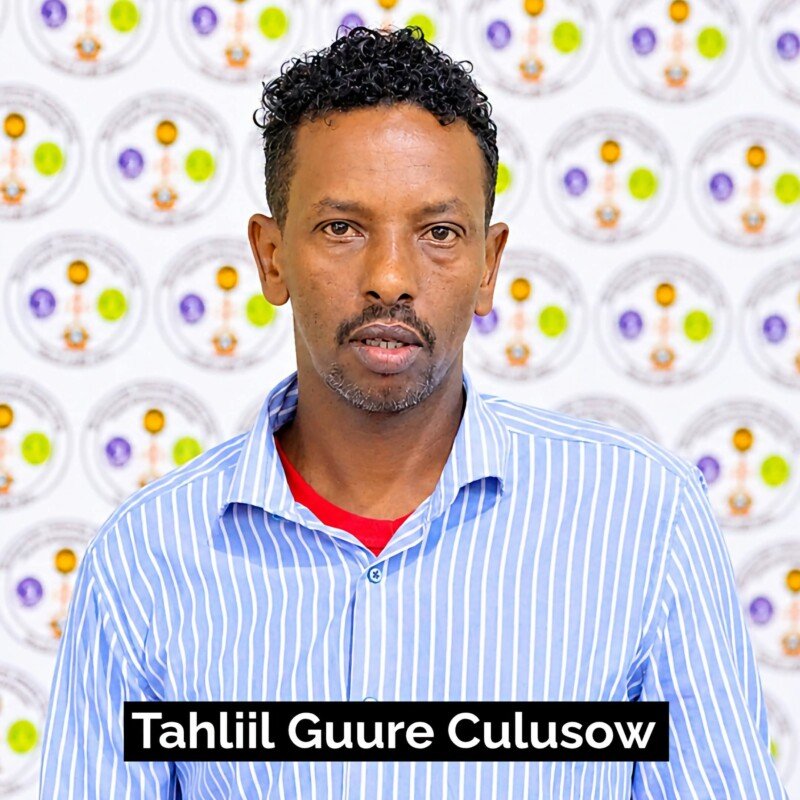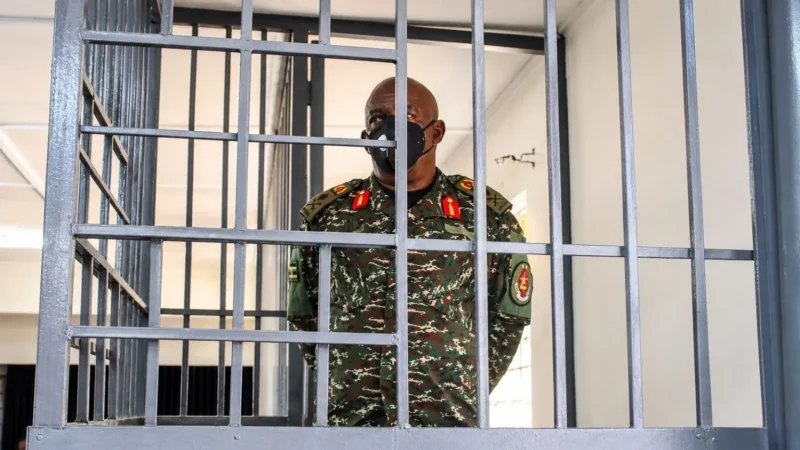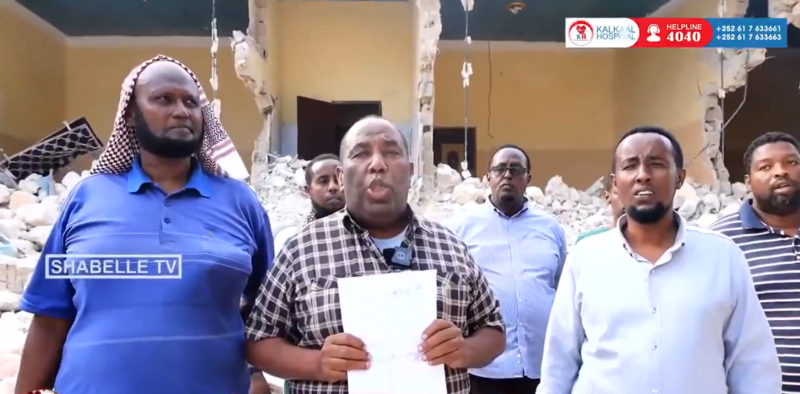
MOGADISHU — A new escalation in Mogadishu’s land crisis emerged this week after Garad Abukar Mohamed publicly warned Banadir Regional Police Commissioner Mahdi Omar Muumin, known as Moalim Mahdi, that if he does not rebuild the houses he demolished, the garad knows which properties the police commander owns in Mogadishu.
The statement, which circulated widely on Somali social media, represents a direct challenge to one of the most powerful security officials in the capital. It follows years of allegations that Moalim Mahdi has overseen a systematic campaign of forced evictions and land seizures in Mogadishu.
In his statement, Garad Abukar Mohamed also identified Abdirahman Abdishakur Warsame as his Member of Parliament, and said he is being discriminated against because he is of the Ayr clan. Abdirahman Abdishakur Warsame is a prominent Somali politician who leads the Wadajir Party and served as Minister of Planning and International Relations under President Sharif Sheikh Ahmed between 2009 and 2010. He was appointed Special Envoy for Drought and Climate Change by President Hassan Sheikh Mohamud in May 2022. Warsame is from the Habar Gidir clan, of which the Ayr is a sub-clan.
A Pattern of Allegations Against Moalim Mahdi
Moalim Mahdi has been the subject of repeated investigations and accusations linking him to land grabbing, forced evictions, and corruption. As reported in Sunatimes’ investigative report, a bank account linked to a company allegedly owned by the police commander received transfers totaling approximately $16.7 million. The report also claimed he constructed multiple luxury properties in Mogadishu and Nairobi in recent years.
According to HLRN’s coverage of evictions and Kaab TV’s reporting, armed police units under Moalim Mahdi’s orders have carried out repeated dawn raids on displaced communities, including the former Pharmaceutical Factory settlement along the Afgooye-Mogadishu road, home to over 2,000 internally displaced people. Residents were given 24-hour ultimatums and threatened with bulldozers.
An anonymous source described in the Sunatimes investigation claimed that Moalim Mahdi receives a 10 percent share of every piece of land that is demolished in Mogadishu.
Political Dimension
Moalim Mahdi has also been a key figure in the government’s confrontation with political opposition. As reported by allAfrica, he issued a public warning to opposition leaders in May 2026, saying security forces were monitoring activities deemed capable of destabilizing the capital.
His role in the current confrontation with former President Sharif Sheikh Ahmed has drawn renewed scrutiny. On Saturday, NISA accused Sharif’s guards of attacking its forces in Wadajir district, allegations Sharif categorically denied. As reported in FTL Somalia’s coverage of the standoff, the escalation followed days of troop deployments around opposition homes, road closures, and reports that President Hassan Sheikh Mohamud had told clan elders he would launch an operation to disarm Sharif within three days.
Sharif responded with a detailed statement documenting what he described as a siege of his residence, including blocked supplies and the abduction of his staff, as reported in FTL Somalia’s coverage of Sharif’s statement. He warned that the NISA claim “cannot serve as a judgment to justify the blood of opposition politicians” and called on the international community to encourage transparency and accountability.
By Saturday night, fighting had erupted at Sharif’s residence, with gunfire heard in the vicinity of his home. As reported in FTL Somalia’s coverage of the outbreak, the incident marked the second time this year that federal forces have deployed military force against a former head of state in the capital.
The Garad’s statement adds a new dimension to the crisis: a community leader directly challenging a security official whose actions have affected thousands of families, and threatening to expose his personal property holdings in return. By invoking his clan identity and his parliamentary representative, the Garad is framing the land crisis not only as a matter of property rights but also as a question of political representation and equal treatment for the Ayr, Habar Inji community.
Critical Note
Garad Abukar Mohamed’s statement is significant for what it reveals about the impunity surrounding land grabbing in Mogadishu. For years, allegations against Moalim Mahdi have accumulated without consequence. Investigative reports, human rights organizations, and community complaints have all pointed to the same pattern: forced evictions, demolitions, and land transfers benefiting politically connected individuals.
The Garad’s threat to expose Moalim Mahdi’s properties is a form of accountability from outside the formal system. It suggests that communities affected by evictions are no longer relying on courts or official investigations, but on public pressure and the threat of reciprocal exposure. This is a dangerous dynamic, but it is also a measure of how thoroughly the formal mechanisms of accountability have failed.
The Garad’s invocation of his Ayr clan identity and his identification of Abdirahman Abdishakur Warsame as his MP adds a political dimension to the confrontation. By framing his treatment as discrimination based on clan, he is appealing to a sense of collective grievance that resonates across the Ayr community and potentially beyond. Warsame, a prominent Habar Gidir politician who has served in senior government positions, represents a significant political constituency. The Garad’s statement effectively draws Warsame into the dispute, whether Warsame chooses to engage or not.
The timing is also notable. It comes as Moalim Mahdi is playing a central role in the government’s confrontation with Sharif Sheikh Ahmed, a confrontation that escalated into gunfire on Saturday night. If the Garad follows through on his threat, it could expose the extent to which a senior police commander has personally benefited from the destruction of communities. If he does not, it may signal that even community leaders are constrained by fear of retaliation.
Share your story. FTL Somalia is continuing to investigate land grabbing and forced evictions in Mogadishu. If you have information, documents, or personal testimony about these practices, contact us at info@ftlsomalia.com. Your identity will be protected.
Recommended Reading On ftlsomalia.com
- Reports of Troops Encircling Opposition Homes as NISA Escalates Standoff with Sharif
- President Sharif Documents Siege of His Home, Denies NISA Claims, Warns Against Justifying Opposition Bloodshed and Urges International Community to Act
- Gunfire Erupts at Sharif’s Residence as Mogadishu Braces for Renewed Conflict
- Former President Sharif Condemns Government Evictions, Calls Military Actions ‘Cowardly’