MOGADISHU, Nearly 874,000 people could be forced from their homes in Somalia over the next three months due to flooding, the International Organization for Migration (IOM) warned, as rising rivers and heavy rainfall threaten communities already struggling with drought and repeated displacement.
New projections by IOM and the Danish Refugee Council estimate that 874,319 people could be displaced between October and December, with flooding accounting for 92 percent of the projected displacement. The warning comes as Somalia enters a rainy season forecast to bring above-normal rainfall amid strengthening El Niño conditions.
“We are looking at the possibility of hundreds of thousands of people losing their homes in just a matter of weeks. Many of these families have already been displaced before and have very little left to fall back on,” said Manuel Marques Pereira, IOM Somalia Chief of Mission. “There is still time to reduce the impact, but that window is closing. We urgently need funding to help people protect their homes and livelihoods, reach safer ground where necessary, and avoid another cycle of displacement.”
A Response Severely Underfunded
Despite the growing threat, IOM has secured only about 14.4 percent of the required $16.62 million needed to prepare for and respond to El Niño-related flooding. The funding is intended to support more than 517,000 people in flood-prone communities across Somalia.
The shortfall is already constraining efforts to establish safe relocation areas and provide essential shelter, clean water, sanitation, and healthcare. IOM is working with Somali authorities and local communities to strengthen early warning systems, identify safer evacuation routes, and prepare emergency assistance, but the agency says the funding gap is limiting its ability to act at the scale required.
As reported in FTL Somalia’s coverage of national flood preparedness, the Somali Disaster Management Agency has placed 29 districts across 14 regions on high alert for riverine and flash flooding. The IOM’s warning confirms that the humanitarian system is not yet resourced to match that level of alert.
Signs of Flooding Already Emerging
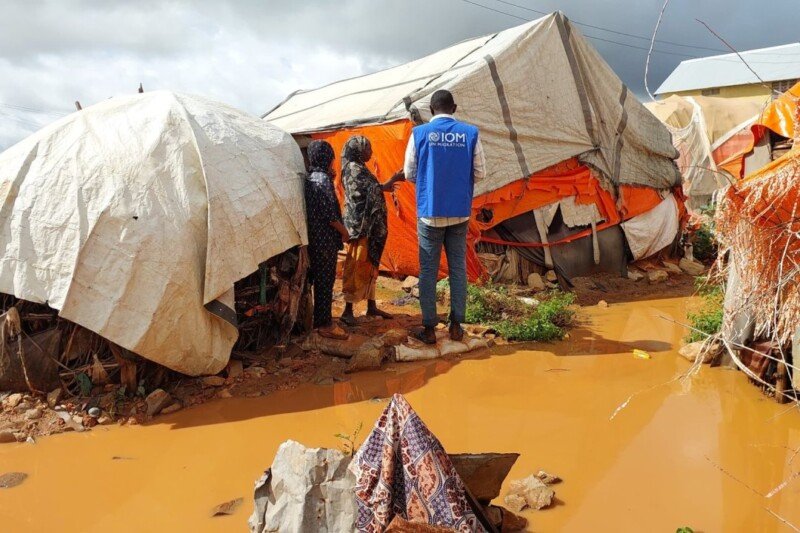
Flooding has already begun in several areas. In Dollow, the Jubba River approached flood levels before receding, while the Shabelle River is rising toward the top of its banks in Jowhar. Heavy rainfall in Baidoa has already damaged homes and forced families to flee several neighborhoods.
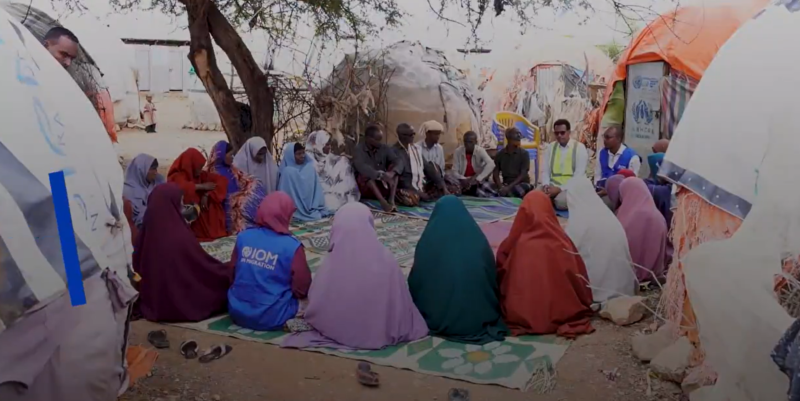
Beletweyne and Gaalkacyo are among the areas facing the greatest threat, with approximately 229,000 and 82,000 people respectively at risk of displacement. Families living in overcrowded displacement sites are particularly vulnerable, with assessments identifying inadequate access to safe water and sanitation, raising concerns about disease outbreaks if flooding intensifies.
As reported in FTL Somalia’s coverage of the Shabelle River, water levels at Jowhar rose by nearly a meter in 48 hours in mid-October, surpassing the high flood risk threshold and approaching bankfull. The FAO’s SWALIM advisory warned that flooding through open river breakages between Jowhar and Balcad was likely to continue and spread into nearby farms and villages.
Beyond the Immediate Threat
Rising floodwaters could destroy crops, disrupt livelihoods, contaminate water sources, and cut off access to healthcare and other essential services, deepening humanitarian needs in communities already affected by successive climate shocks. The displacement projections represent a cumulative estimate for the quarter rather than an even distribution over time. Similar to the 2023 El Niño floods, displacement is expected to peak during the height of flooding and gradually decline as conditions improve.
The warning follows a pattern of repeated climate emergencies in Somalia. As reported in FTL Somalia’s coverage of the 2023 flood victims, communities devastated by the previous El Niño event are once again bracing for a repeat, with depleted coping mechanisms and little external support.
Critical Note
The IOM’s warning is precise, evidence-based, and urgent. The agency has done what it can: projected the displacement, identified the at-risk populations, mapped the river levels, and called for funding. What it has not done, and cannot do alone, is close the gap between the resources it has and the resources it needs.
The 14.4 percent funding figure is the central fact of this crisis. It means that for every ten families at risk, the humanitarian system can currently reach fewer than one and a half. The early warning systems IOM is strengthening are necessary, but they are not shelter. The evacuation routes it is mapping are necessary, but they are not clean water. The emergency assistance it is preparing is necessary, but it is not funded at a scale that matches the projected need.
The international community has repeatedly pledged to act on early warnings in Somalia. The 2023 floods demonstrated what happens when it does not. The current El Niño season is forecast to bring rainfall that could rival or exceed that event. The IOM’s warning is a test of whether the lessons of 2023 were learned, or whether they were noted, filed, and forgotten. The window to act, as Pereira said, is closing. The question is whether anyone with the resources to act is listening.
Recommended Reading On ftlsomalia.com
- SoDMA Urges 29 Districts Across 14 Regions to Prepare for Super El Niño Flooding
- Shabelle River Nears Flood Alert Level at Jowhar as El Niño Rains Intensify
- Somalis Displaced by 2023 Floods Face New Threat as El Niño Looms, WFP Says
- SoDMA and WFP Sign Two-Year Deal to Strengthen Somalia’s Disaster Preparedness
- Somalia Prepares for Super El Niño Flood Response