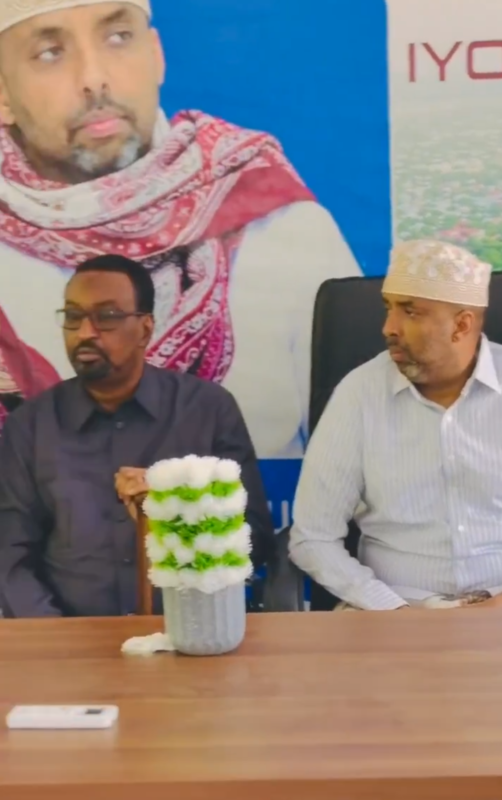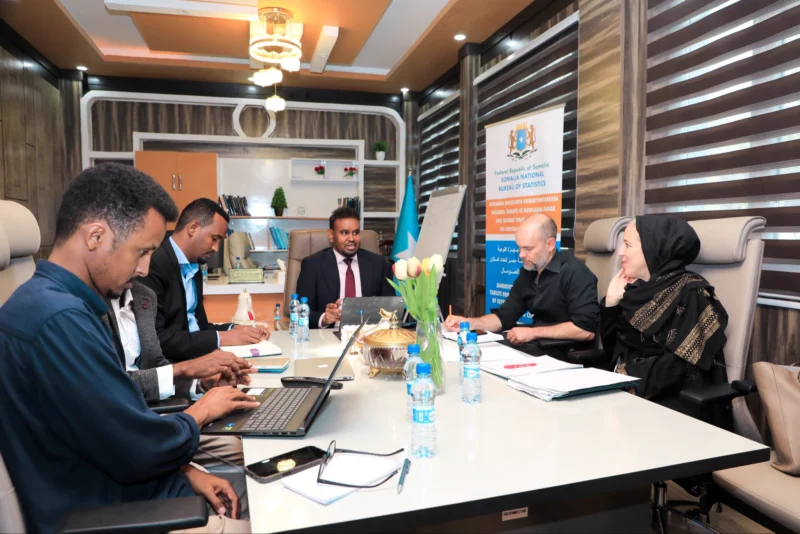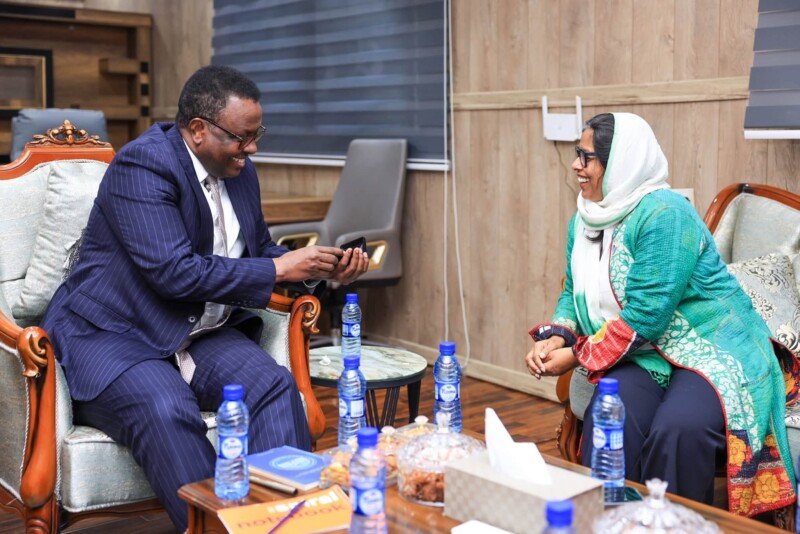
MOGADISHU — Somalia’s Minister of Justice and Constitutional Affairs, Hassan Moallim Mohamud, received a delegation from the United Nations Transitional Assistance Mission in Somalia (UNTMIS) at his office on Wednesday, led by Nasrin Khan, Head of the Rule of Law and Security Institutions Group.
The meeting was a farewell gathering marking the conclusion of UNTMIS’s support for Somalia’s state-building efforts, as the mission prepares to close by 31 October 2026. The delegation included the Commander of the Somali Custodial Corps, Brigadier General Mohamed Sheikh Hassan Hamud.
Minister Hassan thanked UNTMIS for its support to justice sector institutions, particularly in capacity-building, legal and policy development, and corrections reform. He emphasised that justice and corrections institutions will continue their efforts and build on the progress achieved during UNTMIS’s engagement in Somalia.
UNTMIS’s Legacy in Justice and Corrections
UNTMIS has played a central role in strengthening Somalia’s justice and corrections sector over its two-year transition period. In November 2025, the mission’s Justice and Corrections Standing Capacity supported the development of a contextualized and standardized prison training framework, including a training curriculum, mentorship programme, and comprehensive implementation plan, aimed at increasing professionalism and reducing security incidents in the national prison service.
The mission also worked closely with the Ministry of Justice and Constitutional Affairs, the United Nations Development Programme (UNDP), and the United Nations Office on Drugs and Crime (UNODC) through a joint justice and corrections programme. This included support for developing a national justice sector strategy for 2025-2029, which was presented by the Prime Minister in December 2025.
The transition of responsibilities is already underway. In August 2026, Minister Hassan attended the UNTMIS Joint Justice and Corrections Service Closure Workshop, where he described the conclusion of UNTMIS activities as an important milestone that strengthens the Federal Government’s national responsibility for the justice sector.
Broader Institutional Context
The handover of justice and corrections responsibilities comes amid broader efforts to reform Somalia’s institutions. As reported in FTL Somalia’s coverage of judicial reform, the Independent Constitutional Review and Implementation Commission has requested urgent action on judicial reform, while the Speaker of the House of the People has pressed the Human Rights Committee to accelerate pending legislation on women’s and children’s rights.
The Ministry of Justice has also advanced a broader reform agenda under Minister Hassan’s leadership. In April 2026, the ministry convened a senior leadership meeting to evaluate progress on priority projects, including the ongoing constitutional review process and judicial reforms, as detailed in FTL Somalia’s coverage of the ministry’s review.
Critical Note
The meeting between Minister Hassan and the UNTMIS delegation marks the formal conclusion of a significant chapter in Somalia’s post-conflict institutional development. Over more than a decade of UN rule-of-law support through UNSOM and UNTMIS, the mission helped build the foundations of Somalia’s justice and corrections systems, from prison training frameworks to national justice strategies.
However, the transition raises the central question that has accompanied every phase of the UN’s engagement in Somalia: can national institutions sustain and build on the gains achieved with international support? The handover to the Ministry of Justice and Constitutional Affairs, with continued backing from UNDP and UNODC, suggests a phased approach that recognises national capacity remains a work in progress.
The Minister’s emphasis on national ownership reflects the government’s stated commitment to self-reliance. But ownership also means responsibility. The progress made in prison training, justice sector strategy and legislative development will only be meaningful if Somali institutions continue to invest in these areas after UNTMIS closes its doors. The mission’s departure is not an ending; it is a test of whether the foundations it helped build can withstand the pressure of Somalia’s ongoing political and security challenges.
Share your story. FTL Somalia is continuing to investigate the transition and transfer of responsibilities from UNTMIS to Somali institutions. If you have information or insights to share, contact us at info@ftlsomalia.com. Your identity will be protected.
Recommended Reading On ftlsomalia.com
- ICRIC Requests Urgent Judicial Reform as Speaker Presses Human Rights Legislation
- Justice Ministry Assesses Key Projects, Advances Post-Constitutional Reform Agenda
- Somalia’s Constitutional Review Body Sets October 14 Deadline for Key Amendments
- House of the People Misses Quorum for Second Time in a Week