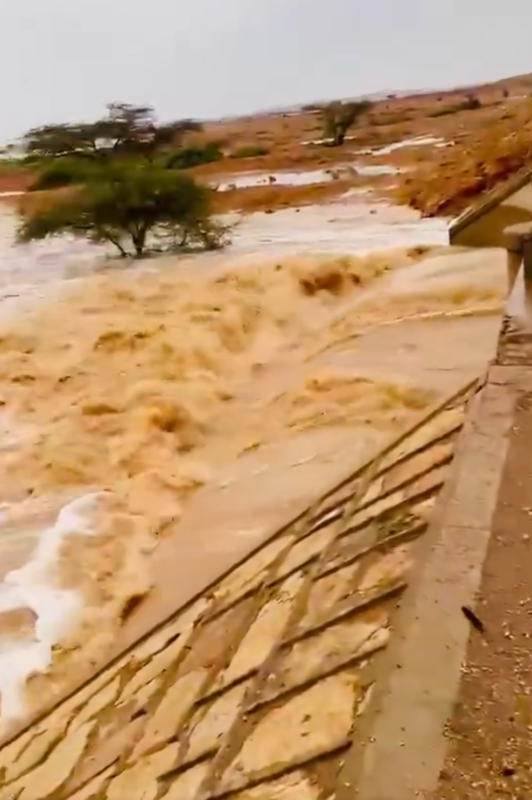
LASANOD — Heavy rains have fallen in Lasanod, the capital of the North Eastern State of Somalia, for several days, raising both relief and concerns about flash flooding across the Sool region.
Local reports highlighted the resilience of the region’s ageing infrastructure. A post on X noted that the Maraaga Bridge, located approximately nine kilometres from the center of Lasanod, remains standing despite being built more than 50 years ago.
The rains come as Somalia’s Deyr season intensifies. As reported in FTL Somalia’s coverage of the Super El Niño warnings, the Somali Disaster Management Agency (SoDMA) has placed 29 districts across 14 regions on high alert for riverine and flash flooding, including areas in the North Eastern State.
The rainfall is part of a wider pattern of extreme weather across Somalia. As reported in FTL Somalia’s coverage of the Mogadishu floods, heavy rains submerged roads in the capital, disrupting schools, businesses and transportation. In Hudur, flash floods affected 37 displaced households, as detailed in FTL Somalia’s coverage of the Hudur floods.
Infrastructure Under Pressure
The Maraaga Bridge’s survival is notable in a country where infrastructure has often been neglected or destroyed by decades of conflict. The bridge is part of the road network connecting Lasanod to surrounding areas, a route vital for the movement of people and goods in the Sool region.
According to the latest FAO-SWALIM forecast, moderate to heavy rains are expected over parts of Sool and Sanaag. The forecast warns that localized heavy rainfall can cause flash flooding along seasonal watercourses and in low-lying settlements, posing risks to communities and infrastructure. As reported in FTL Somalia’s coverage of the SWALIM forecast, the heaviest rains this week are forecast over Mudug, Nugaal and Galgaduud, easing drought conditions but bringing a risk of flash flooding.
Critical Note
The Maraaga Bridge is a testament to the engineering standards of a previous era. Its survival after more than five decades, without the maintenance that modern infrastructure requires, stands in contrast to the state of many roads and bridges in Somalia today, which have deteriorated due to neglect and conflict.
But durability is not the same as adequacy. The bridge was built for the traffic and weather conditions of the 1970s. Somalia’s population has grown, its economy has changed, and the climate is becoming more extreme. The fact that a 50-year-old bridge is still standing is a point of pride, but it is also a reminder that the country has not invested in new infrastructure at the scale required to meet current and future needs.
The rains that are now falling in Lasanod are part of a broader weather system that is bringing both relief and risk to Somalia. For the North Eastern State, the immediate priority is to monitor the situation, ensure that roads remain passable, and prepare for the possibility of flash flooding. In the longer term, the region will need to invest in maintaining and expanding its infrastructure to keep pace with a changing climate and a growing population.
Share your story. FTL Somalia is continuing to monitor the impact of Super El Niño events across Somalia. If you have information or insights to share, contact us at info@ftlsomalia.com. Your identity will be protected.