MOGADISHU, Somalia’s Ministry of Health and Human Services has released a Somali citizen from quarantine after two separate tests confirmed he was not infected with the Ebola virus, following his direct contact with an Ebola patient who died in Kenya on October 5, 2026.
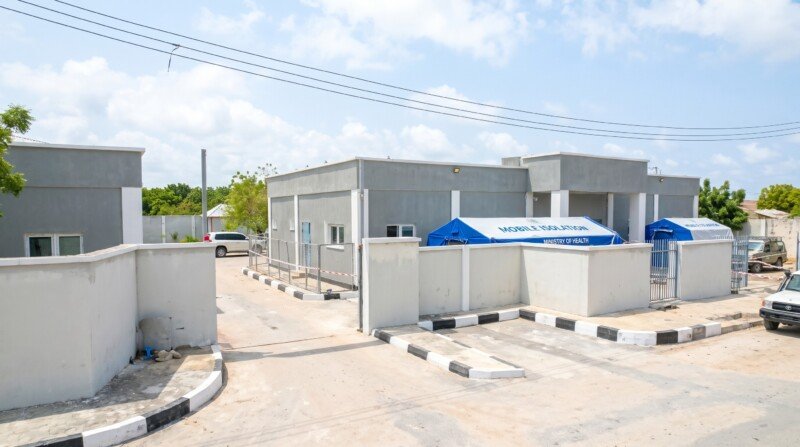
According to a press release issued by the Ministry on October 24, the citizen was placed in quarantine on October 12 at the Ebola quarantine and treatment centre at Forlanini Hospital in Mogadishu. The Ministry said the man had been in direct contact with a person who died of Ebola in Kenya, and that he was quarantined safely and with dignity in accordance with international health procedures.
The Ministry conducted two tests during the quarantine period. The first test, carried out in Somalia on October 12, returned negative. On October 19, the Ministry sent a second sample to a laboratory abroad to confirm the result. That test also came back negative on October 23, definitively confirming that the man was not infected with the virus.
The Ministry said the citizen showed no symptoms of Ebola during quarantine and had completed the 21-day health monitoring period counted from October 3, the last day he had contact with the infected person. Based on the two test results, the completion of the monitoring period, the man’s health status, and a public health risk assessment, the Ministry decided to release him from quarantine in line with national and international health guidelines.
No Confirmed Case in Somalia
The Ministry reiterated that no Ebola case has been confirmed in Somalia to date, and that the quarantined man was a case that had originated outside the country. It said it would continue to strengthen disease surveillance, preparedness at points of entry, and measures to prevent the spread of infectious diseases.
The Ministry urged the public to obtain health information from official sources and to avoid spreading unverified reports. It also provided a list of Ebola symptoms, including sudden fever, severe fatigue, muscle pain, headache, sore throat, vomiting, diarrhea, and unexplained bleeding, and advised anyone experiencing these symptoms to contact the toll-free number 995.
The Initial Quarantine and Tracing Operation
The case began when Somalia’s International Health Regulations office received an official notification from Uganda on the evening of October 10, stating that a Somali citizen and a Kenyan citizen had travelled together from the Democratic Republic of Congo through Uganda. As reported in FTL Somalia’s coverage of the initial quarantine, the two men stayed in the same hotel and took the same taxi to Entebbe Airport before separating. The Somali citizen flew to Mogadishu via Addis Ababa, while the Kenyan citizen travelled to Nairobi, where he later died of Ebola.
The Ugandan report included the Somali citizen’s name, passport number, flight details and seat number. A joint investigation lasting nearly 24 hours, involving the Immigration Agency, the Criminal Investigation Department, the Ministry of Health, and the National Institute of Health, succeeded in safely quarantining the citizen at Forlanini Hospital.
The Ministry also quarantined ten other Somali citizens who had returned from the DRC through Uganda, as reported in FTL Somalia’s coverage of the expanded quarantine measures. Those individuals were also undergoing laboratory testing and medical monitoring.
The Regional Context
The release comes as Kenya continues to manage its own Ebola cluster. As reported in FTL Somalia’s coverage of Kenya’s outbreak, all 135 contacts linked to the index case in Kenya have been traced, and the first group of quarantined contacts has begun returning home.
The Kenyan index patient transited through Uganda and flew to Nairobi without being detected at the airport. A similar case arriving in Mogadishu would encounter screening systems that a WHO assessment rated at 20 percent capacity, with no dedicated isolation areas and no biosecure transport.
Somalia has taken steps to strengthen its preparedness. In May, the government convened a high-level national conference on Ebola readiness at the National Public Health Emergency Operations Center, bringing together security, foreign affairs, health, civil aviation, and disaster management officials, as reported in FTL Somalia’s coverage of the national preparedness meeting.
In October, following Kenya’s first case, the Cabinet approved the establishment of a national Ebola preparedness committee composed of six ministries and chaired by the Second Deputy Prime Minister, as reported in FTL Somalia’s coverage of the Cabinet decision. However, the Cabinet’s own assessment noted that Somalia’s points of entry have International Health Regulations core capacities of only 20 percent, and the federal government does not control all airports and borders.
Critical Note
The release of the quarantined citizen is a welcome development, and the Ministry of Health deserves credit for the transparent and methodical way it handled the case. The decision to send a second sample to an international laboratory, rather than relying solely on the domestic test, reflects a commendable commitment to accuracy. The public communication was clear, the timeline was documented, and the release was based on a combination of laboratory results, clinical observation, and risk assessment.
But the case also illustrates the fragility of Somalia’s position. The citizen was quarantined because he had contact with an Ebola patient in Kenya. That patient had travelled from the DRC through Uganda and arrived in Nairobi without being detected. Somalia’s ability to detect a similar case at its own points of entry remains limited, as the WHO assessment of 20 percent capacity demonstrates.
The Ministry’s statement that no Ebola case has been confirmed in Somalia is accurate, but it is not a guarantee for the future. The DRC outbreak continues to accelerate, with more than 9,000 confirmed cases and 4,500 deaths. The Bundibugyo strain has no approved vaccine or specific treatment. Kenya’s cluster appears contained, but the movement of people across East Africa is constant. The quarantined man was released because he was not infected. The next case may not be so fortunate.
Recommended Reading On ftlsomalia.com
- Somalia Quarantines Citizen Who Travelled with Kenyan Ebola Victim
- Somalia Quarantines 10 Citizens Who Returned from DR Congo Over Ebola Fears
- Somalia Holds Ebola Preparedness Coordination Meeting
- Somali Cabinet Approves Ebola Preparedness Committee, Reviews EAC Benefits and WTO Progress
- Somalia’s Neighbor Signals Progress: Kenya Says Ebola Outbreak “Within Reach” of Ending