MOGADISHU — Somalia’s federal government has said it is ready to take over responsibility for the country’s security, as plans proceed for the Somali National Army to gradually assume duties currently held by the African Union Stabilisation and Support Mission in Somalia (AUSSOM).
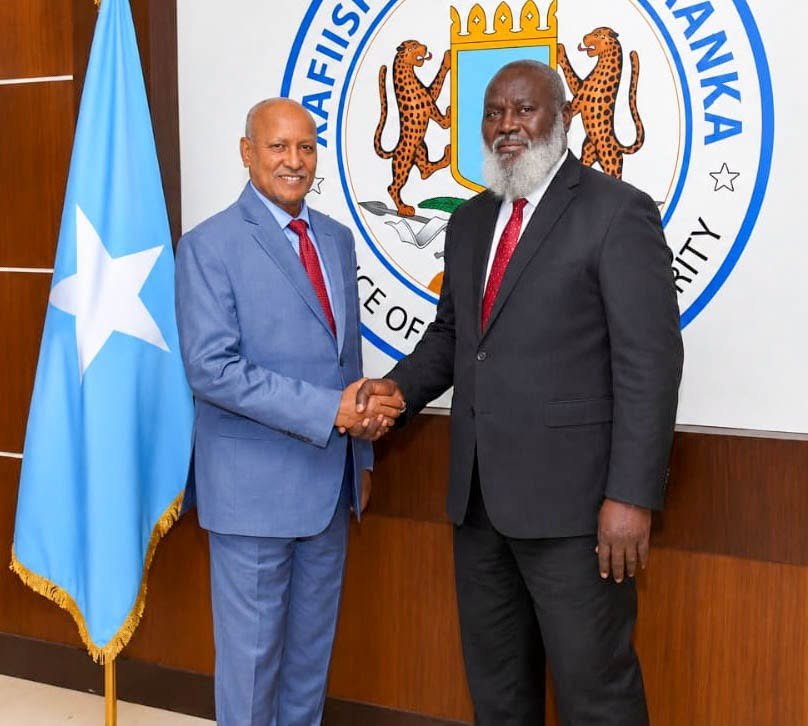
The matter was discussed during a meeting at Villa Somalia that lasted several hours and brought together the National Security Adviser and the Head of the AUSSOM mission. The talks focused on the country’s security situation and efforts to build the capacity of the Somali National Army.
AUSSOM Commits to Continued Cooperation
The Head of the African Union mission reportedly confirmed at the meeting that AUSSOM is committed to strengthening its cooperation with the Federal Government of Somalia and the country’s security forces, which are preparing to fully assume security responsibilities.
The National Security Adviser thanked the AUSSOM mission for its role in maintaining security in Somalia and in the fight against Al-Shabaab during its deployment in the country.
AUSSOM has been part of Somalia’s security efforts for nearly two decades, having gone through various transformations since African Union troops first arrived in the country in 2007.
Phased Transition Plan
The current plan stipulates that responsibility for the country’s security will be transferred to the Somali National Army in phases, so that the government and national security institutions take on the primary role in maintaining security.
AUSSOM’s mandate runs until the end of 2026, with United Nations Security Council resolutions authorizing up to 11,826 uniformed personnel, including 680 police officers. As detailed in FTL Somalia’s coverage of the Kampala summit, African leaders endorsed a phased and coordinated withdrawal that would preserve security gains achieved over nearly two decades, while Somali officials emphasized that political matters should remain domestic and not be internationalized .
The transition is taking place against a backdrop of significant financial uncertainty. The United States notified the African Union in July 2026 that it would end funding for the UN Support Office in Somalia (UNSOS), which provides critical logistics including troop rotations, transport, food, fuel and medical supplies. As reported in FTL Somalia’s coverage of US policy debates, the US has contributed nearly $2 billion to the UN support mission but has grown frustrated with what it views as insufficient progress by Somali leaders in assuming responsibility for their own security . UNSOS operational costs amount to approximately half a billion dollars annually, roughly three times AUSSOM’s own budget.
Capacity Building Efforts
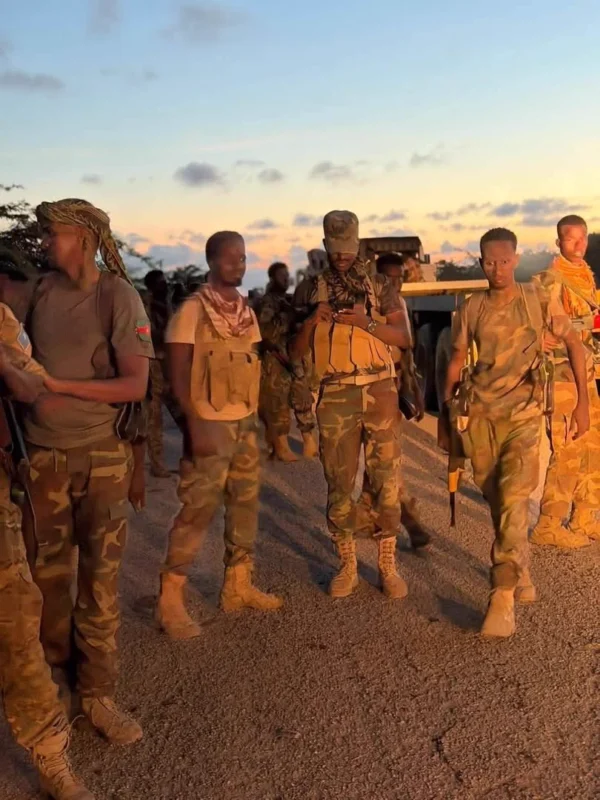
The Somali National Army has taken steps to expand its ranks. In August 2026, approximately 3,000 soldiers graduated at the Xananbuure camp in Galgadud, the largest cohort trained on Somali soil since the collapse of the central government in 1991. As reported in FTL Somalia’s coverage of the graduation, President Hassan Sheikh Mohamud presided over the ceremony, with the graduating troops demonstrating combat skills during the event . The recruits, drawn from all federal member states, completed nearly a year of training delivered by instructors from Ukraine, Romania and Sudan under a Saudi-funded initiative.
Institutional progress has also been made in the transfer of security responsibilities. In August 2026, AUSSOM formally transferred the technical management of the Buurhakaba Forward Operating Base to the Somali National Army’s 60th Division in the Bay region, as detailed in FTL Somalia’s coverage of the handover . The 60th Division has been actively involved in operations against Al-Shabaab in the Bay and Bakool regions.
However, the transition continues to face significant operational challenges. As reported in FTL Somalia’s coverage of defence cooperation, Minister Fiqi has previously briefed parliament on security gains, yet despite these tactical successes, Al-Shabaab continues to control large areas of southern and central Somalia and has repeatedly demonstrated its ability to exploit political divisions and weak state institutions . The recurring challenge is retaining trained personnel, ensuring regular pay and supplying units at the front. As documented in FTL Somalia’s coverage of operations near Teedaan, Al-Shabaab has been able to re-establish a presence in areas previously liberated, underscoring the group’s resilience and the challenges of securing liberated territories .
Critical Note
Somalia’s stated readiness to take over security responsibilities reflects both genuine progress and mounting external pressure. The federal government has expanded its training programs, and the Xananbuure graduation demonstrates that it can now run large-scale basic training on Somali soil. The handover of Buurhakaba base shows that the technical transfer of facilities is proceeding. But readiness is not simply a matter of producing soldiers or transferring bases.
The transition is being forced, in part, by financial realities that are beyond Mogadishu’s control. The United States has made clear it will not sustain the logistical backbone of the AU mission beyond the end of 2026. The African Union itself acknowledges that the mission is no longer tenable in its current form. Somali forces are therefore being asked to take on responsibilities sooner than many analysts consider prudent.
The record of previous security handovers is not encouraging. Since 2022, the pattern has been that areas cleared by Somali and allied forces are often lost again within months because the army cannot garrison and supply what it takes. The loss of Teedaan, where Al-Shabaab re-established a presence despite previous operations, illustrates the consequences of stretched logistics and insufficient ammunition. The real test of this transition will not be the meeting at Villa Somalia or the statements of readiness. It will be whether Somali forces can hold ground, pay their soldiers and sustain operations when the AU mission’s logistics are no longer there to support them.
Recommended Reading On ftlsomalia.com
- African Leaders Endorse Phased AUSSOM Withdrawal as Somalia Rejects Internationalization of Domestic Politics
- President Hassan Sheikh Graduates SNA Troops in Galgaduud as Government Expands Counter-Terrorism Capacity
- AUSSOM Handover in Buurhakaba Signals Progress Amid Looming Mission Closure
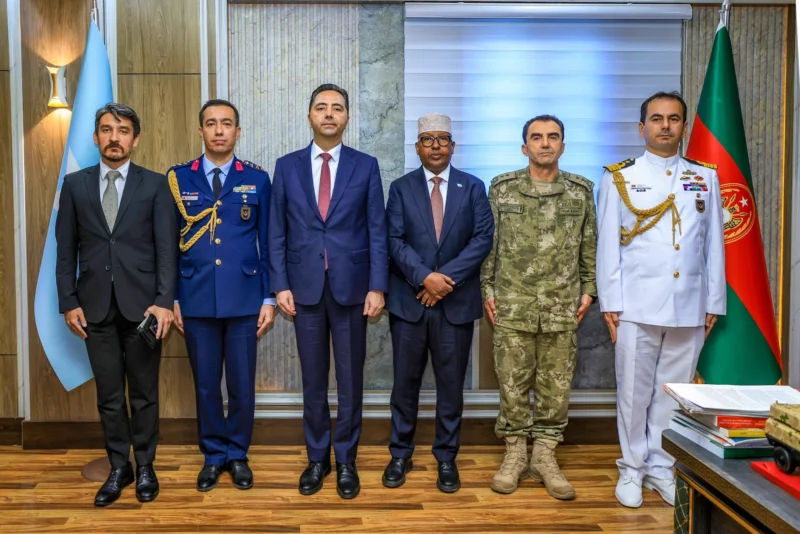
- Somali Defence Minister and AU Envoy Strengthen Ties as AUSSOM Faces Funding Uncertainty
- US Faces Critical Choice on Somalia Security Assistance as AUSSOM Mandate Nears Expiry
- Somali Army, International Partners Target Al-Shabaab in Suullaay, Killing 18 and Wounding 21