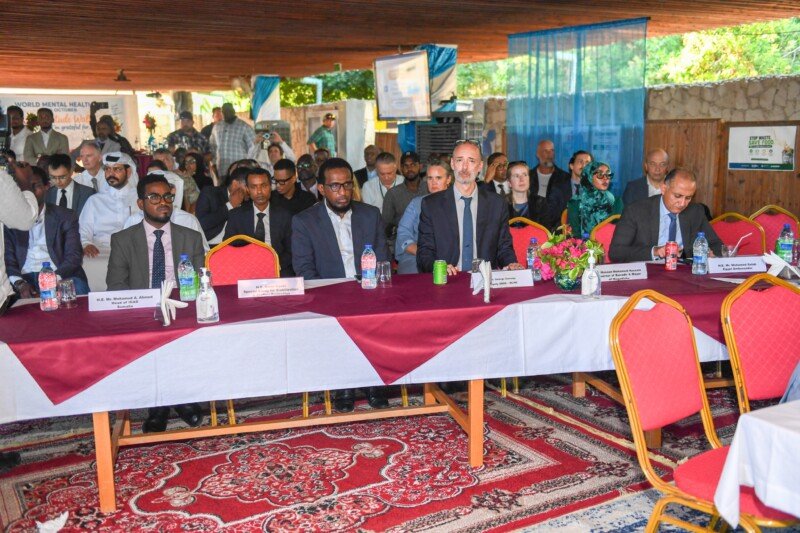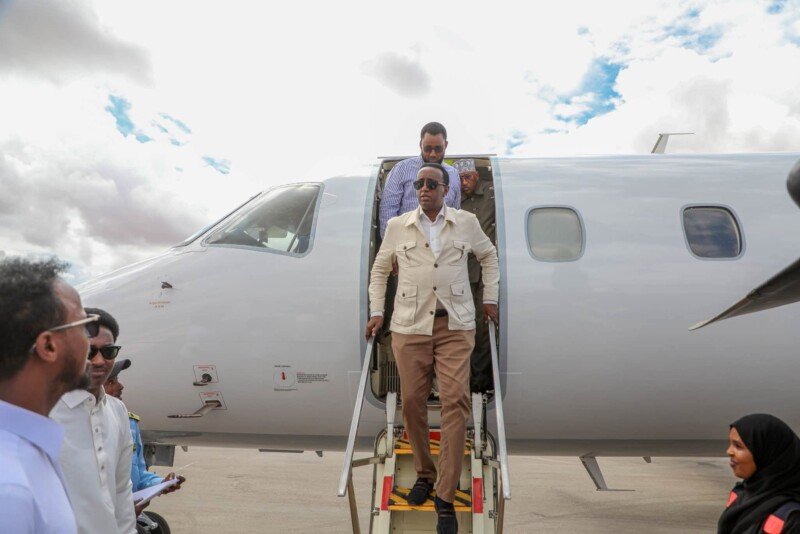
DHUSAMAREB — The Chairperson of the National Independent Electoral and Boundaries Commission (NIEBC), Abdikarim Ahmed Hassan, arrived in Dhusamareb, the capital of Galmudug State, on Thursday to attend the swearing-in ceremony of Members of Parliament elected under the one-person, one-vote system.
The ceremony marks a significant step in the implementation of direct elections, with the newly elected MPs formally assuming their duties to represent the people of Galmudug. The NIEBC Chairperson’s presence underscores the commission’s role in overseeing the electoral process and ensuring that the transition to a new parliament proceeds in accordance with the law.
Implementation of the One-Person, One-Vote System
The Galmudug elections were part of Somalia’s broader efforts to replace the indirect clan-based electoral model with a system of universal suffrage. The elections were held on 30 September 2026, after the Supreme Court annulled the results of the previous elections held on 30 July 2026, citing administrative and legal irregularities.
As reported in FTL Somalia’s coverage of the Supreme Court ruling, the court found that the July 30 vote had not been administered in accordance with constitutional and electoral requirements for free, fair and impartial elections. The court ordered a rerun, which was held on 30 September 2026.
According to the official results, 12 political organizations participated in the Galmudug elections, and 89 members were elected to the Galmudug House of Representatives, alongside 243 members of the local councils. The number of registered voters reached 267,420, while the number of votes cast reached 149,475.
Election Results
The official results showed that the Justice and Unity Party (JSP) won 67 of the 89 seats in the Galmudug House of Representatives, representing 75.28 percent. The Sincad party won 7 seats, Karaama won 6 seats, while other organizations won smaller numbers of seats.
A Milestone Amid Political Tensions
The swearing-in ceremony comes as Somalia faces the threat of Super El Niño floods, with the Shabelle River at Jowhar above its high flood-risk level and the humanitarian response plan only 15.2 percent funded. As reported in FTL Somalia’s coverage of the Shabelle River levels, the river at Jowhar stood at 5.36 metres, just 14 centimetres below bankfull.
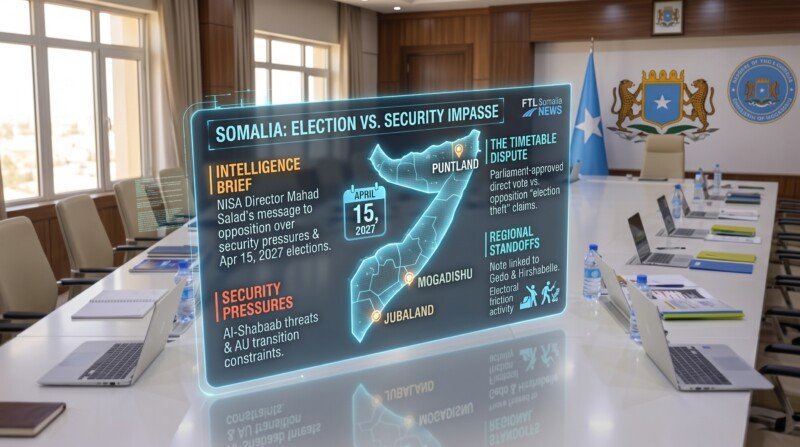
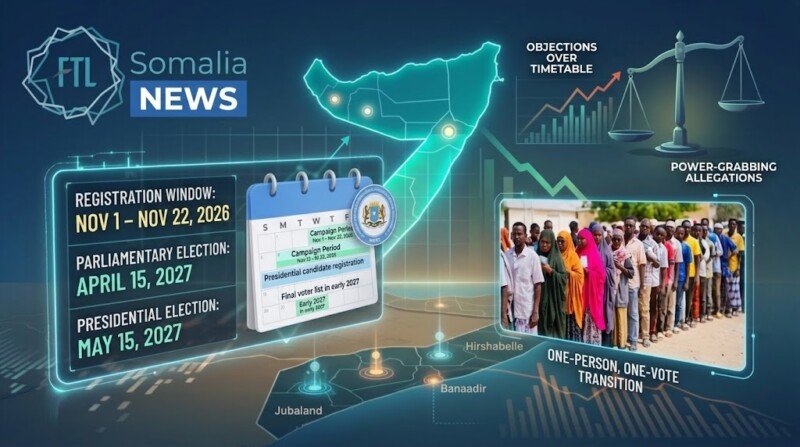
The ceremony also takes place amid heightened political tensions between the federal government and the opposition, which has rejected the federal election timetable announced by the NIEBC on 15 October. As reported in FTL Somalia’s coverage of the opposition’s rejection, the Somali Salvation Forum accused the government of “election theft” and “power-grabbing.”
Despite these tensions, the Galmudug swearing-in represents a concrete step in the implementation of direct elections at the federal member state level. It follows similar electoral processes in other states and marks a departure from the indirect model that has characterized Somali politics for more than two decades.
Critical Note
The swearing-in of Galmudug’s newly elected MPs is a procedural milestone, but its significance should not be overstated. The election that produced this parliament was itself a rerun, ordered by the Supreme Court after the original vote was annulled for irregularities.
The most troubling aspect of this process is the role of the NIEBC Chairperson, Abdikarim Ahmed Hassan. He is the same official who oversaw the July 30 Galmudug election that the Supreme Court annulled, finding that it had breached constitutional requirements of freedom, fairness, and impartiality, and that these breaches had affected the result. Despite this rebuke, he remained in his position and led the rerun election. He is now tasked with overseeing federal elections in 2027. The fact that the same chairperson who presided over an election annulled for illegality and irregularity remains in office, rather than resigning, raises serious concerns about the impartiality and integrity of the entire electoral process.
The credibility questions raised by the Galmudug rerun, particularly the exclusion of the Towfiiq party that had successfully challenged the original vote, remain unanswered. Those questions will follow the commission as it moves to the national stage.
For Galmudug, the new parliament inherits a region facing serious challenges: flood risk, food insecurity, and the ongoing fallout from the political conflict between the federal government and Laftagareen. Whether the new MPs can address those challenges, or whether they will be consumed by the political disputes that dominate Mogadishu, remains to be seen. The swearing-in is a beginning, not an ending.
Share your story. FTL Somalia is continuing to investigate Somalia’s electoral process and the implementation of direct elections. If you have information or insights to share, contact us at info@ftlsomalia.com. Your identity will be protected.
Recommended Reading On ftlsomalia.com
- Galmudug Election Finalized as Supreme Court Certifies Rerun Results
- Towfiiq Party Barred from Galmudug Rerun Despite Having Successfully Challenged Earlier Results
- Somalia’s Opposition Accuses Government of ‘Election Theft’ After NIEBC Announces 2027 Timetable
- Shabelle River Nears Flood Alert Level at Jowhar as El Niño Rains Intensify