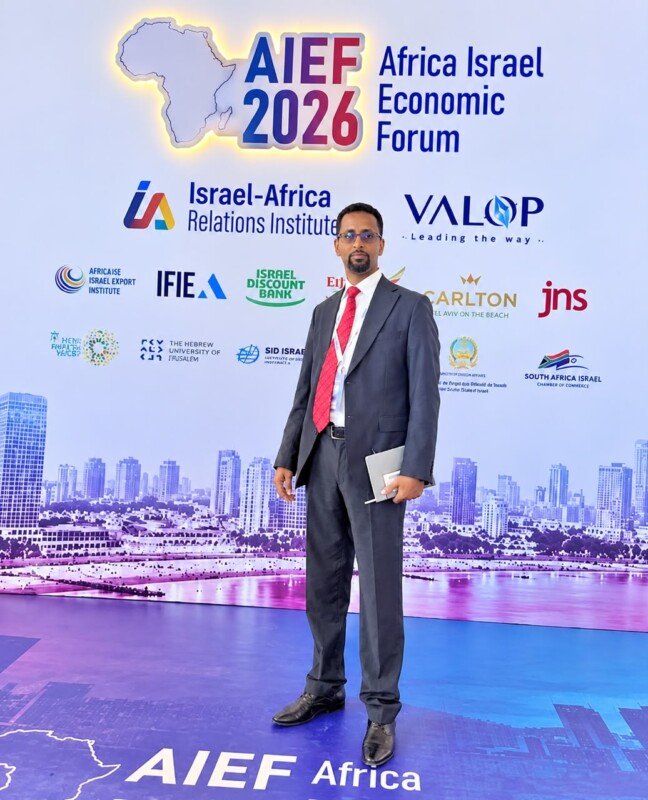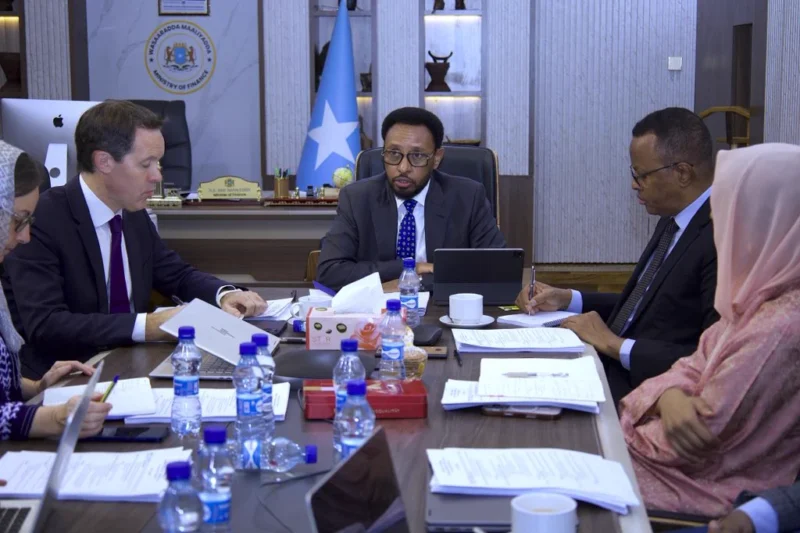
MOGADISHU, The Federal Government of Somalia has spent the past decade passing laws to attract foreign investment. It has a Foreign Investment Law, an Investors and Investments Protection Law, and a new Investment Law enacted in 2025 that established the Somalia Investment Promotion Agency and a National Investment Council, as reported in FTL Somalia’s coverage of the new investment law. It has a National Investment Promotion Strategy and a “one-stop shop” registration system. Its officials travel to Gulf capitals and European forums to present Somalia as “open for business.”
But the 2026 Investment Climate Statement, published by the U.S. Department of State, paints a more complicated picture. While the legal framework for investment has expanded, the institutions needed to enforce it have not kept pace. The report identifies a series of structural barriers that continue to deter the very capital the government is trying to attract: a judicial system incapable of resolving commercial disputes, weak property rights, rampant corruption, a financial sector cut off from the global system, and an insurgency that taxes businesses with impunity.
The Laws Exist. The Courts Do Not.
The report notes that Somalia has no commercial courts. Domestic court processes are “widely viewed as corrupt and subject to external interference.” A 2020 USAID-funded report found that the courts lack political independence and face competition from parallel Al-Shabaab-run Islamic courts, which some citizens reportedly use because they are perceived as more efficient and less corrupt than the formal system.
For foreign investors, this is a fundamental problem. A contract is only as valuable as the ability to enforce it. The report states that “weak judicial capacity, limited administrative law procedures, corruption concerns, and inconsistent enforcement reduce the effectiveness and predictability of judicial review.” As a result, investors often rely on clan mediation or international arbitration outside Somalia, typically in Djibouti or the UAE.
The government has announced plans to establish a commercial court system in 2026, but no such courts currently exist. And while the 2023 Investors and Investments Protection Law provides for arbitration under international rules, Somalia is not a party to the New York Convention, meaning foreign arbitral awards are not automatically enforceable in Somali courts.
The Financial Chokehold
Somalia’s investment climate cannot be separated from its financial isolation. The State Department report notes that “moving money into and around the country through traditional banking mechanisms is difficult,” and that the financial sector is constrained by a lack of correspondent banking relationships.
The cost of this isolation is measurable. As reported in FTL Somalia’s coverage of the financial sector, Central Bank Governor Abdirahman M. Abdullahi has estimated that Somalia loses approximately $210 million annually to intermediary fees because no Somali bank can send or receive U.S. dollars directly. Every transaction is routed through correspondent institutions in other countries, adding cost and opacity at each step.
The State Department identifies the root cause: concerns that Al-Shabaab and ISIS-Somalia exploit regulatory and legal deficiencies in the financial sector. These gaps include weak Know Your Customer capabilities, incomplete anti-money laundering laws, and limited use of national identification documents. The Central Bank has licensed 15 commercial banks and six mobile money providers, but correspondent relationships remain limited to partial arrangements with institutions in Türkiye, Kenya, and the UAE.
The Gap Between Promotion and Investment
The government’s investment promotion efforts are active, but they often run ahead of the conditions needed to sustain the investments they seek. As reported in FTL Somalia’s coverage of the Egyptian-backed Zain-al-Abdin Group’s visit, the Director General of the Investment Promotion Agency, Faisal Adam Hassan, received a delegation from the company to discuss potential investments in fisheries, agriculture, and livestock.
The visit is part of a sustained effort to attract international capital to a sector the government estimates could generate billions of dollars annually. But as FTL Somalia noted, the sectors being pitched are precisely those where the state’s ability to protect and regulate is weakest. An Egyptian investor exploring fisheries opportunities will find a coastline rich in fish and poor in the infrastructure needed to extract value from it. The SomTürk precedent, which has already provoked a formal rejection from Puntland, illustrates the risk that any major fisheries deal will become entangled in the federal-state dispute.
An investor considering a multi-year commitment would be prudent to ask which authority will regulate their license, protect their assets, and honor their contract in three years’ time. The government’s investment promotion agency can facilitate meetings and provide information. It cannot guarantee that the courts will enforce a contract or that a regional administration will recognize a federal concession.
The $2 Billion Lifeline the State Cannot Fully Control
Remittances remain the backbone of Somalia’s economy, estimated at roughly $2 billion annually, or about 25 percent of GDP. Most inflows are processed through hawalas and mobile money platforms, which have become the primary channel for household income, food, education, and small business investment.
The State Department report details how the government is trying to regulate this sector to counter terrorist financing. The National Anti-Money Laundering Committee has issued guidelines to mobile money operators limiting daily transactions per account to $300 and requiring biometric registration of customers. The Central Bank has launched the Somali Payment Switch and the Somali Instant Payment System to enable real-time, interoperable payments.
But the tension is inherent. As FTL Somalia reported in its coverage of the financial sector, the reforms are real but the trust deficit persists. International donors and financial institutions have been shaken by repeated allegations of aid diversion and corruption, and the burden of proof remains on Somali institutions to show that the billions flowing into the country are reaching those who need them most.
The Security Tax
The State Department report is blunt about the security environment. Al-Shabaab “controls large parts of south-central Somalia and conducts attacks on government facilities, civilians, and business.” The group “routinely extorts payments from businesses and households.” Insecurity is “frequently cited by businesses as the top constraint to operating in Somalia.”
This is not an abstract threat. As reported in FTL Somalia’s coverage of counter-extortion operations, Somali security forces have conducted repeated raids on Al-Shabaab checkpoints and “tax collectors,” seizing extortion receipts and dismantling the group’s revenue infrastructure. The group has long relied on illegal taxation of civilians, businesses, and road users as a primary source of funding, collecting an estimated $120 million annually from farmers, traders, and vulnerable rural communities, as detailed in FTL Somalia’s coverage of the group’s revenue networks.
For investors, this means accounting for additional costs: restricted movement, insurance, personnel and facility protection, and in some cases, payments to both the government and the insurgency. The State Department also notes a “general risk of wrongful detention” due to fragmented legal frameworks governing judicial and police processes.
The New Investment Architecture and Its Limits
The government has not been idle. The 2025 Investment Law, approved by the Senate in November 2025, established the Somalia Investment Promotion Agency as the central investment facilitation agency under the Ministry of Planning, Investment and Economic Development, with a mandate to streamline procedures and provide one-stop-shop services.
In May 2025, President Hassan Sheikh Mohamud signed four economic reform bills into law: the Insurance (Takaful) Bill, the Income Tax Bill, the Revised Financial Institutions Bill, and the Revised Anti-Money Laundering and Counter-Terrorist Financing Bill. The President described them as “transformative tools” to bolster investor confidence and protect financial systems, as reported in FTL Somalia’s coverage of the reform bills.
But the State Department report notes that “implementation remains at an early stage, and institutional capacity constraints persist.” The National Investment Incentives Framework, initiated in 2024 to formalize tax holidays and customs exemptions, remains in draft form. Investment incentives continue to be applied on an ad hoc basis, with line ministers and the Prime Minister offering discretionary exemptions.
Critical Note
The State Department’s report is not an investment promotion brochure. It is a risk assessment, and its findings are a useful corrective to the government’s optimistic narrative.
Somalia has made real progress in passing investment laws. The 2023 Investors and Investments Protection Law, the 2025 Investment Law, and the establishment of the investment promotion agency provide a legal framework that did not exist a decade ago. The creation of a one-stop shop and the signing of financial reform bills signal intent. But laws are not institutions. A commercial code is meaningless without commercial courts. An investment protection law is hollow without a functioning land registry. A tax incentive framework is ineffective when incentives are granted through discretionary deals between ministers and investors.
The financial isolation is perhaps the most binding constraint. The State Department notes that the lack of correspondent banking is rooted in AML/CFT concerns, but the government’s reforms, while real, have not yet convinced international banks to reconnect. The $210 million annual loss to intermediary fees is a direct cost of this trust deficit, and it falls hardest on the remittances that sustain ordinary households.
The security tax is the other unavoidable reality. Al-Shabaab’s extortion networks are not a peripheral nuisance. They are a parallel fiscal system that competes with the state, and they operate in the same territory where the government is trying to attract investment. The counter-extortion operations that FTL Somalia has documented are necessary, but they are not sufficient to create the predictability that long-term capital requires.
The government’s stated goal is to attract $5.3 billion in private investment under the National Transformation Plan. That is an ambitious target for any country, let alone one with an active insurgency and a judicial system that cannot enforce contracts. The report suggests that the government’s priority should be less on passing new laws and more on building the institutions that make existing laws work. Until that happens, Somalia will remain open for business in name, but closed for justice in practice.
Recommended Reading On ftlsomalia.com
- Somali Senators Approve New Investment Law
- Egyptian-Backed Zain-al-Abdin Group Explores Fisheries and Livestock Investment in Somalia
- Somalia Loses $210 Million Annually in Costly Aid and Remittance Transfer Chains
- Police Eliminate Al-Shabaab Extortionist, Dismantle Illegal Checkpoint in Lower Shabelle
- Somali President Signs Landmark Economic Reform Bills into Law