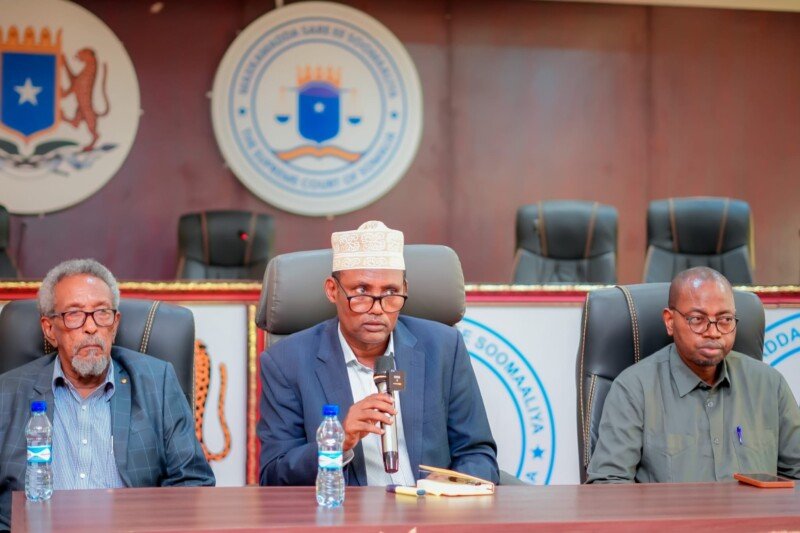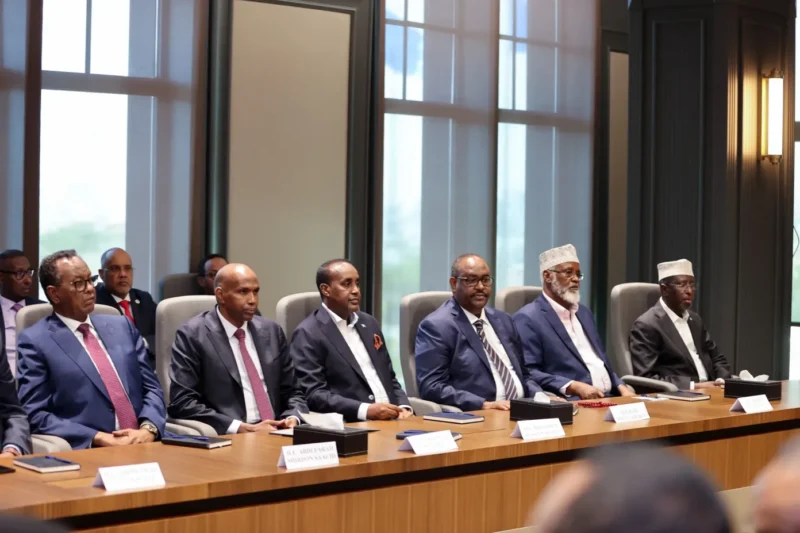
MOGADISHU, The National Salvation Forum (Madasha Samatabixinta Qaranka) has reportedly accepted an offer from President Hassan Sheikh Mohamud to give dialogue another chance to resolve the country’s political crisis, naming a three-member committee to engage with the government.
The committee comprises former Galmudug President Abdikarim Hussein Guled and MPs Abdirahman Abdishakur Warsame and Abdullahi Arab. According to reports, the committee is expected to meet the government’s technical committee before November 14 to agree on the agenda, format, and foundational principles for the talks.
The development follows President Mohamud’s official invitation to opposition parties, political organizations, and civil society to a consultative forum in Mogadishu scheduled for November 14-18. The presidency said the forum aims to seek common ground on federal elections and other political matters.
A Cautious Acceptance
The National Salvation Forum’s decision to engage is a notable shift, but it does not signal that the opposition has conceded on the substantive disputes. The opposition has consistently maintained that the government’s consultative forum must transform into formal negotiations where both sides can make concessions. The acceptance of dialogue does not mean the parties have agreed on the constitutional amendments, the electoral timetable, or the voting system. As former President Mohamed Abdullahi Farmaajo has warned, proceeding without consensus risks parallel elections and renewed conflict.
The move follows reported meetings between opposition representatives and NISA Director Mahad Mohamed Salad, who conveyed the President’s message and urged the opposition to accept the talks. The details of those meetings have not been officially disclosed by either side.
Notably absent from the process so far are Puntland, Jubaland, and other key opposition figures. Puntland President Said Abdullahi Deni has dismissed the Mogadishu forum as a waste of time and called on President Mohamud to resign, proposing a transitional council to lead the country to elections. Jubaland has similarly rejected the federal government’s electoral process, and Puntland has previously dismissed the federal election plans as “predetermined and undemocratic”, raising questions about whether the dialogue can produce a national consensus without the participation of the two most powerful federal member states.
The government’s position remains firm. President Mohamud has repeatedly defended the shift to one-person, one-vote elections, stating that indirect elections are a relic of the past. The opposition’s demand for a negotiated settlement on the electoral model and the timetable remains the central obstacle to any agreement.
The credibility of the process is further complicated by questions surrounding the electoral commission. The National Independent Electoral and Boundaries Commission has already cleared 12 groups for the Galmudug vote, but its handling of the rerun, where a party that won a court challenge was excluded from the ballot, has raised concerns about its ability to administer a credible national election.
Critical Note
The National Salvation Forum’s acceptance of dialogue is a positive development. It is better for political actors to talk than to refuse to talk, and the naming of a committee with figures of the stature of Guled, Abdishakur, and Arab suggests that the opposition is engaging seriously. The decision to meet the government’s technical committee before the forum opens is a practical step that could prevent the November gathering from becoming a ceremonial event with no substance.
But the acceptance should not be mistaken for a breakthrough. The opposition has not abandoned its demand for a genuine negotiation, and the government has not signaled that it is prepared to reconsider the electoral timetable or the constitutional changes that the opposition rejects. The dialogue is a process, not an outcome. The gap between the two sides remains wide, and the absence of Puntland and Jubaland from the process means that even a successful Mogadishu forum would not represent a national consensus.
The most significant test will be whether the talks produce a mechanism for resolving the electoral dispute that both sides can accept. If the forum ends with a communiqué that restates the government’s position and the opposition walks away, the exercise will have deepened the mistrust rather than reduced it. If it produces a framework for negotiation on the core issues, it will be a genuine step forward. The committee has a narrow window before November 14 to set the terms. What happens in those meetings will determine whether the forum is a turning point or another missed opportunity.
Recommended Reading On ftlsomalia.com
- Former President Farmaajo Rejects Election Timetable, Warns of Parallel Elections
- President Stands Firm on One-Person, One-Vote Elections
- Electoral Commission Clears 12 Groups for Galmudug Vote as September 30 Deadline Nears
- Deni Tells Mohamud to Resign, Dismisses November Forum as a Waste of Time
- Puntland Leader Slams Federal Government’s Election Plans as ‘Predetermined’ and ‘Undemocratic’