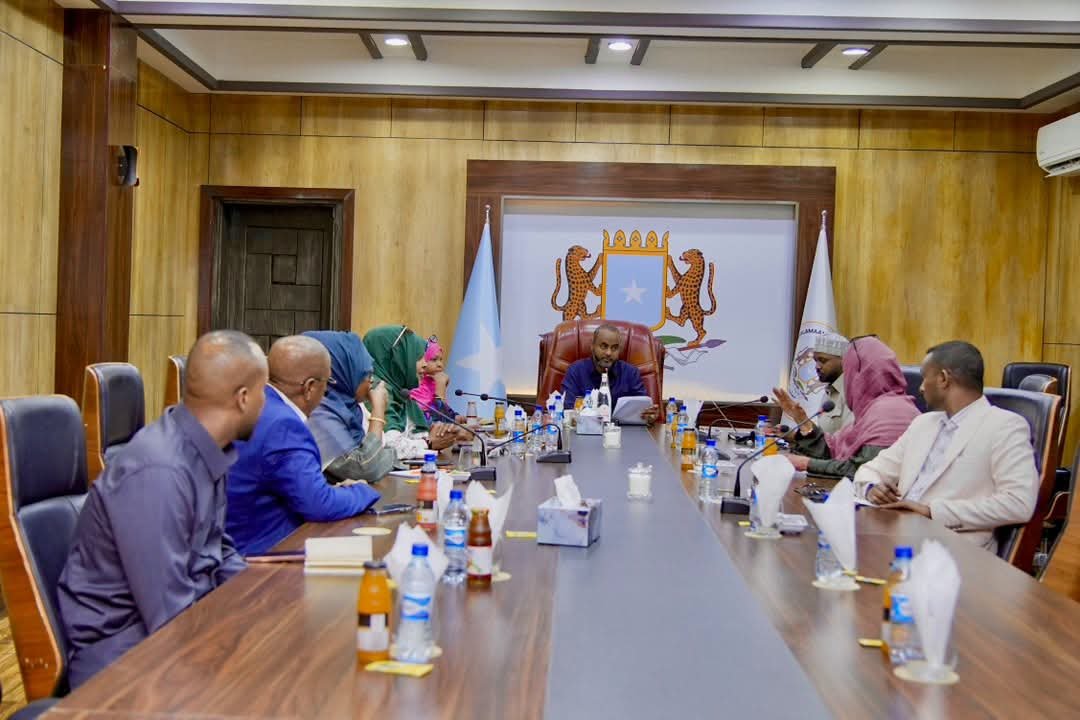

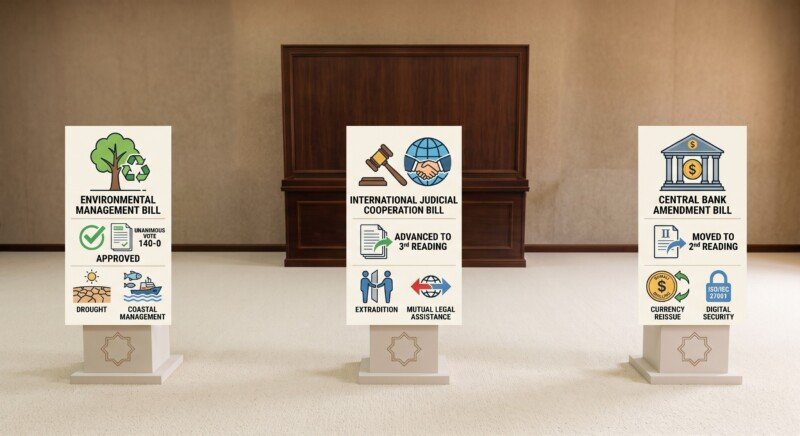
MOGADISHU — Somalia’s House of the People approved the Environmental Management Bill on Wednesday in a unanimous vote, capping a legislative session that also advanced international judicial cooperation legislation and moved amendments to the Central Bank Law to a second reading.
The session, the eighteenth sitting of the eighth parliamentary session, was chaired by Second Deputy Speaker Abdullahi Omar Abshirow. The Environmental Management Bill passed with 140 votes in favour and no votes against or abstentions.
Judicial Cooperation Bill Advances to Third Reading
The House also conducted the third reading of the International Judicial Cooperation Bill, with the report presented by Ali Haji Dahir, Chairperson of the Judiciary, Religious Sites, and Religious Affairs Committee.
The bill establishes the legal framework for Somalia’s judicial cooperation with foreign countries, including Mutual Legal Assistance, Extradition, and the Transfer of Sentenced Prisoners. Public comments on the draft were open until 30 September 2026.
The second reading session was marked by the rejection of a motion to add the general security situation to the agenda. A group of MPs submitted the motion, but the House voted it down and proceeded with the scheduled legislative business.
Central Bank Amendment Moves Forward
At the conclusion of the session, MPs were distributed the second reading of the bill amending the Central Bank of Somalia Law, Law No. 30 of 20 April 2012. The amendment was referred to the next stage of the legislative process.
The Central Bank amendment comes as Somalia’s financial sector undergoes significant reform. The Central Bank has obtained ISO/IEC 27001:2022 certification for its Information Security Management System, granted operating licenses to four Takaful companies, and moved forward with preparations for the reintroduction of the Somali Shilling under a currency board arrangement. The National Payment System Law was also enacted in March 2026.
Critical Note
The unanimous passage of the Environmental Management Bill is notable in a Parliament where contentious votes have become more frequent. However, the substance of the legislation and its enforcement mechanisms remain unclear from the public record. Somalia faces acute environmental challenges, including drought, desertification, illegal charcoal production, and marine resource depletion. Whether the new law provides the institutional capacity and enforcement powers to address these challenges will determine whether it is more than a symbolic measure.
The advancement of the International Judicial Cooperation Bill addresses a genuine gap in Somalia’s legal architecture. As the case of Abdikariim Abdelahi Eidleh demonstrated, Somalia currently lacks the legal framework to extradite criminal suspects to countries with which it has no treaty, even when the requesting state is a key security partner. The bill, if enacted, would provide the statutory basis for such cooperation.
The Central Bank amendment is significant given the institution’s expanding role in financial sector regulation. The Central Bank has been implementing reforms supported by the IMF and World Bank, including preparations for a new currency regime. The amendment may address governance, mandate, or operational provisions that need updating to reflect the Bank’s evolving responsibilities.
What is notable about this session is what it did not address. The House rejected a motion to debate the general security situation, continuing a pattern observed in recent months where the legislature has been willing to process government-backed legislation but hesitant to engage with politically sensitive security matters on the floor. The decision reflects a Parliament that is active on technical legislation but constrained on issues that touch on the executive’s conduct of the war against Al-Shabaab.
Recommended Reading On ftlsomalia.com
- Upper House Approves Bill to Establish National Revenue Authority
- Legal and Diplomatic Roadblocks Emerge in Effort to Bring Somalia-Based Fraud Suspect to U.S. Trial
- Somalia’s Cabinet Celebrates Military Gains Against Al-Shabaab, Approves Civil Service Reforms
- Somalia Advances Public Sector Reform with Landmark Pay & Grading Policy Launch