MOGADISHU — Somalia’s federal government has said it is ready to hold talks with Al-Shabaab members if the group takes a genuine step to renounce what the government describes as an extremist ideology and accepts peace and a system of governance.
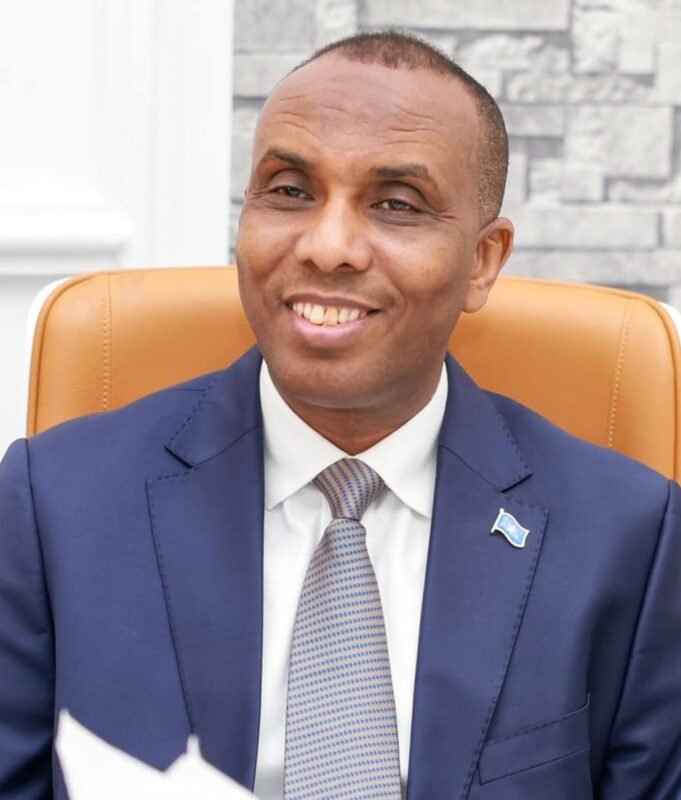
Prime Minister Hamza Abdi Barre, speaking in an interview with a local television station, said the government and Al-Shabaab currently have no political or negotiating relationship, and that what exists between them is war and armed confrontation.
The Prime Minister said, however, that the government is always ready to talk if Al-Shabaab takes a real step toward dialogue. He pointed out that officers and individuals who were previously members of Al-Shabaab have now joined government institutions and the national armed forces, which he said demonstrates that those who abandon the group’s ideology can find a path back into society.
Hamza said the government welcomes anyone who renounces Al-Shabaab’s ideology, noting that the path of reconciliation and reintegration into the community is open to those who wish to move away from the fighting. He said that if Al-Shabaab abandons what he described as its extremist ideology and accepts peace and governance, then a path to dialogue and a political solution becomes possible.
A Long-Standing Government Position
The Prime Minister’s remarks reflect a position the government has articulated repeatedly over the past several years. In 2024, former intelligence chief Fahad Yasin called for a national dialogue aimed at addressing the threat posed by Al-Shabaab, arguing that military options alone had been insufficient. President Hassan Sheikh Mohamud has stated on multiple occasions that his administration might eventually engage with Al-Shabaab, but only from a position of strength.
The government has also invested in defection and reintegration programmes, including the establishment of rehabilitation centres and the provision of incentives for fighters who surrender. As reported in FTL Somalia’s coverage of a recent defection, a man who had been a member of Al-Shabaab for 11 years surrendered to forces in Galgaduud in August 2026, citing the government’s amnesty offer. The Council of Ministers has approved a General Pardon Regulation designed to facilitate the rehabilitation and reintegration of individuals who renounce extremist ideology.
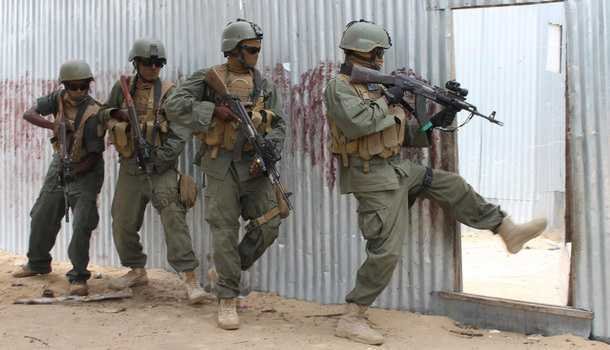
At the same time, the government has continued its military offensive against Al-Shabaab. Defence Minister Ahmed Moallim Fiqi has confirmed that high-ranking members of Al-Shabaab are establishing direct contact with authorities to negotiate their surrender, attributing this internal fracture to the continuous pressure exerted by the Somali National Army and international security partners. A wave of defections followed President Mohamud’s declaration of a “final offensive” against the group in July 2026.
Critical Note
The Prime Minister’s statement that the government is ready to talk to Al-Shabaab if the group renounces extremism is a position that has been articulated before, and it is worth asking whether it represents a genuine opening or a rhetorical posture designed to demonstrate the government’s willingness to pursue a political track while continuing its military campaign. The government has previously stated that it would not negotiate with Al-Shabaab, and the shift in tone raises questions about whether this represents a policy change or a tactical adjustment.
The conditions the government sets are broad and open to interpretation. What does it mean for Al-Shabaab to “renounce extremism”? Does it require disarmament, a formal ceasefire, a public declaration of intent, or a willingness to engage in direct negotiations with the government? The government has not provided a clear framework for what a negotiated settlement would look like or what concessions it might be willing to make. As detailed in FTL Somalia’s analysis of the obstacles to any settlement, Al-Shabaab’s conditions include the immediate withdrawal of all foreign forces and the implementation of strict Islamic law, terms unacceptable to Somalia’s political leaders and international partners.
Al-Shabaab itself has historically rejected the legitimacy of the federal government and has stated that it will not negotiate as long as foreign forces remain in the country. The group has also shown a willingness to engage in indirect talks over local ceasefires and humanitarian access, but has rejected any negotiation that would require it to dissolve as an armed movement or abandon its armed struggle.
The government’s statement also comes as its military campaign continues, which raises the question of whether the offer of talks is meant to complement the military pressure or to provide an alternative path. Some analysts have argued that a combination of military pressure and a credible political track is the most effective way to weaken Al-Shabaab. Others have pointed out that premature talk of negotiations can demoralize government forces and send mixed signals to the public.
What is clear is that the government has not articulated a comprehensive strategy for what it would offer in negotiations, nor has it established a clear process for how talks would unfold. The statement is a general expression of willingness, not a detailed framework for a negotiated settlement. Until the government clarifies what it is offering and what it expects in return, the prospect of meaningful talks with Al-Shabaab will remain remote.
Recommended Reading On ftlsomalia.com
- Former NISA Chief Calls for National Dialogue on Terrorists
- Al-Shabaab Defector Hands Himself Over to Somali Forces in Galgaduud
- Senior Al-Shabaab Terrorists Seeking to Surrender to Somali Government
- ‘Final Offensive’ Triggers Wave of Defections as Al-Shabaab Leaders Surrender in Lower Shabelle
- Somalia’s Conflict Persists Despite Secret Talks Rumors with Al-Shabaab