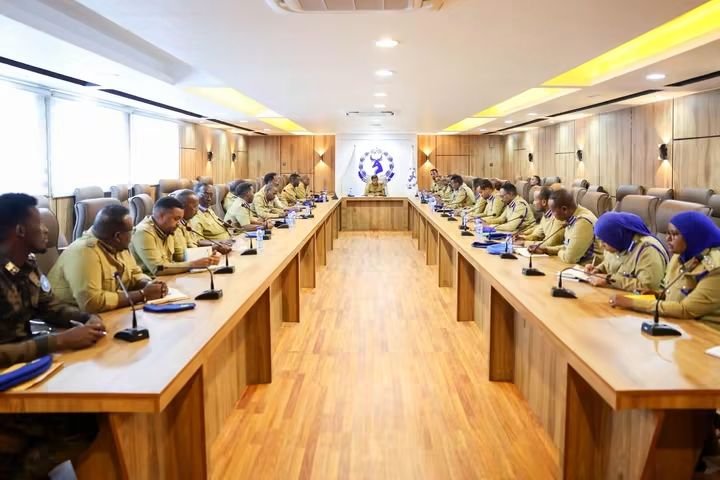
MOGADISHU — Somalia’s Police Commissioner, Brigadier General Asad Osman Abdullahi, chaired a meeting of the force’s commands, departments and independent units on Thursday to review ongoing security operations and progress on previous directives.
Security officials presented updates on the country’s security situation and operations under way, while senior police officers assessed how decisions and assignments agreed at a meeting last week had been implemented. The review also examined progress made by the various commands and departments on their assigned responsibilities.
Abdullahi stressed the importance of coordinating security operations and strengthening cooperation between the different parts of the police force, particularly as officers continue to carry out security duties across the country.
A Regular Review Mechanism
The meeting is part of a regular series of leadership reviews that provide a forum for the police command to assess operational developments, follow up on decisions and coordinate activities among its different units. The emphasis on reviewing the implementation of previous directives reflects an institutionalised approach to police leadership and accountability.
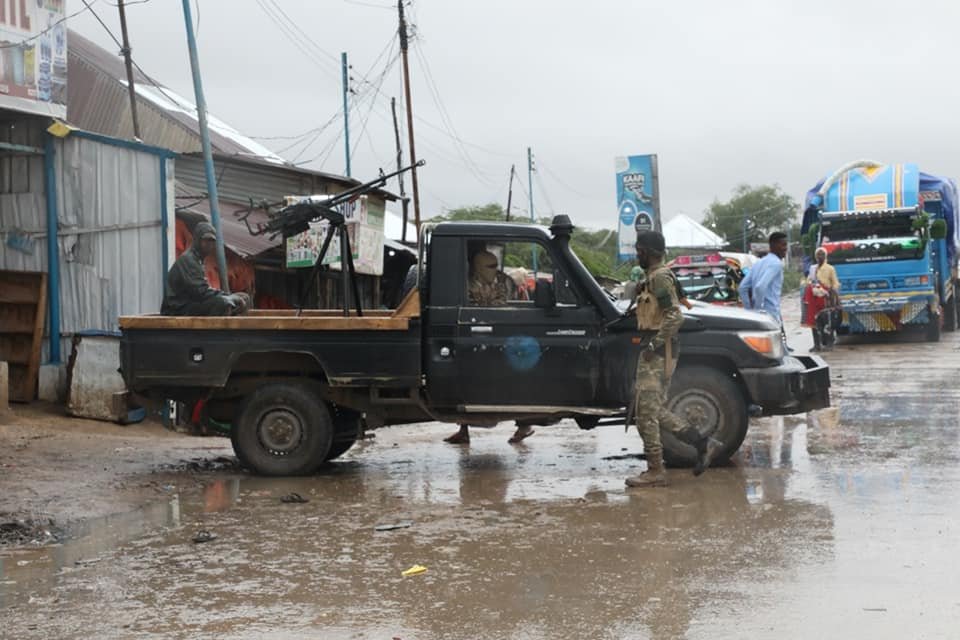
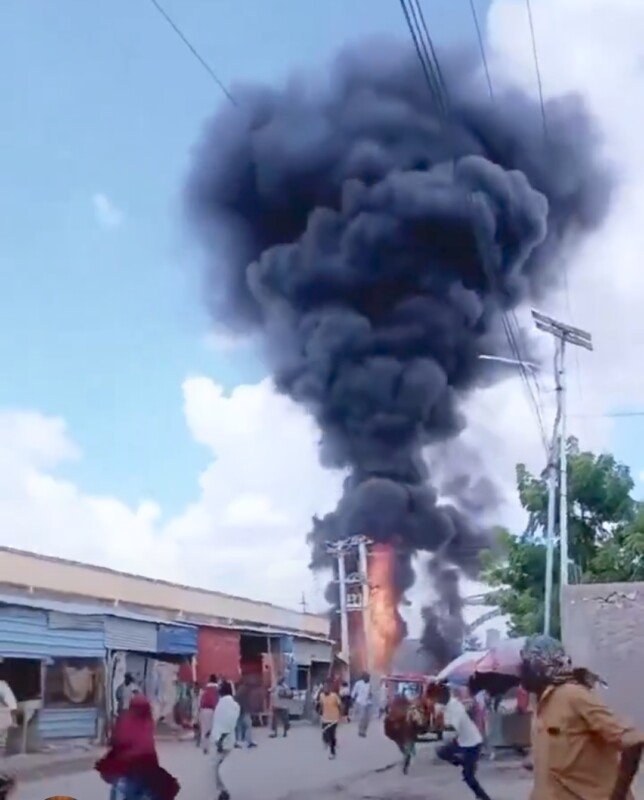
Recent police operations illustrate the range of challenges the force manages, from weapons seizures, such as the large cache of illegal weapons recovered from the Elite Hotel in Mogadishu, to targeted counterterrorism actions, including the elimination of an Al-Shabaab extortionist and the dismantling of an illegal checkpoint in Lower Shabelle.
The force has also conducted weapons recovery operations following clashes in Mogadishu, reflecting the range of security tasks the police leadership coordinates on a regular basis.
Critical Note
The regular coordination meetings reflect an institutionalised approach to police leadership and accountability, which is a positive development for a force that has historically struggled with fragmentation and inconsistent command structures. The emphasis on reviewing the implementation of previous directives suggests a degree of follow-through that is often absent in Somali security institutions.
However, the effectiveness of these meetings cannot be measured by their frequency alone. The key question is whether the coordination discussed in the command room translates into improved security outcomes on the ground. Mogadishu has seen periods of relative calm in recent months, but the capital remains vulnerable to Al-Shabaab attacks, and the police force continues to face significant capacity constraints, including equipment shortages, limited forensic capability and reliance on external training partners.
The broader context of Somalia’s security transition adds urgency to these efforts. With the African Union mission facing an uncertain future and the Somali National Army not yet capable of assuming full security responsibility, the police force will be expected to play an expanding role in maintaining stability in urban areas. Whether it is prepared for that expanded role depends on whether meetings like this one produce concrete improvements in operational readiness, intelligence-sharing and inter-unit cooperation.