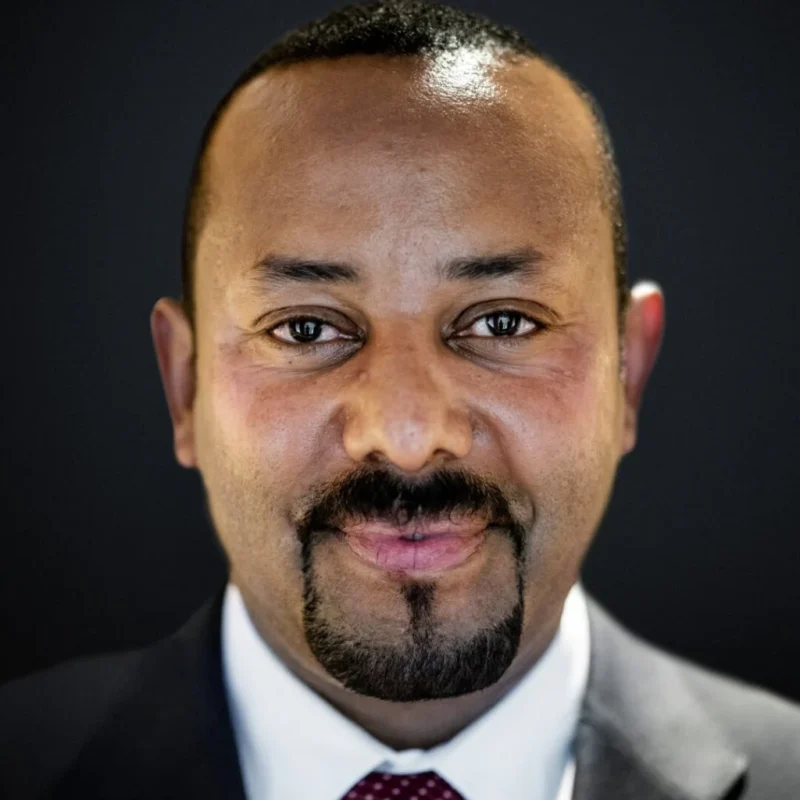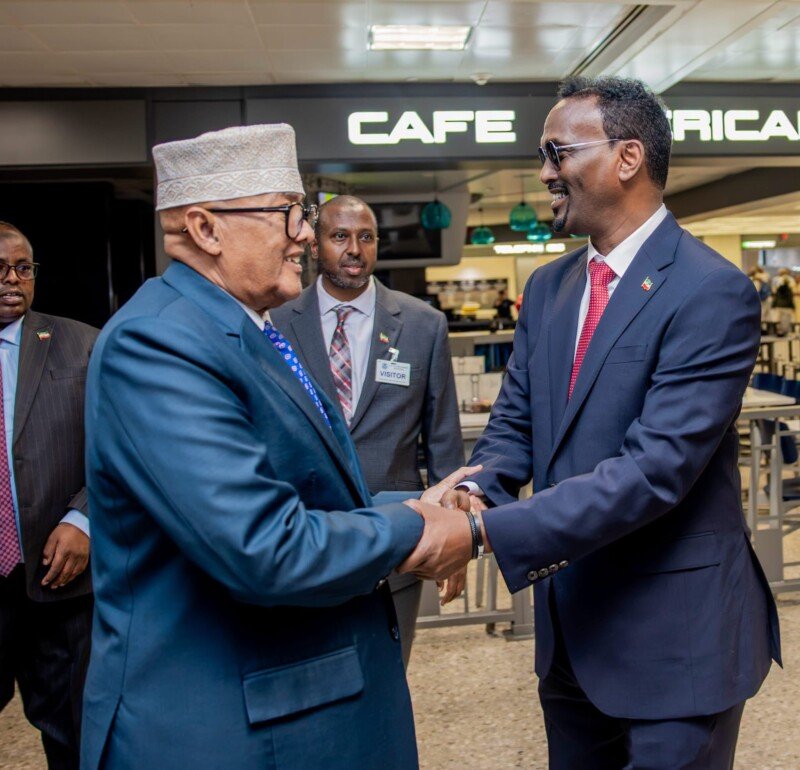
WASHINGTON — Somaliland is willing to contribute up to 2,000 soldiers to the International Stabilization Force planned for Gaza, but is waiting for the United States or Israel to make a formal request, Somaliland President Abdirahman Mohamed Abdullahi said on Wednesday .
“If they ask, we can provide,” Abdullahi said in an interview on the sidelines of the MEAD conference, stressing that although Somaliland is not volunteering, “if they ask me, I am ready”
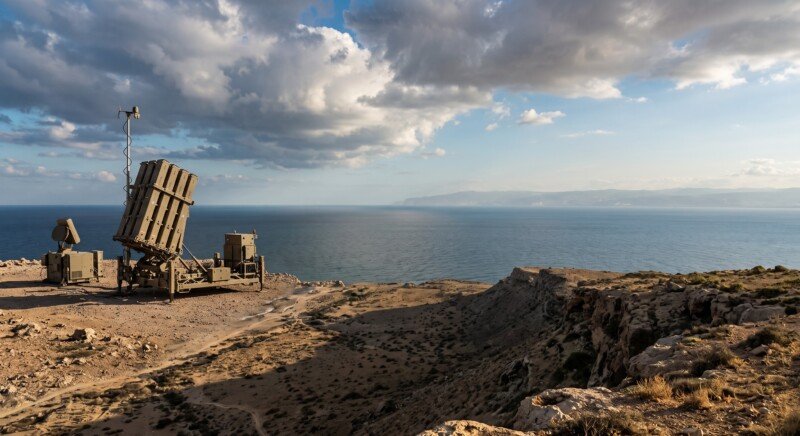
The US-led force is intended eventually to deploy some 20,000 soldiers in Gaza. Uganda has approved a contingent of approximately 1,200 troops, while Morocco has committed up to 500. Albania, Kazakhstan and Kosovo have also pledged personnel . The force’s tasks are set to include maintaining security, training Palestinian police, facilitating humanitarian aid and preventing Hamas from reestablishing its military control.
Abdullahi said Somaliland has an army of approximately 25,000 soldiers and a coast guard of some 1,500 personnel. It has not previously contributed troops to an African Union force.
Recognition and Its Consequences
Israel became the first country to formally recognize Somaliland as an independent state in December 2025, ending the territory’s 35-year struggle without international recognition. Somaliland declared independence from Somalia in 1991, but Mogadishu still considers it part of Somalia.
Somaliland opened an embassy in Jerusalem in June 2026 during Abdullahi’s first official visit to Israel, its first formally designated embassy in the world, though it also opened an embassy-like representative office in Taiwan in 2020.
Abdullahi said Israel’s recognition has already significantly raised Somaliland’s international profile, even though no other country has yet followed Israel’s lead. “There has been much more attention paid to Somaliland following Israel’s recognition,” he said. “Now you can find the word ‘Somaliland’ in every language in the world, in Indian, Arabic and Chinese”.
The president is expected to meet members of Congress next week, including Sen. Ted Cruz, one of Somaliland’s most vocal supporters in Washington. Cruz has called on the US to recognize Somaliland, arguing that it could serve as an important American security and diplomatic partner in the strategically significant Horn of Africa .
Abdullahi said he could not point to any American promise to recognize Somaliland, but added that his government had discussed both recognition and security cooperation with US officials. “We are optimistic,” he said .
Tensions With Somalia and Turkey
Israel’s recognition has increased tensions with Somalia and Turkey, one of Mogadishu’s closest military, economic and diplomatic partners. Turkey adamantly opposed Israel’s move, arguing that Somaliland remains part of Somalia and that recognizing its independence violates Somalia’s sovereignty and territorial integrity. Turkish President Recep Tayyip Erdogan called the recognition illegitimate and unacceptable and accused Israel of trying to destabilize the Horn of Africa .
Following Israel’s recognition, Turkey deployed F-16 fighter jets to Somalia, further expanding its military presence there. Ankara operates a military base in Mogadishu, trains Somali troops, has supplied Somalia with armed drones and is exploring for oil and gas off the Somali coast .
Abdullahi said Turkey’s steps showed that Israel’s recognition had concrete security consequences for Somaliland. “There is no free lunch,” he said. “Everything has some negative and some positive.” “We created new enemies,” he added, saying countries that had not previously provided Somalia with sophisticated weaponry were now doing so .
Asked whether Somaliland faced a threat of invasion, Abdullahi said Somalia’s president and defense minister had publicly spoken about invading the territory. Somaliland has enough manpower to defend itself, he said, but needs more advanced weapons and technology. “We need protection,” he said, adding that Somaliland is seeking assistance from Israel, the US and other allies to “balance the situation” .
The president said there is currently no Israeli or American security presence in Somaliland, but he did not rule out such a presence in the future, saying it could create both balance and deterrence. Asked directly whether he would like an Israeli security presence in Somaliland, Abdullahi said he expected a foreign presence “maybe in the near future” .
Reports have previously suggested that Israel has established an intelligence presence at Berbera International Airport and is holding discussions about a possible Israeli military base, though Abdullahi’s remarks suggest no such presence has been formally established .
Denials on Houthis and Gaza Resettlement
Abdullahi denied that Israel and Somaliland had discussed using Somaliland’s territory or airspace for operations against the Iranian-backed Houthis in Yemen. “As a country, Somaliland, we don’t have any conflict with the Houthis at the moment,” he said. “We haven’t discussed possible Israeli operations against them” .
Abdullahi also denied reports that Somaliland had discussed accepting Palestinians from Gaza as part of its agreement with Israel. “We haven’t discussed it with Israel, we haven’t discussed it with the Americans, we haven’t discussed it with anyone,” he said .
The recognition declaration signed with Israeli Prime Minister Benjamin Netanyahu last year provides for cooperation in security, trade, investment and economic development, Abdullahi said. Water technology will be the top priority because Somaliland is semi-arid. He said he met representatives of more than 100 Israeli companies during his visit to Tel Aviv, including firms interested in Somaliland’s potential oil and gas reserves. No concrete Israeli investments have yet been made, he said, “but we expect” them .
Critical Note
Somaliland’s offer to contribute troops to a Gaza stabilization force represents a significant diplomatic overture, one that ties Hargeisa’s military ambitions to its broader campaign for international recognition. The offer is conditional, waiting for a US or Israeli request, and appears designed as much to signal alignment with Washington and Jerusalem as to contribute to peace in Gaza.
The strategic calculus is clear. Somaliland has an army of 25,000 and has never contributed to an African Union force, but it is now offering troops in a context where Israel is its only formal recognizer and where the United States remains the ultimate prize. Abdullahi’s appeal to Congress, his meeting with Senator Ted Cruz, and his optimism about American recognition all point to a broader effort to convert the Gaza offer into diplomatic momentum.
However, Somaliland’s approach carries risks. The Turkish deployment of F-16 fighter jets to Somalia and Ankara’s deepening security ties with Mogadishu suggest that Hargeisa’s alignment with Israel is not without consequences. Abdullahi’s admission that Somaliland has “created new enemies” is a recognition that recognition has costs as well as benefits. Whether the Gaza troop offer advances Somaliland’s cause or merely deepens the regional polarization it has triggered remains uncertain.