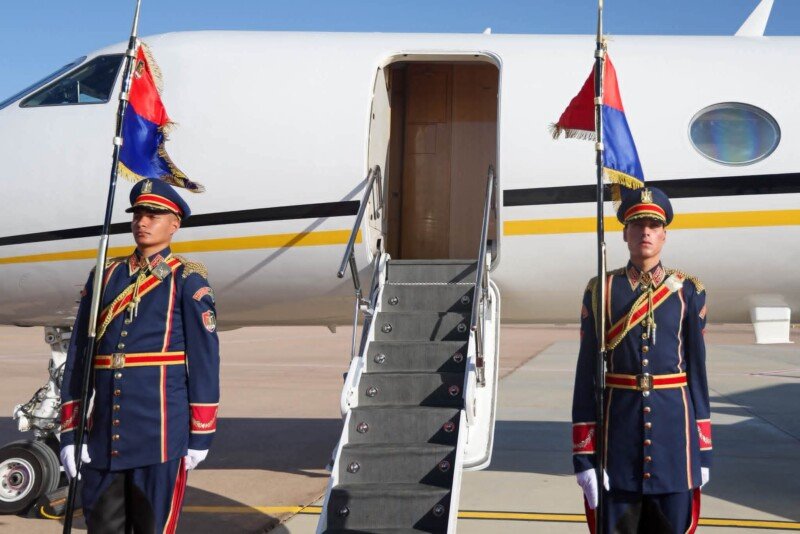
NEW ALAMEIN — President Hassan Sheikh Mohamud arrived in Egypt’s New Alamein City on Friday for the Alamein Africa Forum, a three-day gathering of African heads of state and business leaders focused on trade and investment. But the forum’s economic agenda is overshadowed by a regional crisis that has placed Somalia at the centre of a deepening rivalry between two competing alignments in the Horn of Africa.
On one side stands Ethiopia, facing renewed fighting in Tigray, Amhara and Afar against a rebel alliance that includes the Tigray People’s Liberation Front (TPLF) and six other armed groups. On the other side is an emerging alignment of Egypt, Eritrea and Sudan, each with its own grievances against Addis Ababa. Somalia is navigating between them, deepening its military partnership with Egypt and maintaining longstanding ties with Eritrea while Ethiopia remains a major troop contributor to the African Union mission on Somali soil.
The Cairo-Asmara Alignment
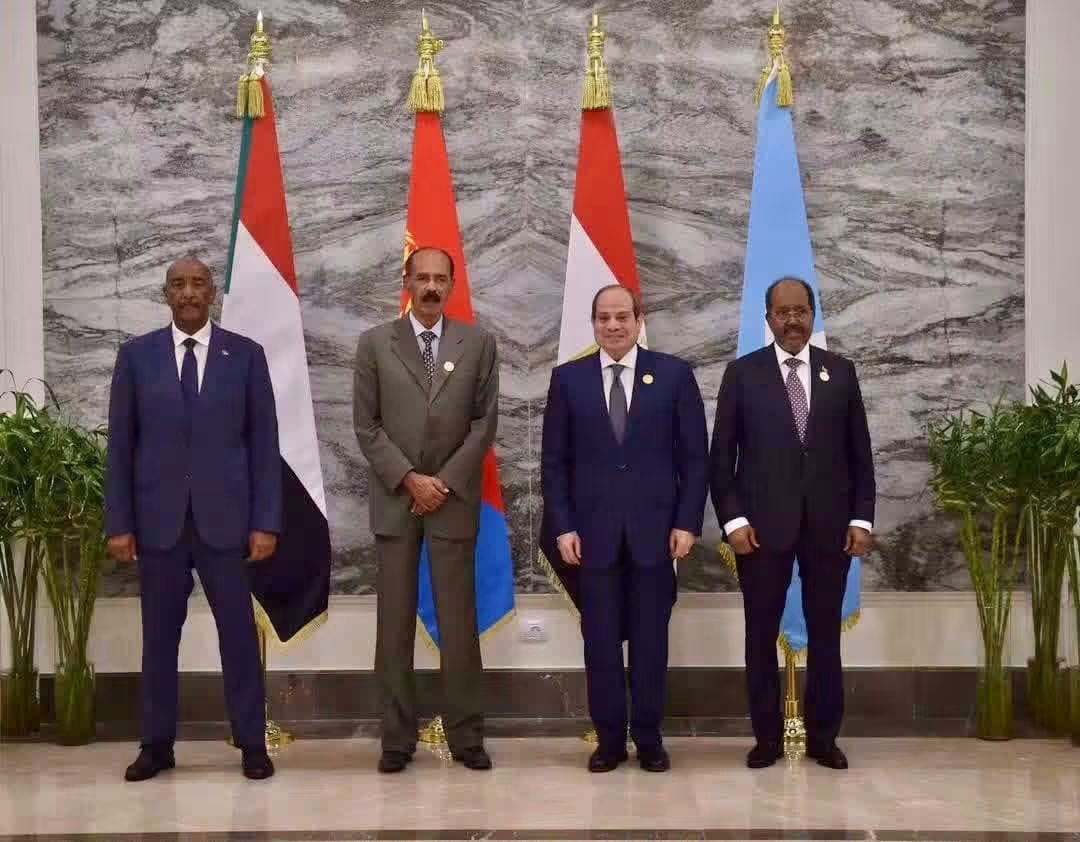
The presence of President Mohamud in Alamein alongside Egyptian President Abdel Fattah el-Sisi, Eritrean President Isaias Afwerki and Sudanese leader Abdel Fattah al-Burhan signals a significant political convergence. A closed meeting between the four leaders is expected during the forum, bringing together countries that, for different reasons, have complex or openly conflictual relations with Addis Ababa.
Egypt’s alignment with Eritrea and Sudan is driven by the Grand Ethiopian Renaissance Dam dispute and Red Sea security. Unable to halt Ethiopia’s construction of the dam, Cairo has pursued closer ties with Asmara and Khartoum, calculating that a weakened Ethiopia would strengthen its own hand in the Nile basin rivalry. Eritrea, for its part, has revived its longstanding antagonism toward Ethiopia, a posture rooted in the unresolved border dispute and Abiy Ahmed’s stated ambitions to secure Red Sea access, potentially at Eritrea’s expense.
Sudan’s involvement adds another layer. Sudan has accused UAE-Ethiopia of supporting the Rapid Support Forces (RSF), the paramilitary group fighting the Sudanese army since 2023. Ethiopia, in turn, accuses Sudan of backing TPLF fighters. Both claims are denied, but the accusations have deepened a rift that now intersects directly with the conflict in northern Ethiopia.
Ethiopia’s Accusations and Regional Fallout
The crisis escalated last week when Ethiopia’s army chief, Field Marshal Birhanu Jula, publicly accused Eritrea, Sudan and Egypt of supporting the TPLF-led rebel alliance. He presented no public evidence for the claims, but the accusations reflect a broader deterioration in Ethiopia’s relations with its neighbours.
Eritrea dismissed the allegations as an attempt by Ethiopia to shift blame for its own internal conflicts. Sudan’s armed forces rejected the accusations as baseless. Egypt issued a flat denial.
Behind the denials, the strategic dynamics are clear. Ethiopia’s pursuit of sovereign sea access has rattled both Eritrea and Somalia, while its hosting of militia training camps in support of Sudan’s RSF has put it at odds with Khartoum. The result is a regional environment in which multiple conflicts are beginning to intersect and reinforce one another.
As reported in FTL Somalia’s analysis of the regional alignment, the withdrawal of Ethiopian forces from Somalia, the arrival of Egyptian troops, and the deepening ties with Eritrea are developments that could either strengthen Somalia’s security or deepen its fragility.
Somalia’s Balancing Act
Somalia’s position in this rivalry is uniquely difficult. Ethiopia has been Somalia’s principal security partner through African Union missions against Al-Shabaab for years, providing thousands of troops. Egypt has emerged as a new security partner, pledging approximately 1,091 troops to AUSSOM and training Somali special forces. Eritrea has trained thousands of Somali soldiers in a programme that began under the Farmajo administration and continues today.
But these partnerships are not neutral. Egypt’s military presence in Somalia places Cairo’s forces closer to Ethiopia than Egypt itself, a fact Addis Ababa will not ignore. Eritrea’s role in training Somali forces has always been controversial, conducted through intelligence channels rather than formal military structures. And Ethiopia’s reported withdrawal of more than 3,000 troops from South West State, if confirmed, would create a security gap that Somali forces may struggle to fill.
The composition of the Alamein meeting reflects the emerging alignment. The absence of Ethiopian Prime Minister Abiy Ahmed from the list of attending leaders is notable, as is the presence of the leaders of Somalia, Eritrea and Sudan, all of whom have complex relations with Addis Ababa.
Critical Note
Somalia’s participation in the Alamein Forum places it at the centre of a regional alignment that is increasingly defined in opposition to Ethiopia. The closed meeting between President Mohamud, El-Sisi, Afwerki and al-Burhan, if it takes place, would bring together four countries with different but overlapping grievances against Addis Ababa. For Somalia, the alignment offers tangible benefits: Egyptian military training, the deployment of Egyptian troops under AUSSOM, Eritrean training programmes, and diplomatic support for Somalia’s territorial integrity.
But the alignment also carries significant risks. Somalia is embedding itself more deeply in a regional rivalry that could escalate into direct confrontation between Egypt and Ethiopia. Ethiopia remains a major troop contributor to AUSSOM, and its withdrawal from South West State creates a security gap that Egyptian forces may not be able to fill. Ethiopia’s internal conflict with the TPLF-led rebel alliance adds another layer of uncertainty. If the crisis in Ethiopia deepens, Somalia could find itself caught between two larger powers with competing interests and little incentive to prioritise Somali stability.
The forum’s economic agenda, meanwhile, risks being overshadowed by the political dynamics. Investment and trade cooperation are important for Somalia, but they require stability and predictable governance. The same regional rivalries that define the Alamein gathering are also shaping Somalia’s internal political disputes, from the conflict in Baidoa to the electoral standoff in Hirshabelle. Until those disputes are resolved, economic initiatives will struggle to deliver results. The President’s participation in Alamein is a diplomatic opportunity, but it is not a substitute for a coherent national strategy at home.