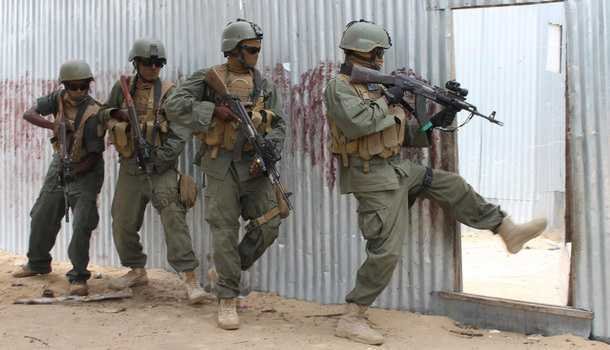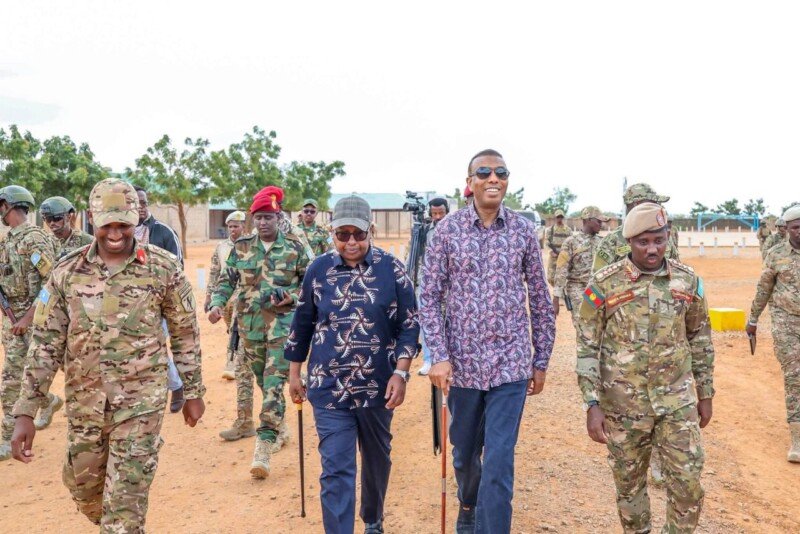
MOGADISHU — Prime Minister Hamza Abdi Barre presided over the closing ceremony of the 12th cohort of the Danab Commando Force at the Martyr Brigadier General Hassan Tuure Training School, marking the completion of an advanced training programme.
The training covered criminal law, human rights, various medical and communications skills, weapons maintenance and repair, and a range of combat tactics and techniques.
The Prime Minister, accompanied by the Minister of Defence and the Commander of the Somali National Army, praised the soldiers for their effort and endurance during the training period. He urged them to use the knowledge and skills they had acquired in the service of the Somali people and in the defence of their country.
Government Commitment to Army Development
Prime Minister Hamza stated that the DanQaran government places particular priority on the construction and professionalisation of the armed forces, with the aim of building a Somali national army that has the training, quality and capability to fully carry out its constitutional duties.
He also urged the new soldiers to uphold the law and to be distinguished by patriotism, honesty and dedication to the defence of the country, so as to defeat Al-Shabaab and any party opposed to the peace and development that the Somali people need.
The event showcased the military skills and knowledge acquired by the soldiers during their training, which is designed to prepare them for national duties related to the defence of the country, maintaining security, and fighting armed groups that oppose peace and governance in Somalia. As reported in FTL Somalia’s coverage of a previous Danab graduation, the SNA Chief has previously praised the U.S. partnership in training these elite units.
The Danab Brigade has been the centrepiece of internationally supported efforts to build a professional Somali commando capability. The training curriculum has evolved to include human rights and legal instruction, reflecting concerns about accountability within the security forces. As detailed in FTL Somalia’s report on the initiation of Danab training, the programme is designed to prepare soldiers for complex operations against Al-Shabaab.
Similar specialised training programmes have been conducted with other partners. As reported in FTL Somalia’s coverage of Somali commandos returning from Egypt, a separate cohort completed advanced training in commando operations, counterterrorism, urban warfare and parachute operations in Egypt earlier this month. The government has also invested in developing aviation capabilities, as detailed in FTL Somalia’s coverage of Somali pilots executing a historic aerial display following bilateral defence support from Türkiye.
Critical Note
The graduation of another Danab cohort reflects the government’s continued investment in elite forces. The inclusion of human rights and legal training in the curriculum addresses a longstanding concern about accountability within the security forces.
However, the recurring theme of graduation ceremonies and training completions raises a question about what happens after the training ends. The Danab forces have been described as among the most capable units in the Somali National Army, but their operational impact depends on whether they are deployed effectively, sustained with adequate logistics and pay, and retained within a coherent command structure. The government has often announced training completions without providing detail on deployment or operational outcomes.
The Prime Minister’s call for the soldiers to “defeat Al-Shabaab and any party opposed to peace and development” echoes the language used by Defence Minister Ahmed Moallim Fiqi in recent statements about eliminating opposition. The framing of all opposition as a security threat rather than a political challenge is a pattern that has raised concerns among observers. The inclusion of human rights training in the Danab curriculum suggests some awareness of these concerns, but training alone does not resolve the tension between counterterrorism operations and the protection of civilian rights.
The broader context is also relevant. Somalia’s security transition is entering a critical phase, with the African Union mission preparing to draw down and Somali forces expected to assume greater responsibility. The Danab and other elite units will be expected to fill gaps left by departing international forces. Whether the training they have received translates into effective operations on the ground, and whether they can be sustained without the levels of external support they have received to date, will determine the trajectory of the security transition.