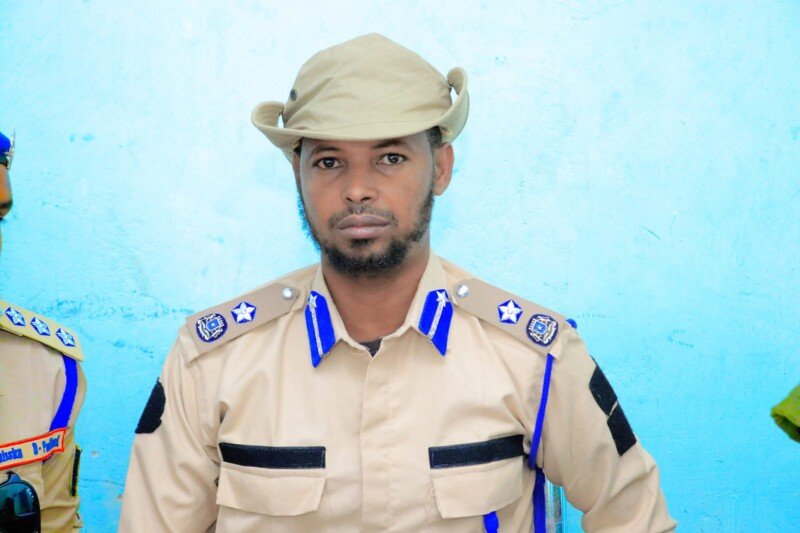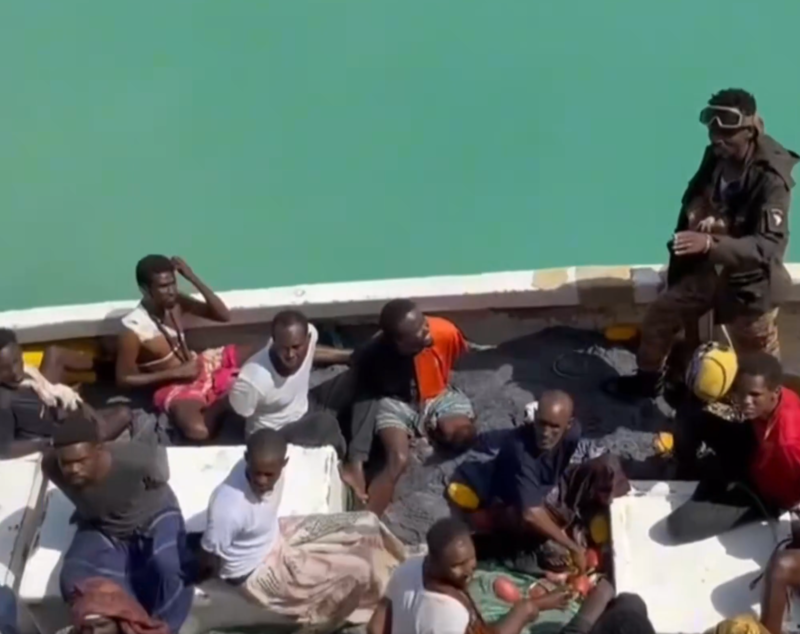
GARACAD — Puntland’s Maritime Police Force (PMPF) has freed a hijacked oil tanker and rescued its 20 crew members after a 48-hour operation, killing one pirate and capturing 47 others, according to a statement issued by the force on Friday.
The vessel, M.T. Sibu 1, also known as Seamull, was hijacked on 20 August off the coast of Yemen and taken into Somali waters. It was rescued in an operation that ended at approximately 09:30 local time on Friday near the coastal town of Garacad, where the tanker had been anchored.
The PMPF said one pirate was killed and four others were wounded during the operation. One Puntland officer was also injured. The force reported that 47 people were on board the vessel when the operation took place, of whom 41 were taken into custody.
The crew consisted of 20 people, including 16 Indian nationals, two Syrians, one Iraqi and one Sudanese national. The PMPF said all crew members and their property were recovered safely.
The Operation
Puntland forces had been pursuing Sibu 1 along with three other hijacked vessels held offshore near the town of Bander Beyla, forcing the pirates to move south along the Somali coast. While the tanker was anchored south of Garacad, a large vessel used by Puntland forces ambushed it at sea, catching the pirates off guard.
According to the PMPF, the operation was a planned action lasting 48 hours that involved both maritime and land units of the Puntland police force. The force said it remained committed to safeguarding Puntland’s territorial waters and protecting maritime security in the region.
Sanctioned Vessel With a Murky History
The Sibu 1 is a product tanker that was sanctioned by the US Treasury in December 2025 as part of a shadow fleet allegedly used to transport Iranian petroleum products in violation of US sanctions. The vessel was flying the Eritrean flag when it was captured, though the registry is considered false.
The tanker was carrying oil products when it was boarded by six armed individuals approximately 136 nautical miles east of Al Mukalla, Yemen. The crew appeared to have transmitted a final AIS message reading “PIRATE ONBOARD HEL” before the vessel was seized. The IMO had warned in August that more than 90 seafarers were being held captive across six vessels in the region at that time.
Three Other Vessels Remain Held
Three other hijacked tankers remain in the hands of pirates, who have moved them south toward the port town of Hobyo in neighbouring Galmudug state. The vessels are Honor 25, MT Eureka, and MT Asana. Officials said Honor 25 and MT Eureka were carrying fuel worth millions of dollars, and that pirates had been observed off-loading barrels to sell on the black market.
The crisis involving the MT Eureka, which was seized on 2 May, remains unresolved. Pirates have demanded a $10 million ransom for the release of its crew, which includes eight Egyptians and four Indians, and have threatened to execute the hostages unless payment is made.
Pirates have converted the MV Sward into a mothership, using the hijacked cement carrier as a floating base to launch smaller attack skiffs against vessels in the Indian Ocean. The Sward was seized on 26 April near Garacad with 15 crew members, including 13 Syrians and two Indians.
The Honour 25, a Palau-flagged oil tanker seized on 21 April, is holding 17 crew members, including 10 Pakistanis, four Indonesians, one Indian, one Sri Lankan, and one from Myanmar. Pakistan has called for intensified diplomatic efforts to secure their release.
The rescue of Sibu 1 is the third vessel freed by Somali forces this year. The small cargo ship Sward was released on 11 September after 138 days in captivity. The MV Lutuf was freed on 29 August in a joint Somali-Turkish operation that resulted in the killing of 14 pirates, according to the Somali Defence Ministry.
Critical Note
The rescue of the Sibu 1 is a significant operational success for the Puntland Maritime Police Force and demonstrates the capacity of local forces to conduct complex counter-piracy operations. The fact that Puntland forces tracked and ambushed the vessel, rescuing all 20 crew members without harm, reflects improved coordination and intelligence capabilities.
However, the broader picture is less encouraging. Piracy off the Somali coast has resurged since April, with at least 15 attacks this year, the highest since 2013. The international naval presence that once kept piracy in check has been drawn away by the crisis in the Red Sea, where Houthi attacks have redirected patrols toward the Bab el-Mandeb Strait. This has created a security vacuum along Somalia’s Indian Ocean coastline that pirates have exploited.
Three other vessels remain in pirate hands, and their crews face an uncertain fate. The Federal Government has called for renewed international cooperation, and the Senate has passed an anti-piracy bill. But the economic drivers of piracy, including poverty, illegal fishing by foreign vessels, and the absence of alternative livelihoods in coastal communities, remain unaddressed. Puntland’s forces can rescue individual ships, but they cannot eliminate piracy without sustained investment in coastal development, maritime governance, and international naval cooperation. Until those underlying conditions change, more vessels will be hijacked, and more crews will be held hostage.
Recommended Reading On ftlsomalia.com
- IMO Sounds Alarm as Somali Pirates Hold More Than 90 Seafarers Hostage
- Somali Pirates Turn Hijacked Ship into Mothership as Piracy Surges in Puntland Waters
- Joint Somali-Turkish Operation Rescues Hijacked Cargo Ship, 14 Pirates Killed
- Somalia’s Senate Unanimously Passes Anti-Piracy Bill as Attacks Surge Off Coast
- Somali Pirates Demand Agreed Ransom for 8 Egyptian Sailors as Rescue Operation Fears Mount
- Pirates Threaten to Execute Crew Over Ransom Delays