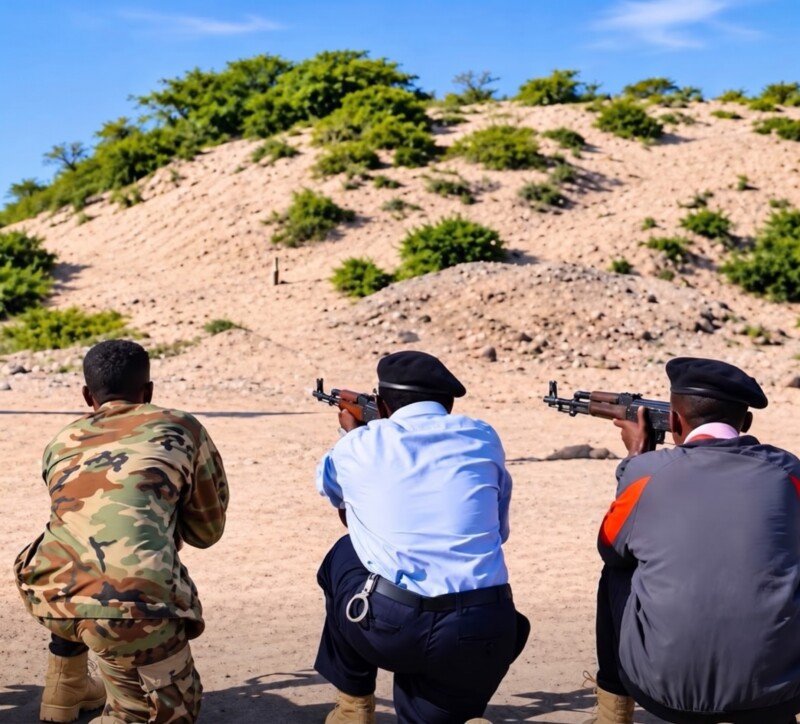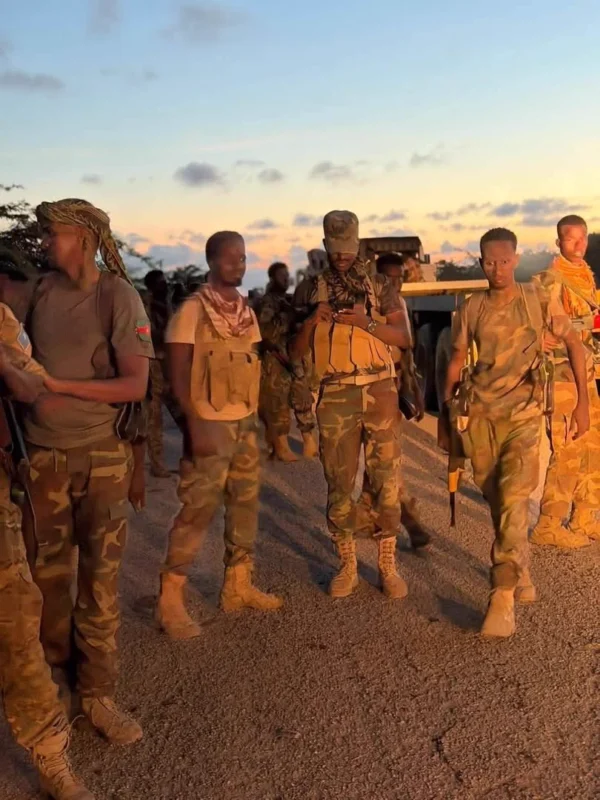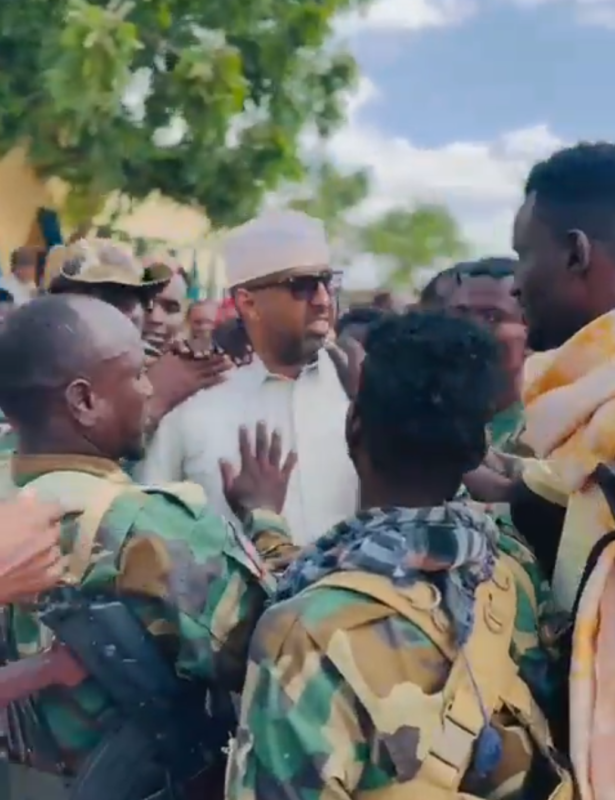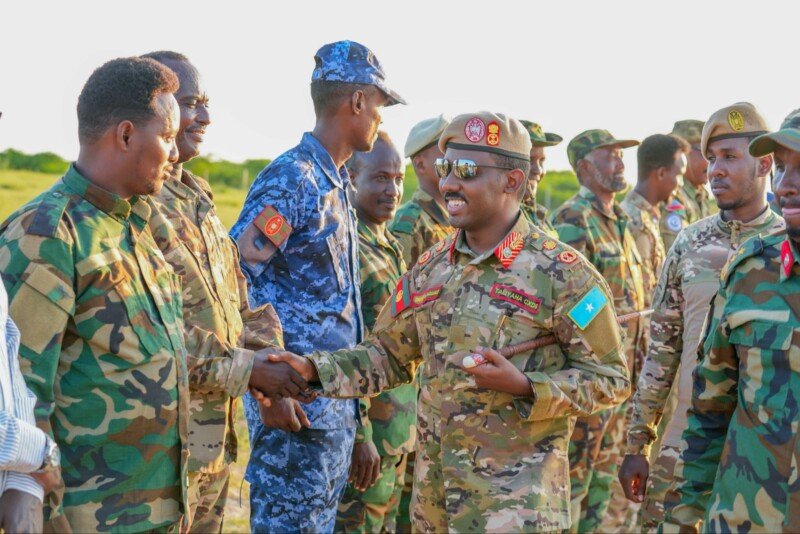
BARAWE, Somalia’s Chief of Defence Forces, Major General Ibrahim Mohamed Mohamud, conducted an operational inspection in the coastal town of Barawe in Lower Shabelle to evaluate troop readiness and operational posture as Ugandan contingents prepare to draw down their presence in the region. The visit coincides with an accelerated transition timeline, during which local units of the Somali National Army are expected to take full command of forward defensive bases across key sectors previously held by Ugandan contingents.
Transition Pressure and Tactical Readiness
During the visit, General Mohamud met with local sector commanders, field officers, and regional security officials to inspect defensive perimeters, logistical supply corridors, and garrison infrastructure. The deployment review comes months after the Somali cabinet named the army chief to lead force modernization and streamline command structures across frontline operations.
The operational review in Barawe takes place as Kampala proceeds with a phased troop reduction. Reports confirmed that Uganda’s bilateral troops leave their designated bases in Lower Shabelle while larger multilateral commitments shift under the successor African Union Support and Stabilization Mission in Somalia (AUSSOM). The departure of Ugandan forces leaves vital maritime and inland transport hubs, including the strategic port of Barawe, directly dependent on the operational capability of domestic forces.
Regional Security Dilemmas
Lower Shabelle has long represented one of the most volatile theatres in the conflict against Al-Shabaab, where control over supply arteries between Mogadishu and southern ports remains fiercely contested. Previous handovers in neighboring districts demonstrated logistical vulnerabilities, even as high-level dialogues between the national security adviser and AUSSOM leadership have consistently emphasized joint coordination and phased tactical transfers.
Security analysts note that any abrupt reduction in international troop coverage risks exposing rural supply lines to insurgent ambushes. In several liberated pockets, a governance vacuum fueled clan mobilisation in Lower Shabelle, creating localized power struggles that complicate regular army operations and dilute frontline coordination against insurgent networks.
FTL Critical Note
While official visits by senior military leadership project resolve and reassurance, inspecting frontline garrisons cannot by itself resolve the structural deficits facing Somali armed units. The planned departure of seasoned Ugandan contingents leaves significant air support, heavy artillery, and medical evacuation capabilities without comparable domestic replacements.
Furthermore, holding Barawe and surrounding agricultural communities requires more than static base takeovers. Without sustained operational funding, dependable ammunition pipelines, and institutional reconciliation among rival local clans, the transfer of security responsibility threatens to overstretch domestic formations precisely as Al-Shabaab seeks opportunities to exploit transitional seams along the southern coast.
Recommended Reading On ftlsomalia.com
- Uganda’s Bilateral Troops Leave Now, AUSSOM Troops Depart in 2027
- Somali Cabinet Names New Army Chief to Boost Modernization and Security
- National Security Adviser and AUSSOM Chief Meet at Villa Somalia to Discuss Transition
- Governance Vacuum Fuels Clan Mobilisation in Lower Shabelle Following Al-Shabaab Withdrawal
- The UN Political Mission Ends: Somali Institutions Inherit the Mandate Without the Budget