MOGADISHU — Mosques across Minnesota are stepping up security measures after President Donald Trump urged non-Somali Minnesotans to “fight back” against the state’s Somali American community, in a social media post that community leaders say has created a climate of fear and potential violence.
The president’s post, published Thursday on Truth Social, followed a week of statements from officials and online commentary blaming the Somali community for violence in Minnesota. As reported by MPR News, the rhetoric intensified after a shooting at a high school football game in Eden Prairie on October 2 that injured two Somali American teenagers and the unrelated arrest of an 18-year-old Somali American accused of planning an attack at the Mall of America.
Community Leaders Respond
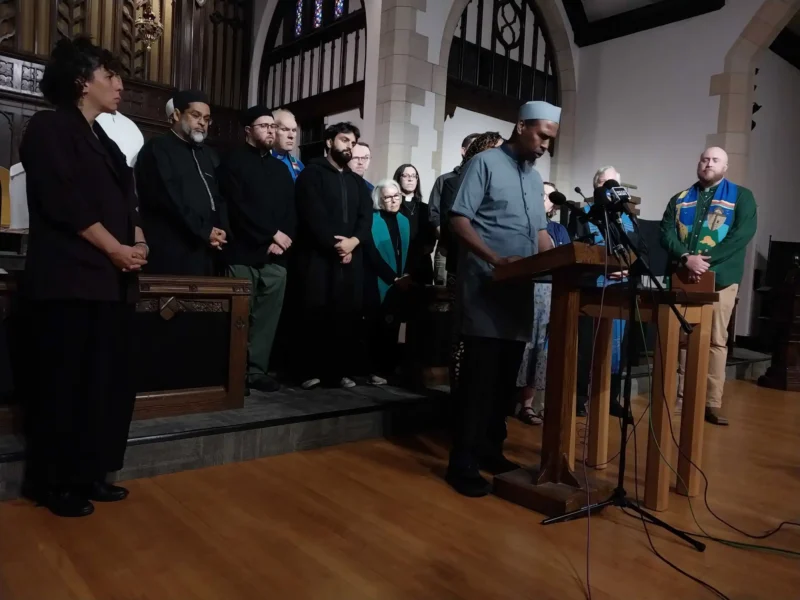
Minnesota’s chapter of the Council on American-Islamic Relations (CAIR) held a meeting Thursday for imams across the state to discuss safety plans. As detailed in CAIR-Minnesota’s press release, the organization condemned Trump’s remarks as “blatant racism and an implicit call for violence against an entire community.”
Suleiman Adan, CAIR-Minnesota’s deputy executive director, said the president’s call for non-Somali Minnesotans to “fight back” against the Somali community cannot be dismissed as mere political rhetoric.
“We cannot simply dismiss that as political rhetoric or the president saying something that he doesn’t actually mean,” Adan said. “We have seen how quickly hateful language can translate into harassment, into threats and violence.”
Imam Abdulahi Farah, who leads the Dar al-Farooq mosque in Bloomington, where a far-right group set off a homemade bomb in 2017, described the president’s words as reckless and dangerous.
“These words are reckless, they are dangerous, and they have consequences,” Farah said at a press conference Friday. “We know what it means when an entire community who comes to worship are made to feel unsafe. Blaming an entire community is not accountability. Scapegoating is not a public safety strategy.”
Neighbors Renew Patrols
Several mosques and Somali businesses have heard from neighbors who plan to patrol outside their buildings and watch for disturbances or threats of violence, restarting a practice that many retired after the drawdown of Operation Metro Surge. That federal immigration enforcement operation in Minnesota targeted Somalis, among other groups.
Minnesota Governor Tim Walz, whom Trump called an “incompetent thief” in his post, said in a fundraising email that the president is lashing out at blue states.
“You’d think the president of the United States would have more important things to do than spend his afternoon trying to turn Americans against each other,” Walz wrote.
Context of the Rhetoric
The president’s post comes amid heightened tensions in Minnesota following the Eden Prairie shooting and the arrest of an 18-year-old Somali American accused of planning a mass shooting at the Mall of America in support of ISIS. According to federal prosecutors, the suspect was arrested after purchasing an AK-47 and 200 rounds of ammunition from an undercover FBI employee.
Trump and other Republican leaders have repeatedly been accused of making xenophobic and racist attacks against Muslim Americans. As detailed in FTL Somalia’s coverage of Trump’s rhetoric, the president has specifically singled out the Somali community in Minnesota numerous times, calling them “garbage” in December.
Some community leaders and officials said they are concerned the federal government is attempting to blame the Somali community for violence as a pretext to send federal forces to the state, noting Trump’s promise to Minnesotans that “the federal government come to your rescue.”
Adan said he wants to see politicians stand up for all Minnesotans, including Somali Americans.
“Somalis are as Minnesotan as apple pie and the State Fair,” he said. “You should stand up for them, just as you would stand up for any element of your community that is being scapegoated.”
Critical Note
The targeting of an entire community for the actions of a few individuals is a recurring and dangerous pattern. The Eden Prairie shooting was gang-related, and the Mall of America plot was allegedly carried out by a single radicalized individual. Neither justifies the president of the United States calling on citizens to “fight back” against an entire ethnic and religious group.
The Somali American community in Minnesota numbers tens of thousands, the vast majority of whom are U.S. citizens. They have built businesses, raised families, and contributed to the state’s economy and civic life for decades. The rhetoric from the White House does not distinguish between the alleged actions of a few and the lawful presence and contributions of the many.
What is notable is the response. Neighbors, clergy, and local officials have rallied around the Somali community, with some renewing patrols to protect mosques and businesses. This local solidarity stands in contrast to the divisive language coming from Washington. It also reflects a broader truth: the security of any community depends not on presidential proclamations, but on the willingness of neighbors to stand together.
Recommended Reading On ftlsomalia.com
- Minnesota’s Somali Community Draws Renewed Scrutiny Under Trump’s Rhetoric and Policies
- Somali Community Voices Anger Over Trump’s Statements
- Trump Draws Fire for Insulting Comments About Somalis
- Somali Leaders in Minnesota Challenge Trump’s TPS Termination
- Trump Terminates Somali TPS in Minnesota, Citing Unverified Claims and Sparking Outrage
- Bessent Targets Minnesota Fraud in Somalia Money Transfers