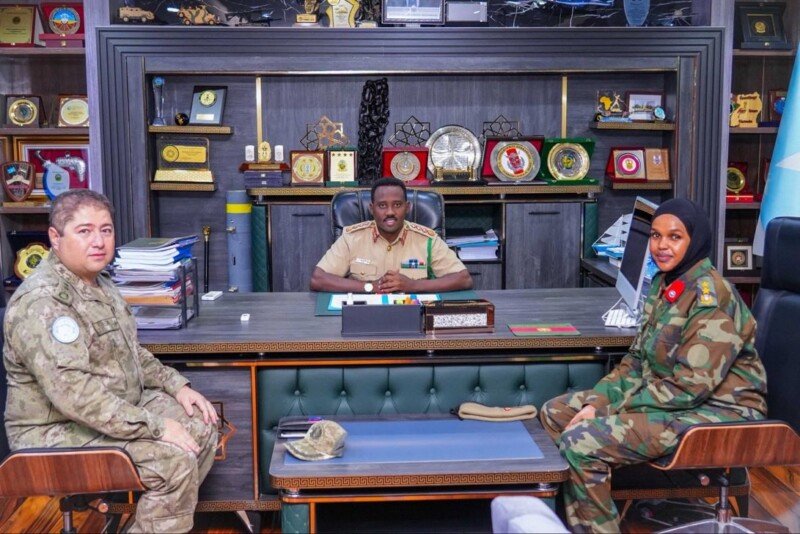
MOGADISHU — The Commander of the Somali National Army, Brigadier General Ibrahim Mohamed Mohamud, has signed a directive aimed at preventing and addressing conflict-related violence against women, according to a statement circulated on social media.
The directive is intended to strengthen protection, reporting, investigation, and accountability mechanisms in line with national and international law.
The order comes as the Somali National Army continues offensive operations against Al-Shabaab in central and southern Somalia. General Mohamud was appointed army chief in January 2026 with a mandate to professionalise the force and streamline command structures.
Context of the Directive
The SNA has faced longstanding allegations of human rights abuses, including conflict-related sexual violence, though accountability has been limited by weak judicial institutions and the prevalence of customary law that often resolves such cases outside formal courts.
Training on mitigating conflict-related sexual violence has been conducted with Somali security forces in recent years, including in the Hiiraan region, focusing on prevention and response mechanisms. The African Union and SNA have also conducted joint civil-military training that covered gender aspects in peacekeeping operations, prevention of sexual exploitation and abuse, and conflict-related sexual violence.
The directive follows a pattern of public orders issued by General Mohamud since taking command, including a February 2026 directive mobilising SNA units for drought relief operations.
Critical Note
The signing of a directive on conflict-related violence against women is a welcome signal from the SNA leadership, particularly given the historical gap between formal commitments and enforcement. However, directives alone do not change outcomes. The critical questions are whether reporting mechanisms will be accessible and safe for victims, whether investigations will proceed independently of command structures, and whether those found responsible will face consequences regardless of rank.
Somalia’s legal framework for prosecuting sexual violence remains incomplete. The sexual offences bill has been under development since 2018 and has not been enacted, leaving prosecutors reliant on an outdated penal code and customary mechanisms that frequently prioritise clan interests over victim rights. Without legislative reform and functioning courts, even well-intentioned military directives may struggle to deliver accountability.
Recommended Reading On ftlsomalia.com
- General Ibrahim Mohamud Named New Somali Army Commander
- Hamza Oversees Somali Military Command Transition
- Defense Minister and UN Envoy Reach Human Rights Security Agreement in Mogadishu
- Defence Minister Joins Security Sector Governance Review, Highlights Accountability and Institutional Reform
- Duchess of Edinburgh Holds Talks with President Hassan on Somalia Visit
- Defence Minister Fiqi and UN Deputy Envoy Conway Discuss Protection of Civilians in Somalia