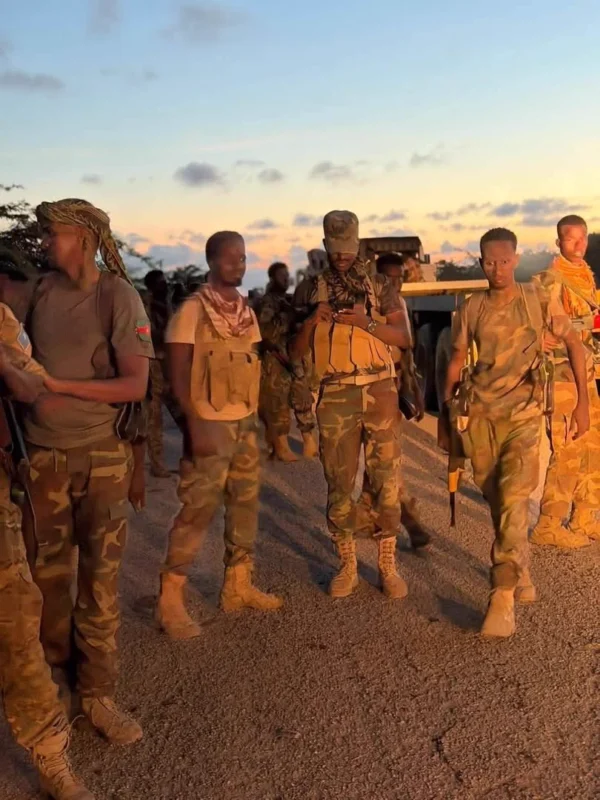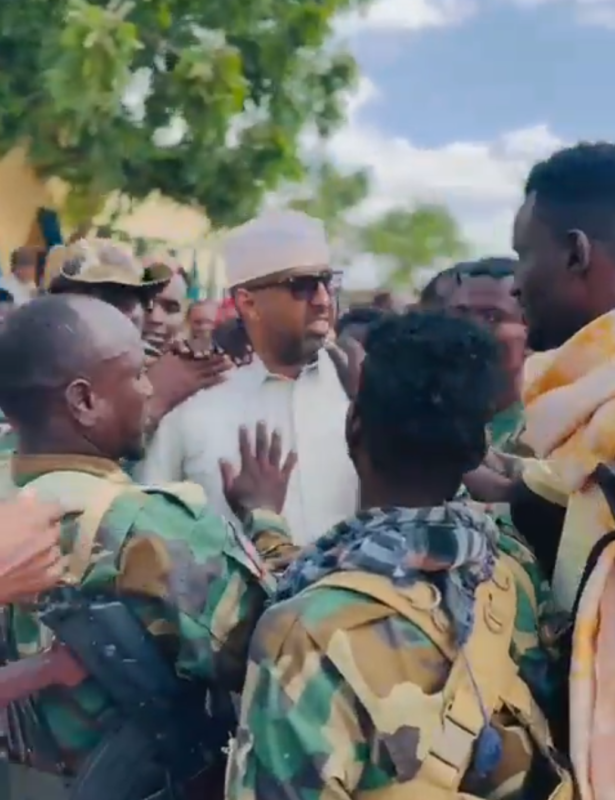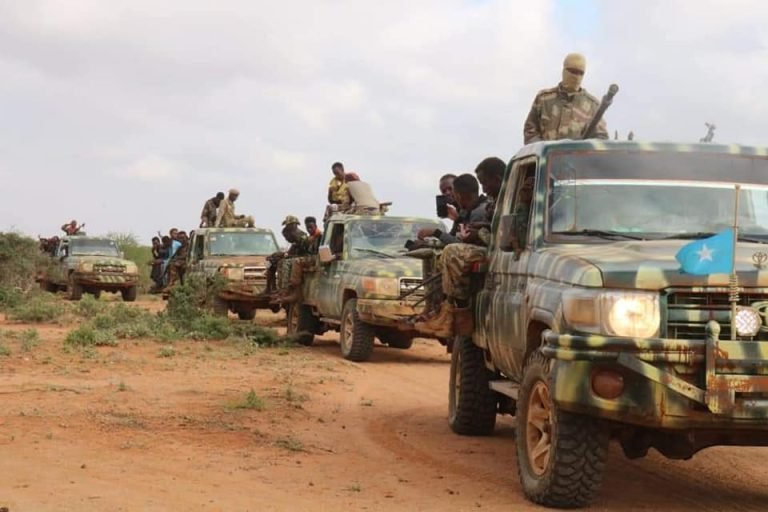
MOGADISHU — The Somali National Army has launched a series of operations against Al-Shabaab in areas under Maxaas district in the Hiiraan region, according to military officials, as part of ongoing efforts to strengthen security in the area.
The operations target Al-Shabaab positions and movements in rural areas of Maxaas, with the stated aim of weakening the group’s operational capacity and preventing attacks in the region. Military officials did not provide details on casualties, the number of troops involved, or the specific locations targeted.
A Region Under Pressure
The operations come at a critical moment for Hiiraan, where Al-Shabaab has made significant gains in recent months despite years of military pressure. The strategic town of Maxaas was captured by Al-Shabaab in July 2025 following an assault involving suicide bombings and a ground attack. The town had been under government control for over a decade and served as a key logistical hub.
The fall of Maxaas dealt a severe blow to local and government forces. As detailed in FTL Somalia’s coverage of the Hiiraan security crisis, former Prime Minister Hassan Ali Khaire called the loss a “national disgrace” and accused the federal government of abandoning the Hawadle Macawiisley fighters who had been defending the town.
The Macawiisley militia, composed primarily of Hawadle clan fighters, emerged in 2022 as a grassroots self-defense force against Al-Shabaab. Their uprising compelled militants to abandon checkpoints that had been under their control for more than a decade. However, the federal government failed to capitalize on these gains, and by 2024, all districts recaptured by Hawadle fighters had fallen back into Al-Shabaab’s hands.
As reported in FTL Somalia’s coverage of the political dimension, the reported Hawadle-Al-Shabaab agreement in early October 2026 emerged as a direct consequence of the federal government’s failure to support local forces that had borne the brunt of the fighting. The agreement was announced on the same day that the National Independent Electoral and Boundaries Commission declared a landslide victory for the Justice and Solidarity Party in Hirshabelle’s elections.
Recent Military Activity
The current operations in Maxaas follow a pattern of intensified military activity across Hiiraan in recent weeks. On 9 October 2026, federal troops and Al-Shabaab fighters clashed around Hees and Xaanshigadafer villages in Mahaas district after the army moved into positions at Hees to reinforce its presence there. Al-Shabaab claimed through its own media that its fighters had overrun the army’s base at Hees, killing two soldiers and seizing a rocket-propelled grenade launcher, though the army did not confirm or deny the claim.
A day earlier, on 8 October, residents of Tardo village in neighbouring Jalalaqsi district fought Al-Shabaab for hours when the group’s fighters tried to take a herder’s rifle. At least seven people were killed by a local administrator’s count, and residents fled to places between 40 and 80 kilometres away.
NISA has also conducted targeted operations against Al-Shabaab leadership in Hiiraan. In August 2026, NISA killed three senior Al-Shabaab commanders and five guards in the Tardo area, including Said Xuuriye, the commander responsible for extortion in eastern Hiiraan, Hamse Bakool, the commander of the group’s Hiiraan front, and Osman, the commander of what the group calls Fursaan.
In May 2026, NISA killed five Al-Shabaab militants in the Tardo area and destroyed bases and equipment used by the group for terrorist activities, following intelligence reports that around 25 militants had gathered in the area to coordinate attacks.
Strategic Significance of Hiiraan
Hiiraan’s strategic importance lies partly in its position along key transport routes connecting central Somalia to the capital and to Ethiopia. The road connecting Matabaan and Beledweyne districts, for instance, supports the movement of residents, commercial vehicles, and goods between communities in the region. Any disruption to this route affects civilian travel, trade, and access to essential services.
Al-Shabaab has demonstrated its capacity to disrupt these routes. In October 2026, the group severed a vital army supply road in central Somalia by capturing Hees, a town located close to Matabaan and astride the road connecting it to Beledweyne.
The group has also shown an ability to adapt its approach to local communities, using more incentives and fewer coercive measures. It replaced its Middle Shabelle governor early in the 2022 uprising, bringing back a commander from the Abgal clan who leveraged his ties to persuade some sub-clans not to join the government’s campaign. It also replaced the commanders of its army and intelligence services, with Somali security officials crediting the new intelligence head with playing a central role in the tactical changes behind the group’s battlefield gains.
Critical Note
The Somali National Army’s operations in Maxaas district are a necessary response to Al-Shabaab’s continued presence in Hiiraan. But they are operating in a deeply challenging environment that previous military campaigns have not resolved.
The pattern in Hiiraan is now well established: government forces conduct operations, clear territory temporarily, and then withdraw or fail to hold the ground. The Macawiisley militia, which once spearheaded the anti-Al-Shabaab campaign, has been depleted and demoralized by years of fighting without adequate government support. Some of its former members have reportedly reached accommodation with Al-Shabaab, prioritizing survival over continued confrontation.
The absence of official information about the current operations, including casualty figures, troop numbers, and locations, makes it difficult to assess their impact. The defence ministry has said nothing in public about the purpose or strength of recent positions. This lack of transparency is a recurring feature of Somali military communications, but it also makes independent verification impossible.
The fundamental question remains whether military operations alone can restore security in Hiiraan. The region’s history since 2022 suggests that without a political settlement that addresses the grievances of local communities, without sustained support for local forces, and without a credible plan to hold and administer cleared territory, the cycle of clearing and losing will continue. The operations in Maxaas may weaken Al-Shabaab temporarily. Whether they contribute to lasting security depends on what happens after the shooting stops.
Recommended Reading On ftlsomalia.com
- Political Crisis and Abandonment Push Hawadle Toward Deal with Al-Shabaab
- Somali Commandos Disrupt Al-Shabaab Waterways and Movement in Jowhar-yareey
- Al-Shabaab Militant Surrenders to Somali National Army in Lower Shabelle
- ‘Final Offensive’ Triggers Wave of Defections as Al-Shabaab Leaders Surrender in Lower Shabelle