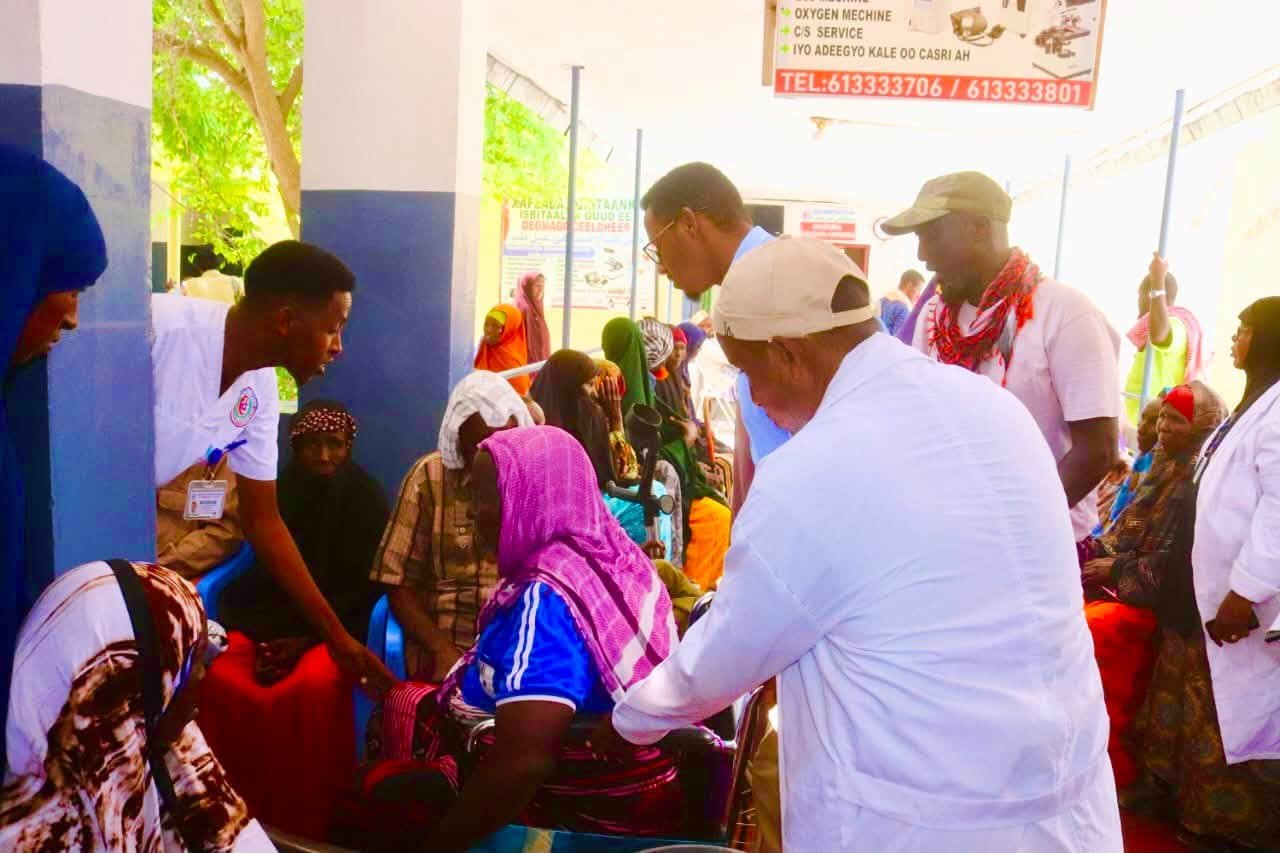
CEELDHEER, A free eye care campaign has begun at Ceeldheer District Hospital in Galguduud region, offering consultations, treatment, and surgeries to residents who have lacked access to specialized ophthalmology services for over two decades.
The programme, led by Somali doctors under Dr. Ahmed Xalaal, officially opened on October 31. Hospital director Abdullahi Osman Hassan Xagaleey told SONNA that the services, including examinations and surgeries, are being provided free of charge. By the second day, nearly 500 people had registered for consultations, and the medical team planned to begin surgical procedures in the following days. The target is to examine, treat, and operate on up to 300 patients.
The campaign marks the first time since 2005 that residents of Ceeldheer and surrounding areas have had access to eye surgery locally. The previous campaign, 21 years ago, was carried out by the Italian humanitarian organization CISP with doctors from the Kikuyu Eye Hospital in Kenya, and treated more than 500 people.
A Local Initiative in a Neglected Sector
What makes this campaign notable is its composition. It is led by Somali doctors, not an international NGO or a foreign medical team. Dr. Ahmed Xalaal and his colleagues are providing their services voluntarily, filling a gap that the formal health system has not addressed in this district for a generation.
The need is acute. Eye care is one of the most underfunded areas of Somalia’s health system. The Essential Package of Health Services, the government’s framework for prioritizing health interventions, groups eye care alongside chronic non-communicable diseases, mental health, and dental care as services receiving “minimal funding”. For residents of Ceeldheer, a district that has also been the site of repeated Al-Shabaab attacks and military operations, the absence of eye care is one of many service gaps that accumulate in areas far from Mogadishu’s hospitals and international donors’ priorities.
The campaign’s reliance on voluntary Somali doctors is a reminder of the capacity that exists within the country. It is also a reminder of how thin the institutional support for that capacity remains. A 21-year gap between eye camps is not a system. It is a stopgap.
Critical Note
The Ceeldheer eye campaign is a genuine good. Hundreds of people will receive examinations they could not otherwise afford. Some will regain their sight. The doctors who volunteered their time and skills deserve recognition for stepping into a void that the state and international partners have left unfilled.
But the celebration of this campaign should not obscure the question it raises. Why does a district of Ceeldheer’s size and strategic importance have to wait 21 years for a basic eye care service? The answer is not a lack of Somali doctors. It is a lack of sustained investment in district-level health infrastructure, a lack of predictable funding for specialized services outside Mogadishu, and a donor landscape that concentrates resources on flagship hospitals and emergency response rather than the routine care that determines whether a cataract blinds a farmer or a mother can see her children.
The volunteers who are making this campaign possible are compensating for a system that has failed. Their service is admirable. The fact that it is necessary is not.