MOGADISHU — Somalia’s Military Court of First Instance has sentenced a former Somali National Army soldier to death by firing squad for the killing of a civilian in Luuq district, Gedo region, in May 2026.
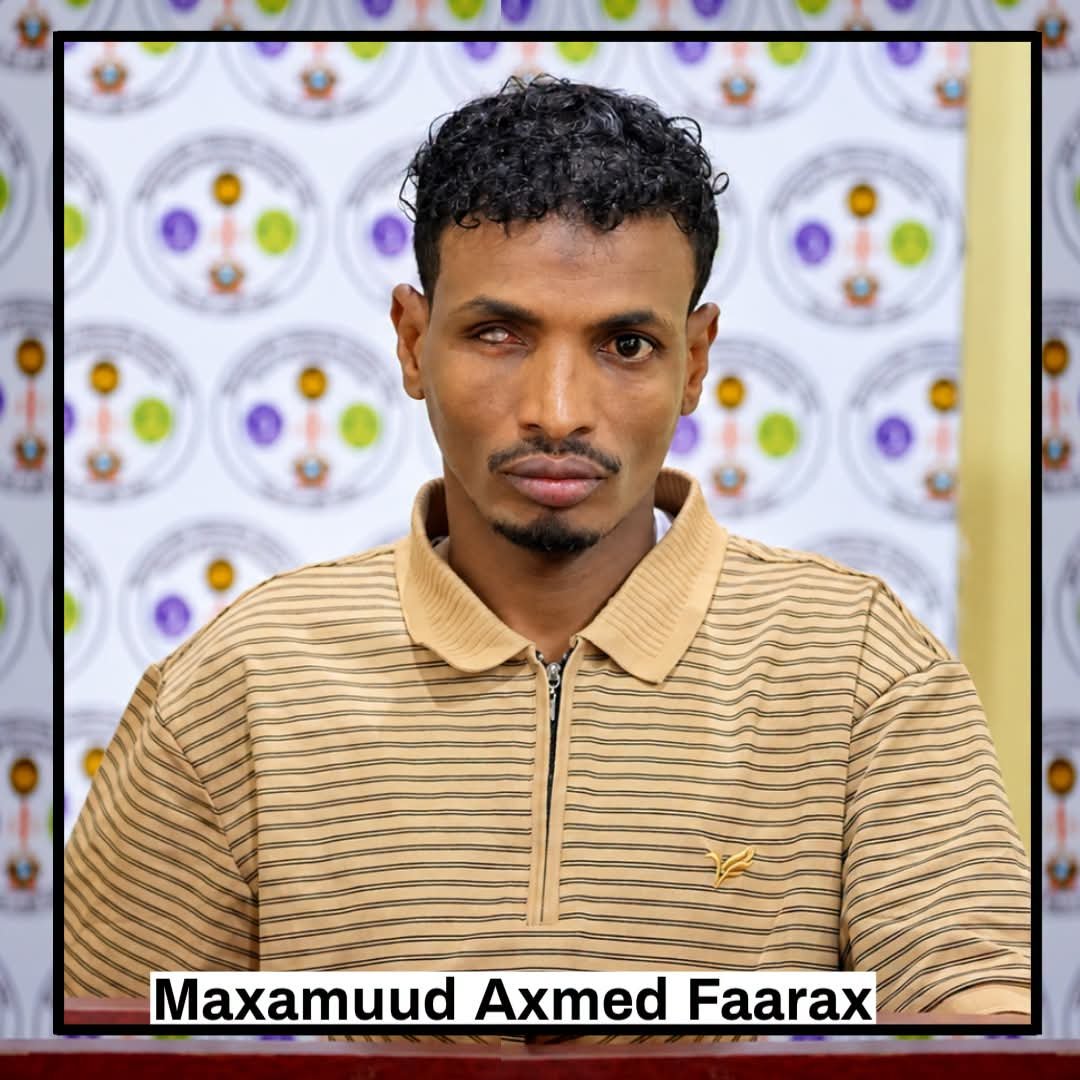
The court found former soldier Mahmoud Ahmed Farah, also known as Captain Dhashiike, responsible for the death of Abdiasis Sheikh Hussein, who was killed on May 15, 2026. The verdict was announced by Colonel Hassan Ali Nur Shuute, chairman of the First Instance Military Court.
According to the case presented by the military prosecution, the two men had a previous dispute but did not have an ongoing relationship. They encountered each other at a house in the agricultural area outside Luuq, where a disagreement developed after Farah asked for a match or lighter while smoking. The lighter was in Hussein’s possession, and the disagreement escalated. The prosecution alleged that Farah then used an AK-47 against Hussein, who died at the scene.
The military prosecution service investigated the case before referring it to the military court, with the request to proceed approved on September 3, 2026. After hearing arguments from both sides, the court convicted Farah and sentenced him to death under qisas, a form of retributive justice in Islamic jurisprudence.
Military Justice and Civilian Protection
The case underscores the role of Somalia’s military courts in handling serious criminal allegations involving members of the armed forces. The court’s decision reflects the application of qisas in Somalia’s judicial system in cases involving unlawful killings.
Somalia’s military courts have prosecuted several cases involving security force members and Al-Shabaab operatives accused of killing civilians in recent months. In February 2026, the Military Court executed two operatives affiliated with Al-Shabaab who had been convicted of direct involvement in targeted killings and bomb attacks in Mogadishu.
The Armed Forces Court has previously sentenced and executed Somali National Army soldiers for murders committed in Mogadishu and Balcad. In 2023, two federal soldiers, Qasim Duale and Hassan Juulle Shakir, were executed after the military court ordered them to die for their crimes.
The government has intensified its use of military courts to handle high-profile terrorism and murder cases, with executions carried out in fulfillment of qisas sentences. In August 2025, three Al-Shabaab convicts were executed by firing squad after the court upheld their sentences for targeted assassinations and bombings.
Civilian Protection Framework
The case comes amid broader efforts by the Somali government and its international partners to strengthen civilian protection mechanisms. The National Independent Human Rights Commission and the Special Presidential Envoy for Stabilization and Civilian Protection have been working to embed safeguards for non-combatants into the country’s security doctrine.
Defence Minister Ahmed Moallim Fiqi has met with UN officials to discuss strengthening cooperation on the protection of civilians, emphasizing that military operations are conducted in accordance with national policies and international obligations.
The Independent National Human Rights Commission has launched capacity-building workshops aimed at strengthening its ability to protect and promote human rights throughout Somalia. The training gathers Commission members and specialists from the United Nations and regional human rights bodies to boost institutional capabilities.
Critical Note
The death sentence for Captain Dhashiike sends a clear message that members of Somalia’s security forces are not above the law. The military court’s decision to apply qisas in a case where a soldier killed a civilian over a trivial dispute demonstrates a commitment to accountability within the armed forces. For a country where impunity for security force abuses has long been a source of public grievance and a driver of conflict, such prosecutions are a necessary step toward rebuilding trust between the military and the communities it is meant to protect.
At the same time, the case raises questions about the broader pattern of civilian killings by security personnel and whether these prosecutions represent a systemic approach to accountability or isolated responses to high-profile incidents. The military court system in Somalia operates with limited transparency and has faced criticism from human rights organizations for trying civilians suspected of terrorism and for the use of capital punishment. Ensuring that military justice is applied consistently, fairly, and in accordance with international standards remains an ongoing challenge.
The killing itself, triggered by a dispute over a lighter, illustrates how quickly minor disagreements can escalate into lethal violence in a context where weapons are readily available and accountability has historically been weak. Addressing this dynamic requires not only prosecutions after the fact but also training, oversight, and discipline within the security forces to prevent such incidents from occurring in the first place.
Recommended Reading On ftlsomalia.com
- Military Court Executes Al-Shabaab Members in Mogadishu
- Somali Officials Discuss Civilian Protection and Human Rights Oversight
- Human Rights Commission Launches Capacity Workshop in Mogadishu
- Two SNA Soldiers Executed for Murders Committed in January
- Al-Shabaab-Linked Men Executed in Mogadishu
- Defence Minister Fiqi and UN Deputy Envoy Discuss Protection of Civilians