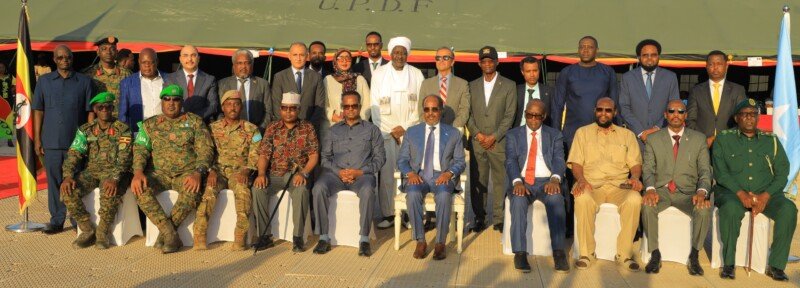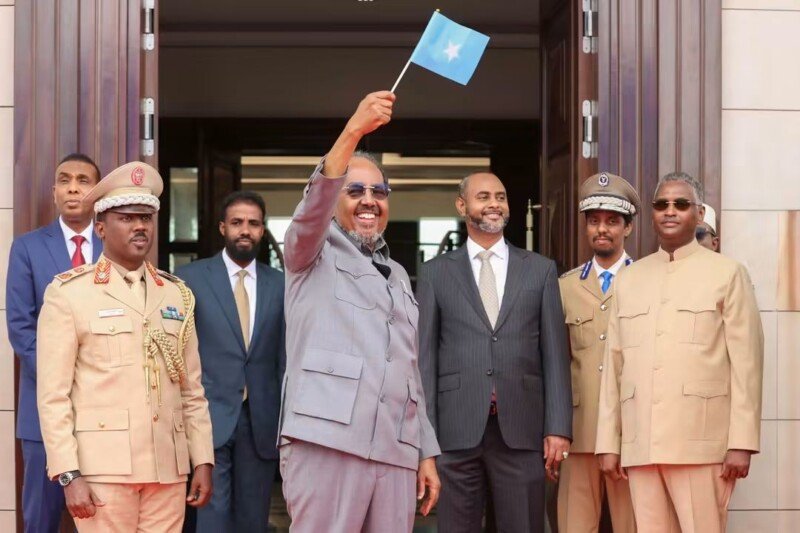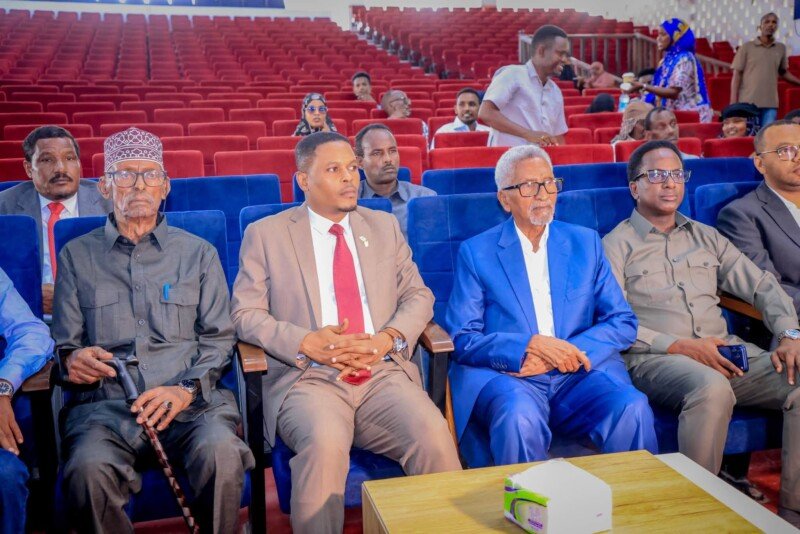
MOGADISHU — The Somali Poets’ Council (Golaha Abwaannada Soomaaliyeed) held a ceremony in Mogadishu on Monday to honour several national leaders and Banadir Regional Administration officials, recognising their support for Somali poetry and culture.
The event was attended by the Speaker of the Upper House of the Federal Parliament, Abdi Hashi Abdullahi; the Minister of Information, Culture and Tourism, Abdifatah Qasim Mohamud; the Deputy Governor of Banadir Region for Security and Politics, Mohamed Ahmed Diriye (Yabooh); and other officials.
The ceremony also served as a welcome event for the poet Mustafa Sheikh Elmi, organised by the Somali Poets’ Council. The council expressed gratitude to the Governor of Banadir Region and Mayor of Mogadishu, Dr. Hassan Mohamed Hussein (Mungaab), and awarded a medal of honour to the Banadir Regional Administration, the Ministry of Information, and doctors who have supported Somali poets.
Deputy Governor Yabooh, who spoke at the ceremony, thanked the Somali Poets’ Council for their wisdom in honouring those who have supported the arts. He noted that the Banadir Regional Administration has consistently stood by the arts community and Somali poets.
A Recognition of Cultural Patronage
The ceremony reflects the continuing role of the Somali Poets’ Council in promoting poetry and recognising those who contribute to Somalia’s cultural life. The council has organised events honouring poets and public figures who have supported the arts, including a similar ceremony in September 2025 honouring Banadir Governor Mungaab and Information Minister Abdifatah Qasim Mohamud. During that event, Muungaab rewarded veteran poet Mustafa Sheikh Elmi with two plots of land and pledged to build him a new home, as reported by Mustaqbal Media.
Somali poetry occupies a central place in the country’s cultural identity. Poetry is one of the most respected art forms in Somali society, and poets have historically played important roles as commentators, historians, and social critics. As detailed in FTL Somalia’s coverage of Somali poets, the poets’ community has increasingly organised to advocate for its role in national life, with the Somali Council of Poets reporting around 400 members, many residing abroad.
Government Support for the Arts
The Ministry of Information, Culture and Tourism has been involved in efforts to promote Somali arts and culture. In May 2026, Minister Mohamud visited the Somali National Theatre and pledged to safeguard the rights of artists while rehabilitating and modernising the historic landmark, as reported in FTL Somalia’s coverage of the theatre visit.
The Ministry has also supported literary initiatives, including the National Poetry Competition and the Somali Book Fair. These events provide platforms for poets and writers to showcase their work and engage with the public.
Critical Note
The Somali Poets’ Council’s decision to honour national leaders and Banadir officials is a gesture of appreciation for their support. It is also a reminder of the relationship between cultural patronage and political power. In Somalia, as elsewhere, poets and artists depend on the goodwill of those who control resources and influence. The council’s recognition of the Banadir administration and the Information Ministry reflects a pragmatic relationship: the poetry community needs support, and officials benefit from association with respected cultural figures.
The dependence of cultural institutions on political patronage raises questions about artistic independence. The poets’ council operates in a context where free expression remains constrained. As FTL Somalia has documented, journalists and media workers in Somalia face significant pressures, including arrests and intimidation. The arts community is not immune to these pressures.
The ceremony’s emphasis on the support of individual officials, rather than on institutional or policy commitments to the arts, is notable. A medal of honour is a symbolic gesture. What Somali poets need most is not just recognition, but sustained investment in cultural infrastructure, educational programmes and opportunities for young poets. Whether the government will provide that is a separate question.