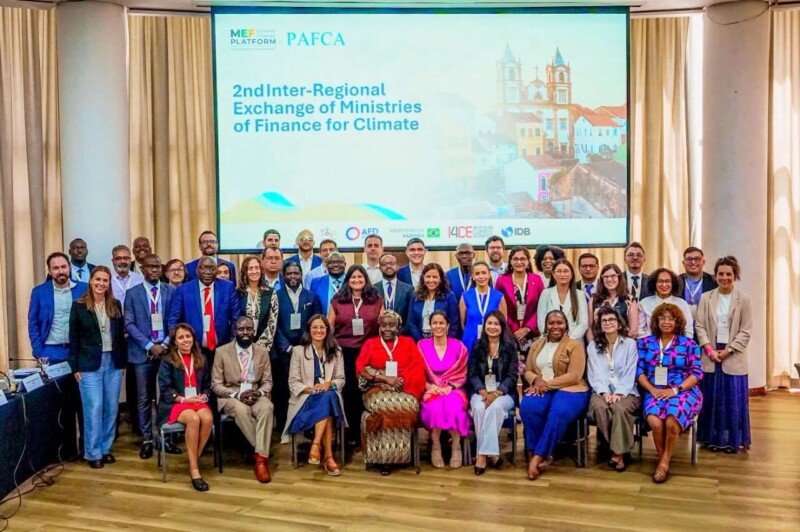
SALVADOR — The Executive Director of Somalia’s National Climate Fund (NCF), Liban Obsiye, participated in the Second Inter-Regional Exchange of Ministries of Finance for Climate in Salvador, Brazil, sharing Somalia’s experience in mobilizing climate finance and advocating for more effective support to fragile countries.
The three-day meeting brought together finance officials and climate finance experts from Africa and Latin America to discuss opportunities and challenges in mobilizing national climate finance. Participants examined the effectiveness of various financial instruments, including domestic revenue, public-private partnerships, disaster risk financing, insurance, diaspora bonds, and debt.
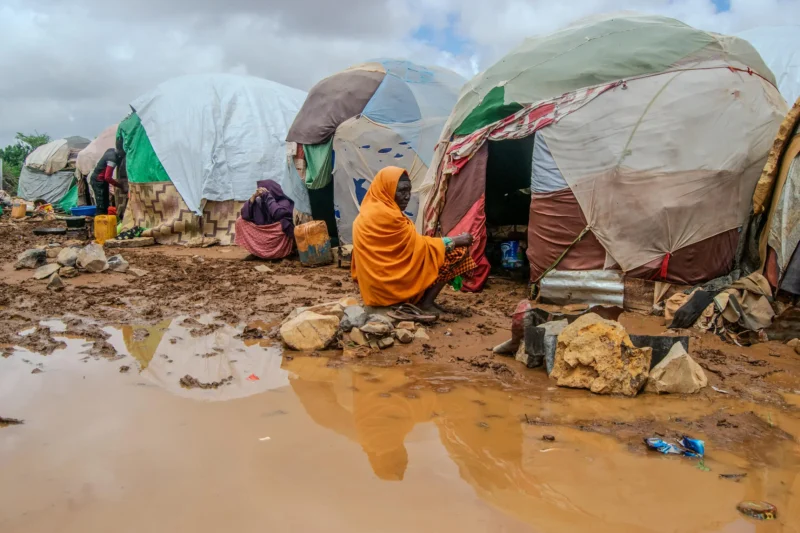
“As a country at the forefront of the climate crisis, I had the opportunity to share some of Somalia’s climate finance successes and challenges, and its experience of making the case for how financing can be most effectively deployed in more fragile countries,” Obsiye said. He noted that Somalia is adopting a whole-of-government and whole-of-society approach to climate finance, using innovation and experimentation to strengthen resilience and support a transition to a more sustainable future.
Building Somalia’s Climate Finance Architecture
Somalia has taken significant steps to strengthen its capacity to access and deploy climate finance. The National Climate Fund has trained Somali banks to access global climate funding, positioning the private sector at the center of Somalia’s climate response. The inaugural workshop for the Somali Bankers Association provided banks with tools to engage with major international climate funds and incorporate climate finance into their lending strategies.
Somalia has also launched climate finance training in Nairobi focused on Green Climate Fund Direct Access Accreditation, bringing together key national institutions including the Ministry of Finance and the Somali Development and Reconstruction Bank to improve their preparedness for direct accreditation.
The National Climate Fund and Somali Bankers Association have also concluded a second capacity-building workshop in Mogadishu, focusing on translating climate finance concepts into practical investment strategies and exploring Sharia-compliant instruments such as Murabaha, Ijara, Sukuk, and Musharaka.
The Funding Gap
Despite these efforts, Somalia continues to face a significant climate finance gap. A study by the Somali National Climate Fund found that less than 20 percent of the required climate finance is currently being met. Somalia’s weak governance structures, inadequate infrastructure, and limited institutional capacity hinder its ability to manage climate risks and deliver basic services [citation:3].
The country has not yet secured direct accreditation to the Green Climate Fund, and the banking sector’s capacity to manage climate risks and deploy green finance remains nascent. While training programmes have enhanced technical capacity, they cannot resolve the fundamental governance deficits that have long impeded effective climate action.
Critical Note
Obsiye’s participation in the Brazil meeting reflects Somalia’s continued efforts to position itself as an active participant in global climate finance discussions rather than a passive recipient of aid. The emphasis on sharing experiences and advocating for fragile states is a recognition that Somalia’s challenges are shared by many countries facing similar constraints.
However, the gap between ambition and reality remains stark. Somalia has built the institutional framework for climate finance, including the National Climate Fund and capacity-building programmes for banks and government institutions. Yet these initiatives remain largely preparatory. The country has not secured direct access to major climate funds, and the banking sector’s ability to absorb and deploy climate finance is still limited.
The fundamental challenge is that climate finance requires not just technical capacity but also governance systems, infrastructure, and a stable operating environment that Somalia continues to build. The training programmes and inter-regional exchanges are necessary steps, but they are not sufficient. Without addressing the underlying constraints that make Somalia a high-risk environment for investment, the country will struggle to translate global climate pledges into tangible resilience for its most vulnerable communities.