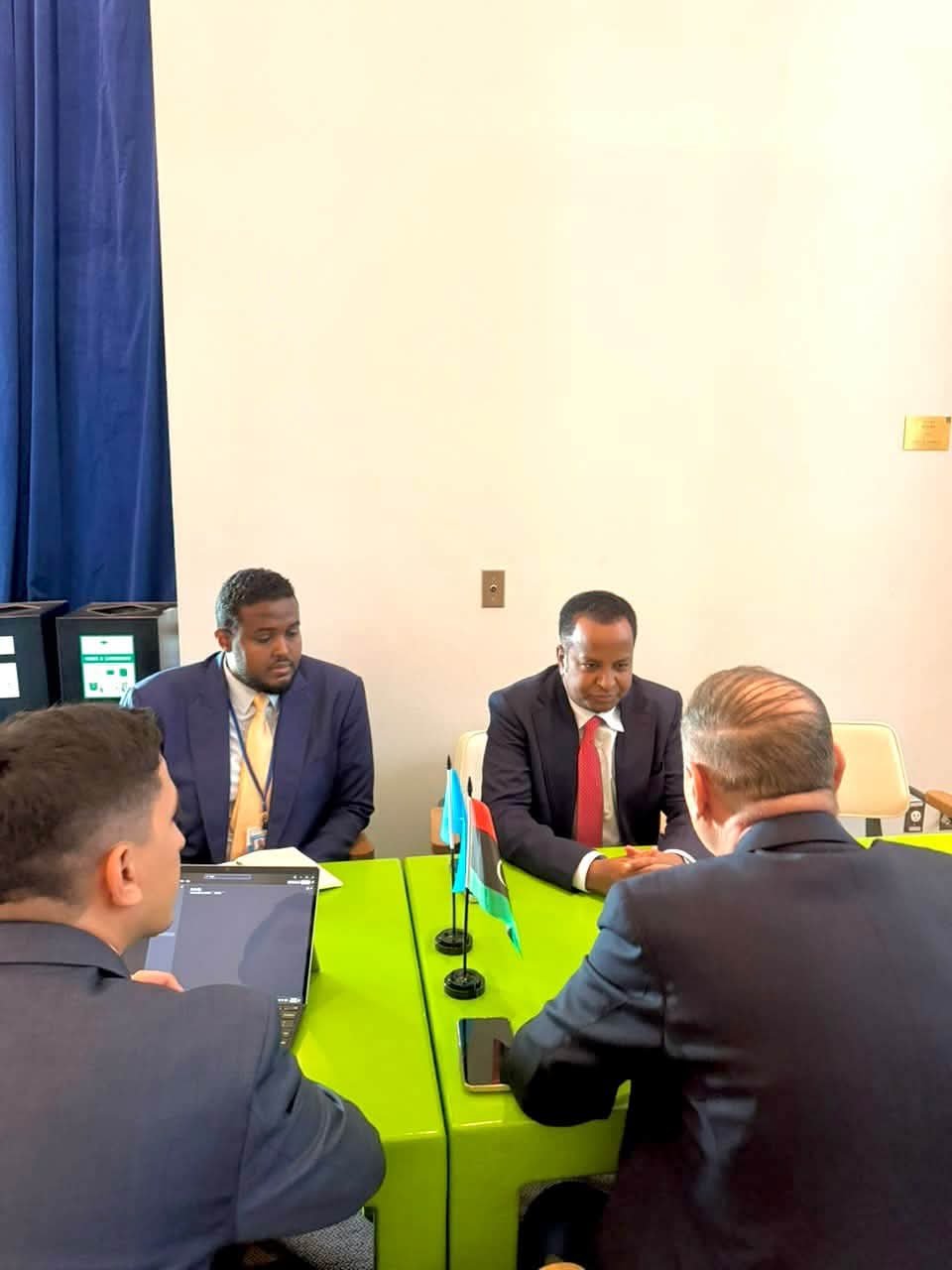
NEW YORK — Somalia and Libya have agreed to strengthen cooperation and coordination on matters related to travel and the situation of Somali citizens in Libya, during a meeting held on the sidelines of the 81st session of the United Nations General Assembly in New York.
Somali Minister of Foreign Affairs and International Cooperation Abdisalam Abdi Ali met with Daahir Saalim Al-Baour, the official responsible for the Libyan Ministry of Foreign Affairs and International Cooperation. The two officials discussed several issues concerning bilateral relations, with particular focus on the situation of Somali citizens in Libya and cooperation on travel matters.
The two sides agreed to further strengthen coordination and cooperation between the two governments to address matters of shared interest. The discussions also covered regional issues, reflecting the broader diplomatic engagement Somalia has pursued during the UN General Assembly.
A Migration Route Under Strain
The meeting comes amid longstanding concerns about the treatment of Somali migrants in Libya, a major transit route for those attempting to reach Europe. In September 2026, 171 Somali migrants stranded in Libya were repatriated on a charter flight organized by the International Organization for Migration, after enduring dangerous travel conditions, exploitation and abuse at the hands of smugglers.
Since August 2022, the EU-IOM partnership with the Somali government has facilitated the voluntary return of about 2,000 Somali migrants from Libya, with additional charter flights scheduled for late 2026. According to the IOM’s Displacement Tracking Matrix, hundreds remain stranded in Libya under dangerous conditions, with severe insecurity and a lack of food, shelter and medical care leaving thousands in urgent need of protection and humanitarian assistance.
The situation has been further complicated by the decision of Libya’s eastern-based administration to ban nationals of Somalia, Sudan, Eritrea and Ethiopia from entering territory under its control. The decree, issued in June 2026, bars citizens of the four countries from entering through all land, sea and air ports, with exemptions only for diplomats and workers in education and health.
In August 2026, a delegation from Somalia’s Independent Human Rights Commission visited Ganfuda Prison in Benghazi, where 70 Somali nationals were being held, including eight women. Officials said nearly 300 Somali citizens are being detained in prisons across eastern and southern Libya.
Critical Note
The meeting between the Somali and Libyan foreign ministers is a necessary diplomatic engagement, but it addresses a crisis that has persisted for years despite repeated bilateral agreements. Somalia and Libya have signed memoranda of understanding on visa exemptions, political consultation and municipal cooperation since 2025. Yet Somali migrants continue to be detained, abused and stranded in Libyan detention centres, and the eastern-based administration has only tightened restrictions on their entry.
The gap between diplomatic agreements and conditions on the ground remains wide. The release and repatriation of detainees has been a stated priority in previous talks, but the numbers of those held and the frequency of returns suggest that progress is slow and the underlying drivers of migration remain unaddressed. Young Somalis continue to embark on dangerous journeys through Libya despite the well-documented risks, driven by lack of economic opportunity, insecurity and limited legal pathways abroad.
For Somalia, the most tangible outcome of these talks would be a concrete mechanism for protecting the rights of Somali nationals in Libyan custody and expediting their release and repatriation. Without that, the diplomatic engagement, however welcome, risks becoming another in a series of agreements that do not translate into meaningful change for the people it is meant to protect.