
GENEVA — Somalia has delivered a strong statement at the 63rd session of the United Nations Human Rights Council, condemning grave violations committed by the Rapid Support Forces (RSF) against civilians in Sudan and calling for an immediate cessation of hostilities and a Sudanese-led political solution to the conflict.
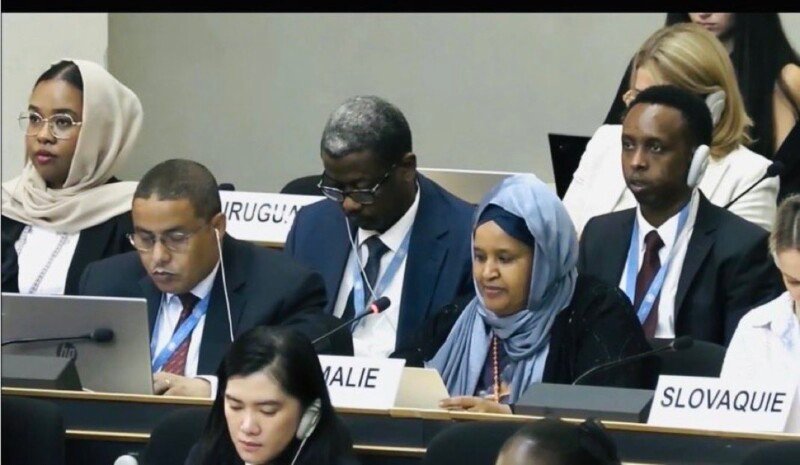
Ambassador Khadra Mohamed Dualle, Somalia’s Permanent Representative to the UN in Geneva, delivered the statement during an interactive dialogue on the report of the Fact-Finding Mission on Sudan. The session at the Palais des Nations is part of the Council’s sixty-third regular session, which runs from September 7 to October 7, 2026.
Somalia called for safe and unhindered humanitarian access to affected populations and stressed the need to hold perpetrators accountable for violations committed during the conflict.
Somalia’s Position on Sudan
Somalia’s statement at the Human Rights Council reflects its consistent stance on the Sudan conflict. The country rejected foreign interference in Sudan’s internal affairs and reaffirmed its support for Sudan’s sovereignty, unity, independence, and territorial integrity. Somalia also expressed support for the efforts of the African Union and the Intergovernmental Authority on Development (IGAD) to advance peace in Sudan.
This engagement follows years of strained relations between Somalia and Sudan. In May 2023, RSF fighters broke into the Somali Embassy in Khartoum, destroying several parts of the Embassy and breaking down doors. The reason for the attack remained unclear at the time, but the incident highlighted the dangers facing Somali diplomatic missions in conflict zones.
The statement comes as the UN Fact-Finding Mission for Sudan presented its latest report to the Council, which documented a transnational network of external support fueling the conflict. The report found that foreign personnel, training, weapons, and logistics have been provided to both sides of the conflict, with devastating consequences for civilians.
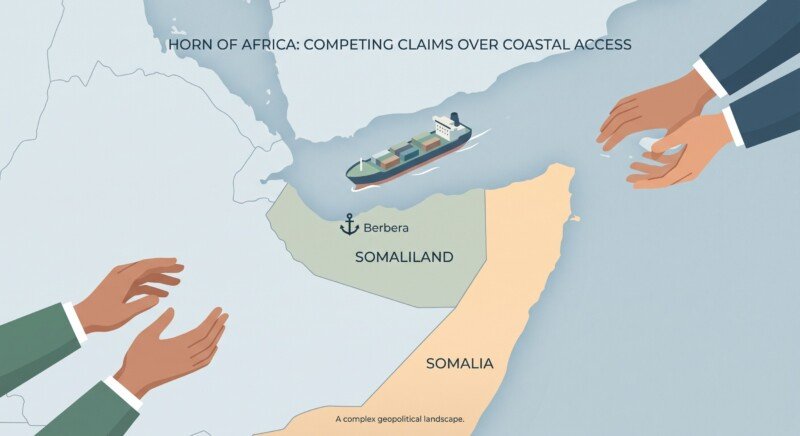
The US Senate Foreign Relations Committee has expressed serious concern regarding reports of supply routes for RSF militants passing through Somaliland. Senator Jim Risch, chairman of the committee, stated that he was “troubled by reports of a UAE-connected training base for genocidal RSF elements in Ethiopia with possible supply channels via Somaliland,” warning that such actions would be provocative and provide additional grounds to designate the RSF as a Foreign Terrorist Organization.
According to the UN, intensified fighting in Sudan has displaced at least another 200,000 people since late 2025, while destructive seasonal floods are compounding the massive humanitarian emergency.
Somalia’s Defence Minister Ahmed Moallim Fiqi has previously compared armed opposition factions in Somalia to Sudan’s RSF, describing them as the group’s “Somali wing” following clashes in Mogadishu, underscoring the connection between the two conflicts in the regional security landscape.
Somalia’s Engagement at the Human Rights Council
Ambassador Dualle has previously reaffirmed Somalia’s commitment to advancing human rights and strengthening cooperation with international partners at the UN Human Rights Council. She noted that the Federal Government continues to implement reforms aimed at improving governance, protecting human rights, and promoting inclusive development across the country.
The 63rd session of the Human Rights Council is addressing a wide range of issues related to the promotion and protection of human rights worldwide. In addition to Sudan, the Council is examining situations in Afghanistan, Syria, Myanmar, and other countries, as well as technical assistance dossiers concerning Somalia, Haiti, the Central African Republic, the Democratic Republic of Congo, Cambodia, and Yemen.
The Council will also consider a report on technical assistance to Somalia, reflecting the international community’s ongoing engagement with the country’s human rights and governance challenges.
Critical Note
Somalia’s strong statement on Sudan at the Human Rights Council reflects the country’s growing diplomatic engagement on regional issues and its commitment to supporting peace and stability in the region. By condemning RSF violations, calling for accountability, and rejecting foreign interference, Somalia has positioned itself as a principled voice on Sudan.
Yet, Somalia’s diplomatic engagement on Sudan also highlights the interconnected nature of the region’s conflicts. Somalia itself continues to face significant challenges, including the ongoing fight against Al-Shabaab, political instability, and humanitarian crises. The country’s ability to advocate for peace and human rights in Sudan while addressing its own domestic challenges will be a test of its diplomatic capacity and political will.
Moreover, the allegations of RSF supply routes passing through Somaliland underscore the complex dynamics at play, where a territory seeking international recognition may be implicated in fueling a conflict that Somalia is calling on the international community to resolve. The Human Rights Council’s consideration of technical assistance for Somalia also underscores the international community’s recognition of the country’s ongoing challenges. For Somalia, engaging constructively with the Council and other international human rights mechanisms is essential to building the institutions and accountability frameworks necessary for lasting peace and development.