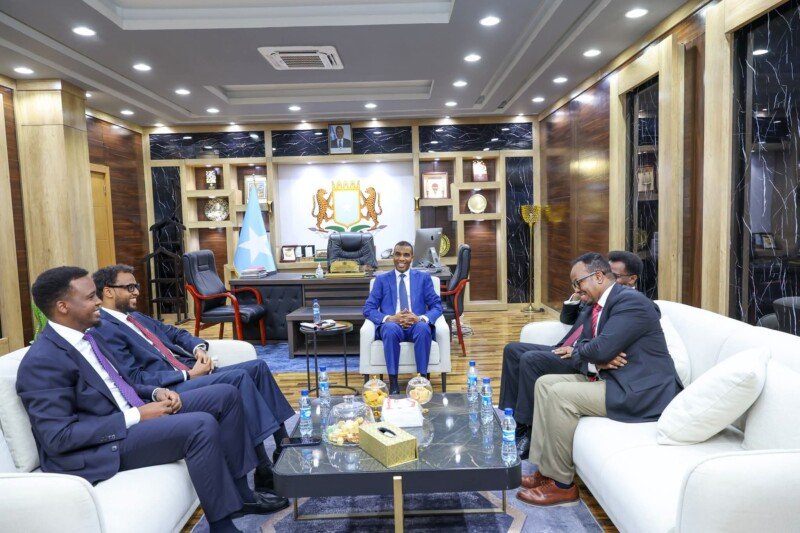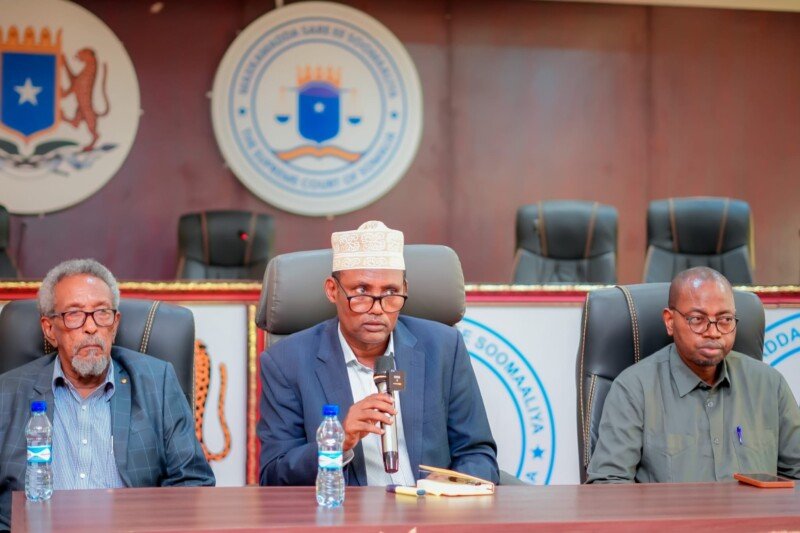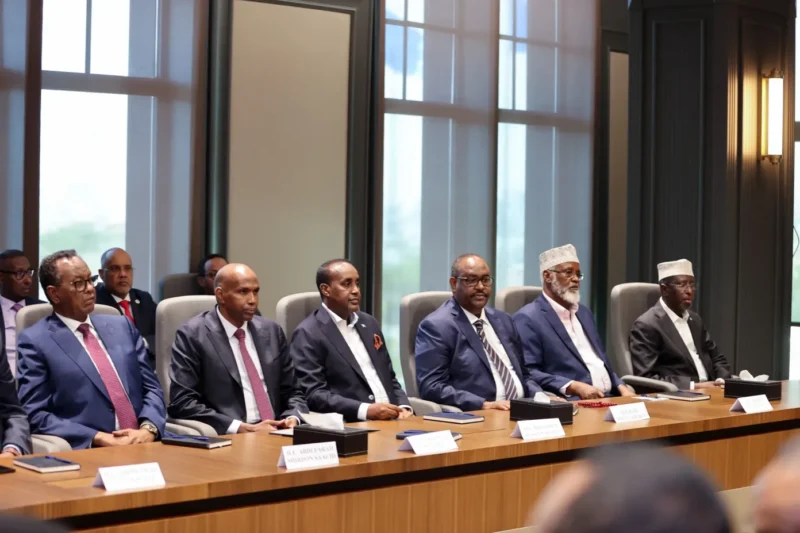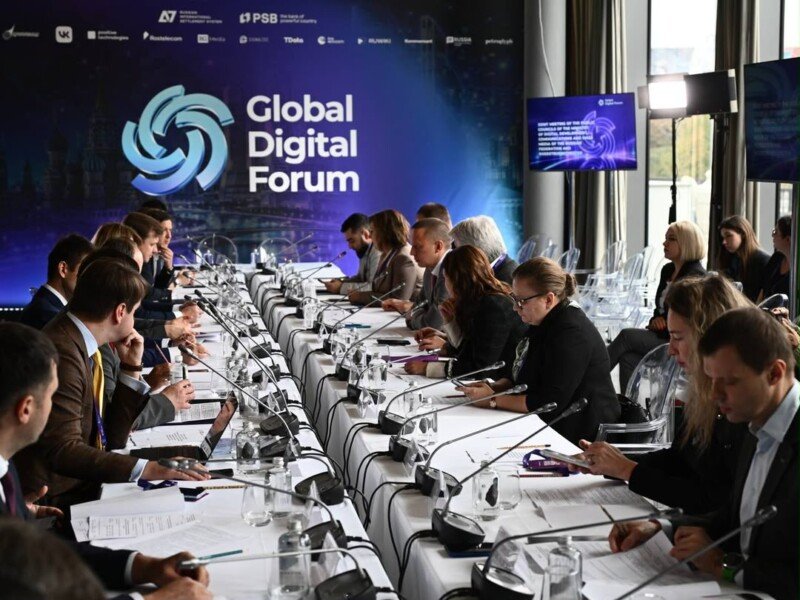
MOGADISHU — Somalia participated in the Global Digital Forum 2026 in Moscow this week, joining more than 700 representatives from over 100 countries across Africa, Asia, the Persian Gulf, Latin America, and Europe, including deputy prime ministers and ministers of digital development.
The forum, held in the Russian capital, focused on technological development, artificial intelligence, and the role of digital transformation in improving public services. Somali officials joined government representatives, technology experts, business leaders, and media organisations to discuss opportunities and challenges related to digital development.
Key Agenda Items
The forum’s agenda included discussions and presentations on the use of technology to facilitate public services, business development, data protection, and the acceleration of daily operations.
Participants also discussed the use of artificial intelligence in media, particularly in the preparation and dissemination of news, data analysis, and efforts to strengthen public trust in media at a time when the use of technology and AI programmes is increasing.
Attendees exchanged knowledge and experience related to the development of digital services, presenting new ideas and approaches to address challenges in business, communications, and public services.
Somalia’s Digital Transformation Agenda
Somalia’s participation in the forum comes as the country continues to pursue digital transformation across multiple sectors. The federal government has prioritized the modernization of public services, the expansion of digital payment systems, and the integration of technology into governance and economic development.
The Central Bank of Somalia has led efforts to modernize the country’s financial infrastructure, including the launch of the Somalia Instant Payment System (SIPS) in January 2025, which enables real-time, 24/7 transfers between banks and mobile wallets. As reported in FTL Somalia’s coverage of the national payment system, the system processed 337,788 transactions worth $593 million in the first quarter of 2026 alone, reflecting broader adoption of electronic payment infrastructure.
The government has also advanced digital identity and civil registration initiatives. As detailed in FTL Somalia’s coverage of the digital ID rollout, Somalia has begun issuing digital identification cards aimed at streamlining access to public services, improving security, and enabling more efficient delivery of government programmes.
Broader Implications for Somalia
Participation in international forums like the Global Digital Forum offers Somalia an opportunity to engage with global partners on technology and innovation, exchange best practices, and potentially attract investment in digital infrastructure.
Somalia’s digital economy has shown significant growth in recent years, driven largely by the private sector. Mobile money services have become ubiquitous, and the telecommunications sector has expanded rapidly despite the country’s broader challenges. However, government-led digital transformation remains in its early stages, and the country faces significant gaps in infrastructure, regulatory frameworks, and technical capacity.
The forum’s emphasis on AI and digital cooperation aligns with Somalia’s stated priorities. Whether participation translates into concrete partnerships, funding, or technical assistance remains to be seen.
Critical Note
Somalia’s participation in the Global Digital Forum in Moscow is a welcome signal that the country is engaging with international partners on technology and digital development. The forum provides a platform for Somali officials to learn from other countries’ experiences, showcase their own progress, and explore potential partnerships.
However, participation in conferences is not the same as transformation. Somalia’s digital economy has grown primarily through private sector initiative, particularly in mobile money and telecommunications. Government-led digitalisation, while improving, remains constrained by limited infrastructure, weak regulatory capacity, and the broader challenges of state-building.
The forum’s focus on AI and emerging technologies is relevant to Somalia’s future, but the country’s immediate priorities remain more basic: expanding internet access, building secure data infrastructure, developing legal frameworks for data protection and cybersecurity, and ensuring that digital services reach citizens beyond major urban centres. High-level participation in international forums is valuable, but it must be accompanied by sustained investment and institution-building at home.
Share your story. FTL Somalia is continuing to investigate Somalia’s digital transformation and its engagement with international technology partners. If you have information or insights to share, contact us at info@ftlsomalia.com. Your identity will be protected.