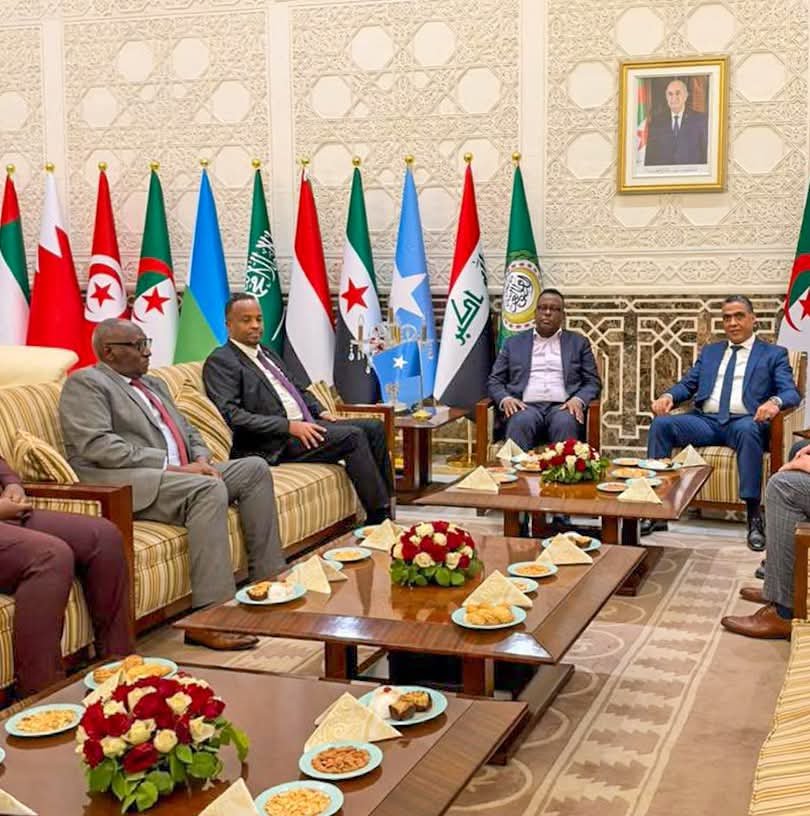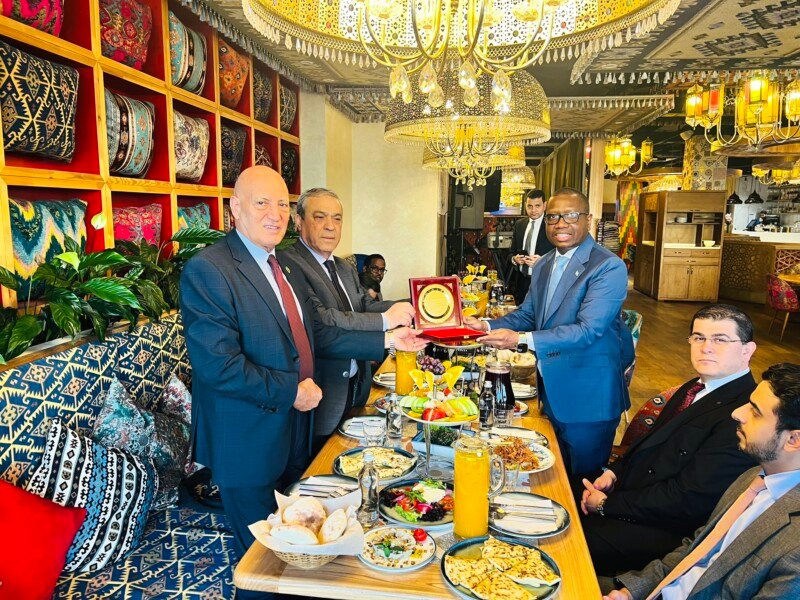
MOSCOW, Somalia’s Ambassador to Russia, Mohamed A. Zubeyr, has concluded his diplomatic tenure in Moscow, thanking his fellow Arab ambassadors for a warm farewell and describing his time in the Russian capital as an honour marked by “cherished memories, lasting friendships, and deep appreciation.”
Zubeyr’s departure comes after a tenure that saw a notable revival in Somalia-Russia relations, a period in which he presented his credentials to President Vladimir Putin at the Grand Kremlin Palace and witnessed the deepening of defense and political ties between Mogadishu and Moscow.
The farewell from his Arab counterparts is a reflection of the diplomatic community in Moscow, where ambassadors from the Middle East and Africa often coordinate on regional issues. For Zubeyr, the gesture was personal as much as professional, coming at the end of a mission that he has publicly framed as a period of renewed engagement.
A Tenure of Formal Accreditation and Quiet Diplomacy
Zubeyr’s formal accreditation began in January 2026, when he presented his letters of credence to Putin at the Grand Kremlin Palace, a ceremony that marked the official start of his mission and signaled Somalia’s intent to maintain robust relations with a permanent member of the UN Security Council. His early diplomatic steps included presenting a copy of his credentials to Deputy Foreign Minister Mikhail Bogdanov, Russia’s Special Representative for the Middle East and Africa, a move described as significant in strengthening diplomatic relations between the two countries.
In the months that followed, Zubeyr was active in laying the groundwork for closer bilateral cooperation. His tenure coincided with a series of high-level engagements between the two governments. In May 2026, Somalia’s State Minister for Defence, Omar Ali Abdi, met with Russian Deputy Minister of Defence Vasily Osmakov in Moscow to discuss enhanced defense cooperation, building on a relationship that had lain largely dormant since 1991. The visit was followed by a meeting between Somalia’s Internal Security Minister and Russia’s Deputy Minister of Internal Affairs, Igor Zubov, on the sidelines of the Russia-Africa Summit, where police training and counterterrorism cooperation were discussed.
Russia also provided humanitarian assistance during Zubeyr’s tenure, including a shipment of 25,000 tons of wheat in late 2023 to communities affected by drought, a gesture that Somali leaders publicly acknowledged. Moscow further supported Somalia’s sovereignty at the UN Security Council, including opposing the extension of the arms embargo in April 2026, a stance Mogadishu welcomed as a reflection of growing strategic convergence.
The parliamentary dimension of the relationship also deepened. In May 2025, Somalia’s Senate Speaker, Abdi Hashi Abdullahi, traveled to Moscow to strengthen parliamentary ties, meeting with Vyacheslav Volodin, Chairman of the State Duma, to discuss regional security, economic development, and political collaboration.
Zubeyr’s diplomatic engagement extended beyond the strictly political. In May 2026, the outgoing Russian Ambassador to Somalia, Mikhail Golovanov, held farewell talks with Foreign Minister Abdisalam Abdi Ali, with both sides reaffirming their commitment to strengthening political dialogue and economic cooperation.
Critical Note
Ambassadorial farewells are routine diplomatic courtesies, and the warmth of Zubeyr’s message to his Arab colleagues says more about the collegiality of the Moscow diplomatic corps than about the substance of Somalia-Russia relations. That is not a criticism. Diplomacy is built on relationships, and an ambassador who leaves with the goodwill of his peers has done part of his job well.
But the substance of the Somalia-Russia relationship during Zubeyr’s tenure deserves a clear-eyed assessment. The defense talks, the security meetings, and the humanitarian shipments are real, but they remain modest in scale compared to Somalia’s engagements with Türkiye, the United States, and the Gulf states. The graduation of four Somali police officers from Russia’s Academy of Management was a historic milestone, yet it sits alongside unresolved questions about how those officers were selected and whether the programme is building institutional capacity or providing opportunities for patronage, as FTL Somalia reported at the time.
Zubeyr’s departure also comes at a moment when Somalia’s diplomatic bandwidth is stretched. The UN political mission has closed, Uganda is withdrawing troops, AUSSOM faces a funding crisis, and the electoral calendar is contested. The next ambassador to Moscow will inherit a relationship that is warming but not yet warm enough to fill any of those gaps. The farewell is a moment of personal closure. It is not a milestone in the bilateral relationship, which remains a work in progress.
Recommended Reading On ftlsomalia.com
- Russia-Somalia Security Ties Revive as Police Officers Graduate with Master’s Degrees After Four Decades
- Somalia, Russia Discuss Enhanced Defense Cooperation
- Somalia, Russia Discuss Police Training and Counterterrorism at Africa Summit
- New Somali Ambassador to Russia Presents Credentials to Bogdanov
- Somali Foreign Minister Extends Farewell to Russian Ambassador