

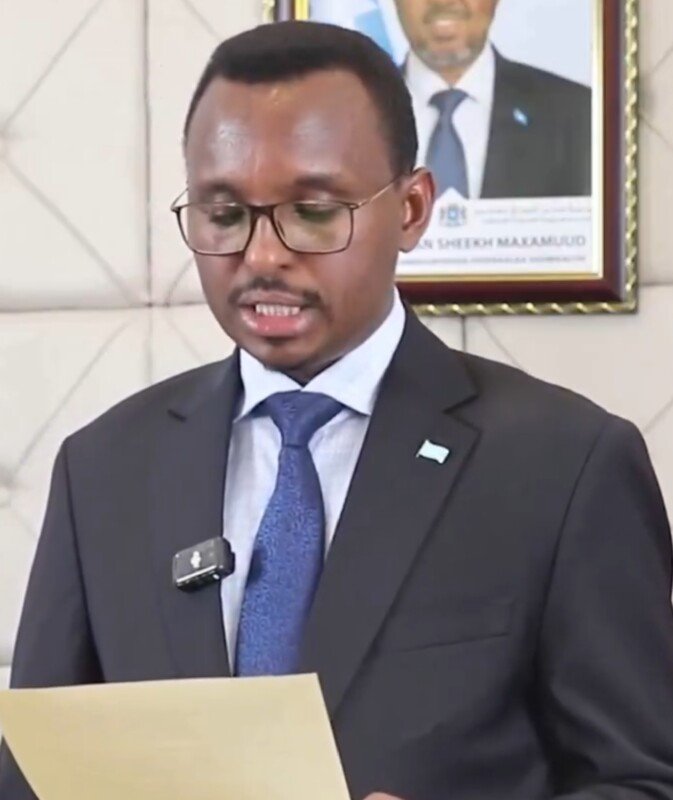
CAIRO — The Auditor General of the Federal Republic of Somalia, Ahmed Issa Gutale, has been elected as the Alternate External Auditor of the Arab-speaking African Association of Supreme Audit Institutions (AFROSAI-A) for a three-year term spanning 2026 to 2029.
Gutale attended and addressed the AFROSAI-A Constituent Assembly meeting held in Cairo, where the election took place. Algeria’s Auditor General was elected as the External Auditor for the same period.
Somalia’s election to this position reflects the country’s growing credibility in financial governance and accountability, coming after years of rebuilding state institutions and strengthening public financial management systems.
Significance of the Election
Gutale expressed gratitude to AFROSAI-A for the confidence placed in the Office of the Auditor General of the Federal Republic of Somalia, noting that the election demonstrates the importance and role of Somalia within the community of supreme audit institutions in Africa.
He emphasized the importance of AFROSAI-A moving beyond its foundational stage to an operational and effective phase, in order to strengthen professional cooperation and the exchange of expertise among member supreme audit institutions.
About AFROSAI-A
AFROSAI-A comprises nine Arab-speaking African countries and aims to strengthen cooperation, promote the audit profession, and share expertise among supreme audit institutions in the region. The organization works to enhance public financial management and accountability across member states.
The election of Somalia to this position provides an opportunity for the Office of the Auditor General to further strengthen international relations and cooperation in auditing and accountability for government institutions.
Critical Note
Somalia’s election to the AFROSAI-A leadership represents a significant vote of confidence in the country’s public financial management reform efforts. The position will allow the Office of the Auditor General to contribute to regional standard-setting and benefit from peer learning opportunities with more established audit institutions.
However, this achievement must be measured against the substantial challenges that remain in Somalia’s public financial management landscape. The Auditor General’s office faces significant capacity constraints, limited resources, and political interference that undermine its ability to effectively scrutinize government expenditures. The office has documented millions of dollars in misappropriated funds, but has often lacked the political backing or institutional capacity to ensure follow-through.
For this election to be meaningful beyond the symbolic, the federal government must provide the Auditor General’s office with the resources and independence it needs to carry out its mandate effectively. Without institutional strengthening at home, Somalia’s regional leadership role in audit governance will remain an aspiration rather than a reflection of reality.
Recommended Reading On ftlsomalia.com
- Auditor General Flags $32 Million in Unverified Port and Airport Revenues
- Somalia’s 2024 Audit Report Exposes $153 Million in Underdocumented Social Spending
- Somali Cabinet Briefed on GDP Growth and Military Gains Against Al-Shabaab
- Somalia’s Currency Reform: New Shilling to Be Backed by Currency Board Arrangement