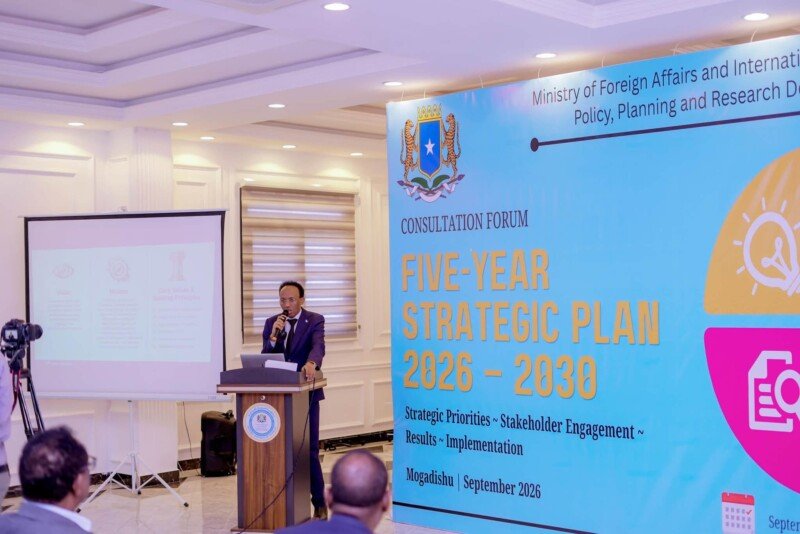
MOGADISHU — The Deputy Minister of Foreign Affairs and International Cooperation, Hassan Mohamed Ali (Nadaara), has officially launched the Ministry’s five-year strategic plan for 2026–2030, outlining the direction and priorities for Somalia’s diplomatic engagement over the coming years .
The plan, which was presented by the Director of Planning, Research and Development, Jibril Afyare, sets the strategic direction and priorities for the Ministry over the next five years . It aims to channel diplomatic time and efforts toward safeguarding Somalia’s sovereignty and national interests, strengthening peace and security, and promoting economic growth through international cooperation .
The launch of the strategic plan comes at a critical juncture for Somalia’s foreign policy, as the country seeks to consolidate its diplomatic gains, strengthen its international partnerships, and assert its role in regional and global affairs .
Key Priorities and Focus Areas
The five-year plan is designed to guide the Ministry’s work across several key areas, including safeguarding Somalia’s sovereignty and national interests, strengthening peace and security, and promoting economic growth through international cooperation .
Somalia has been actively expanding its diplomatic footprint and strengthening its relationships with key international partners. The country has played a leading role in global initiatives, including co-chairing the Global Roadmap for Social Protection in Fragile and Conflict-Affected Settings with the United Kingdom, demonstrating its growing diplomatic influence .
Somalia has also been actively engaging with regional partners, including Egypt and Turkey, to address shared challenges and advance mutual interests . The country’s recent election to the UN Security Council and its role in the Arab League have provided additional platforms for advancing its diplomatic agenda .
Somalia has also been strengthening its engagement with the African Union, securing a position on the African Union Peace and Security Council for the first time in over two decades .
The plan also reflects Somalia’s broader development agenda, as outlined in the National Transformation Plan and the Centennial Vision 2060, which emphasize the importance of international cooperation in achieving sustainable development .
Critical Note
The launch of the Foreign Ministry’s five-year strategic plan represents a significant step toward professionalizing Somalia’s diplomatic service and aligning its foreign policy with national development priorities. The plan’s emphasis on safeguarding sovereignty, strengthening peace and security, and promoting economic growth through international cooperation reflects a comprehensive approach to foreign policy that recognizes the interconnection between diplomacy and development.
Yet, the success of the plan will depend on the Ministry’s ability to implement it effectively, including mobilizing resources, building institutional capacity, and ensuring coordination across government. Somalia’s foreign policy challenges are substantial, including ongoing tensions with Ethiopia, the recognition of Somaliland by Israel, and the need to balance relationships with regional and global powers. Without sustained political will and institutional strengthening, the plan risks becoming another document rather than a guide for action.
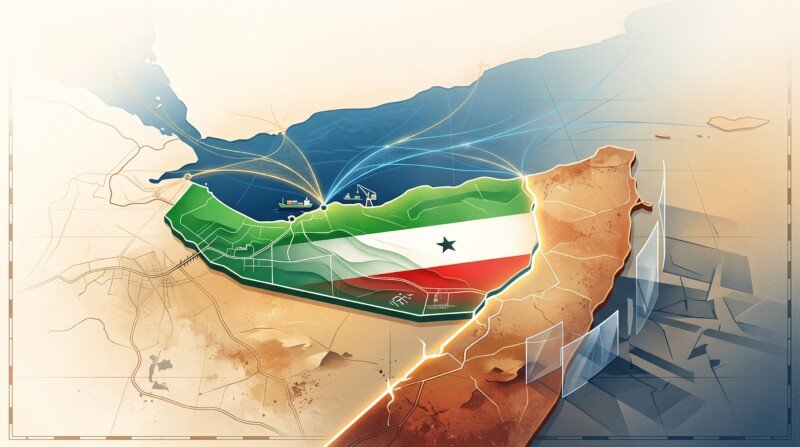
The plan also comes at a time when Somalia’s diplomatic position is under pressure, with the breakaway region of Somaliland continuing to seek international recognition and regional dynamics shifting. The plan’s success will be measured not by its publication but by its implementation and the tangible outcomes it delivers for Somalia’s sovereignty, security, and development.