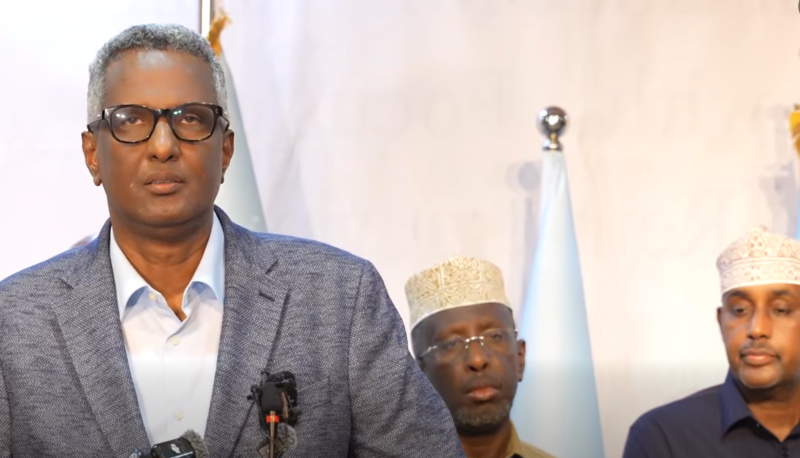

HARGEISA — Somaliland’s government issued a formal statement on 3 October 2026 rejecting what it called “misleading claims” made by Somali President Hassan Sheikh Mohamud in a recent interview with Al Jazeera, asserting that Somalia has no authority to determine Somaliland’s foreign relations or speak on behalf of its people.
The statement, issued by Somaliland’s Ministry of Foreign Affairs and International Cooperation, came after Mohamud said Somalia would not accept an Israeli presence “under any circumstances” and alleged that Israel plans to establish a naval base in Berbera and use its airport.
Rejection of Mogadishu’s Authority
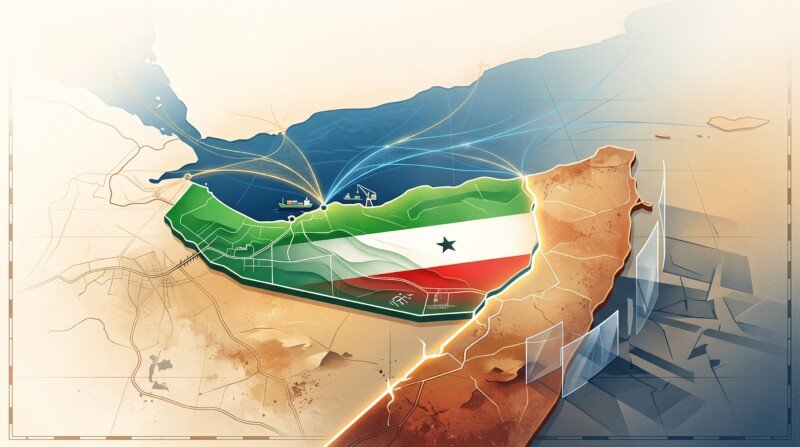
Somaliland said it is “a separate sovereign state” with fundamentally different governance realities from Somalia, and that Mogadishu has no authority over its diplomatic partnerships [citation:3]. The statement cited Somaliland’s independence on 26 June 1960, five days before Somalia’s independence on 1 July 1960, and the restoration of sovereignty on 18 May 1991, invoking the principle of uti possidetis juris, the international legal doctrine that respects boundaries inherited at independence.
The government said that for more than three decades, Somaliland has built functioning institutions, held competitive elections, ensured peaceful transfers of power, and contributed to regional stability, and that “Somalia’s continuing insecurity, political fragmentation, and institutional fragility cannot be obscured by misrepresenting Somaliland or threatening its sovereign partnerships”.
Defence of Israel Relations
Somaliland defended its diplomatic relations with Israel as “the sovereign decisions of two states” aimed at advancing peaceful cooperation, development, and regional stability. It described claims that Berbera would serve as a platform for aggression against other countries as “unfounded and misrepresent Somaliland’s commitment to peaceful relations”.
The statement also addressed the deepening economic relationship with Israel. As reported in FTL Somalia’s coverage of Israeli business engagement, representatives of Israeli infrastructure companies, including a delegate from the Shikun & Binui Group, have visited Somaliland to explore opportunities in infrastructure, construction, transportation and urban development, according to reporting by Israeli journalist Yehoshua Meiri. The report has not been independently verified.
Somaliland’s rejection of Mohamud’s claims came as Shikun & Binui’s participation raised questions about the company’s documented record of building settlements in the occupied West Bank and East Jerusalem, and its exclusion from Norwegian and Danish pension funds on human rights grounds. Somaliland has sought recognition by presenting itself as a law-abiding, democratic entity, and partnering with a company on the UN Human Rights Council’s database for settlement activities could complicate that narrative.
Ethiopia MoU and Regional Tensions
Somaliland said it has “consistently supported negotiated arrangements enabling the Federal Democratic Republic of Ethiopia to secure access to the sea through mutually beneficial cooperation,” and that Somalia’s campaign against the 2024 Ethiopia-Somaliland Memorandum of Understanding “directly contradicts its professed support for such access”.
The statement noted that the MoU collapsed under pressure from Somalia, Egypt, the Arab League, and other international actors. As detailed in FTL Somalia’s coverage of the diplomatic dispute, President Mohamud recently stated that Somalia does not object to Ethiopia obtaining a commercial port through Somali territory under the United Nations Convention on the Law of the Sea.
Somaliland’s statement also condemned “threats of force and interference in its internal affairs” and called on Somali leadership to exercise restraint and address its domestic challenges responsibly.
The exchange comes amid heightened regional tensions. As reported in FTL Somalia’s coverage of the Israel-Turkey rivalry, officials in Hargeisa say their diplomatic normalisation with Israel was motivated in part by the need to counter Turkey’s growing military footprint in Somalia [citation:16].
Critical Note
Somaliland’s formal statement is the most detailed public rebuttal of Mogadishu’s position on its foreign relations since Israel’s recognition in December 2025. The government’s invocation of uti possidetis juris, the principle that colonial-era borders become sovereign boundaries at independence, is a calculated legal argument aimed at international audiences. It positions Somaliland not as a secessionist entity but as a state exercising rights it already possessed.
The statement’s defence of Israel ties is equally notable. Somaliland presents its relationship with Israel as a matter of sovereign choice, rejecting Mogadishu’s framing of Berbera as a platform for aggression. The claim that Israeli infrastructure companies are exploring projects in Somaliland adds an economic dimension to a relationship that has been dominated by security and diplomatic considerations.
However, the involvement of Shikun & Binui complicates Somaliland’s narrative. The company’s documented record of settlement construction in the occupied West Bank and its exclusion from Norwegian and Danish pension funds raise questions about whether Somaliland’s pursuit of investment is compatible with its stated commitment to international law and democratic values. Somaliland has spent decades building a reputation as a law-abiding, democratic entity. Partnering with a company blacklisted by the UN for settlement activities risks undermining that reputation at a moment when recognition is its central diplomatic objective. The government’s statement does not address this tension.
For Somalia, the statement confirms that Mogadishu’s opposition to Somaliland’s foreign partnerships will not deter Hargeisa from pursuing them. The Somali government has consistently said it has no intention of resolving the dispute by force and has framed its opposition in legal and diplomatic terms. Somaliland’s response suggests that it will continue to test those terms, deepening its relationships with Israel, the UAE, and others while rejecting Mogadishu’s authority outright.
Recommended Reading On ftlsomalia.com
- Israeli Construction Firms Explore Somaliland Infrastructure Despite Settlement Construction History
- Somaliland Rejects Mogadishu’s Criticism, Offers Ethiopia Sea Access as Somalia Proposes UNCLOS Alternative
- Hargeisa Wants Israel to Shield It From Turkish Drones and Warplanes
- Israel Opens Somaliland Intelligence Base
- Israel Recognizes Somaliland as Independent State